

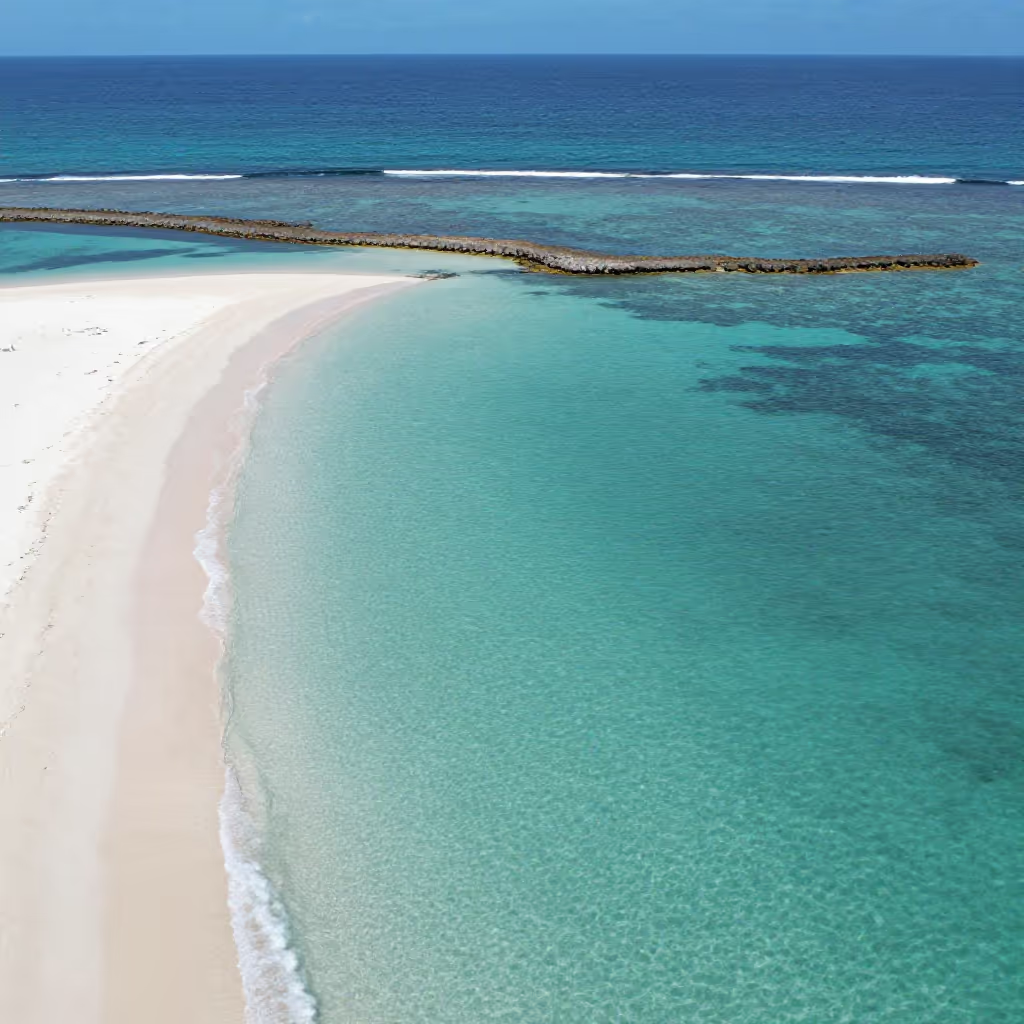
A shallow body of water that is largely or completely separated from the open sea by a sandbank, a reef, or a spit.
example
Venedig ist berühmt für seine einzigartige Lage in einer Lagune.
Venice is famous for its unique location in a lagoon.
Usage tips
Register and context
'Lagune' (lagoon) is a specific geographical term. It is mainly used when talking about geography, travel, or coastal landscapes.
EXAMPLE
Im Biologieunterricht haben wir das Ökosystem einer Lagune besprochen.
In biology class, we discussed the ecosystem of a lagoon.
Typical adjectives
Lagoons are often characterized with descriptive adjectives such as 'flach' (shallow), 'weitläufig' (extensive), 'malerisch' (picturesque), or 'salzig' (salty).
EXAMPLE
Wir machten eine Bootsfahrt durch die malerische Lagune.
We took a boat trip through the picturesque lagoon.
Sentence structure with prepositions
As a location, 'Lagune' (lagoon) is usually used with the prepositions 'in' (in) or 'an' (at/on). You are 'in der Lagune' (in the lagoon), or a place is located 'an der Lagune' (on/by the lagoon).
EXAMPLE
Das Hotel liegt direkt an einer wunderschönen Lagune.
The hotel is located right by a beautiful lagoon.
Compare with
confusable
Lagune vs Bucht
bay
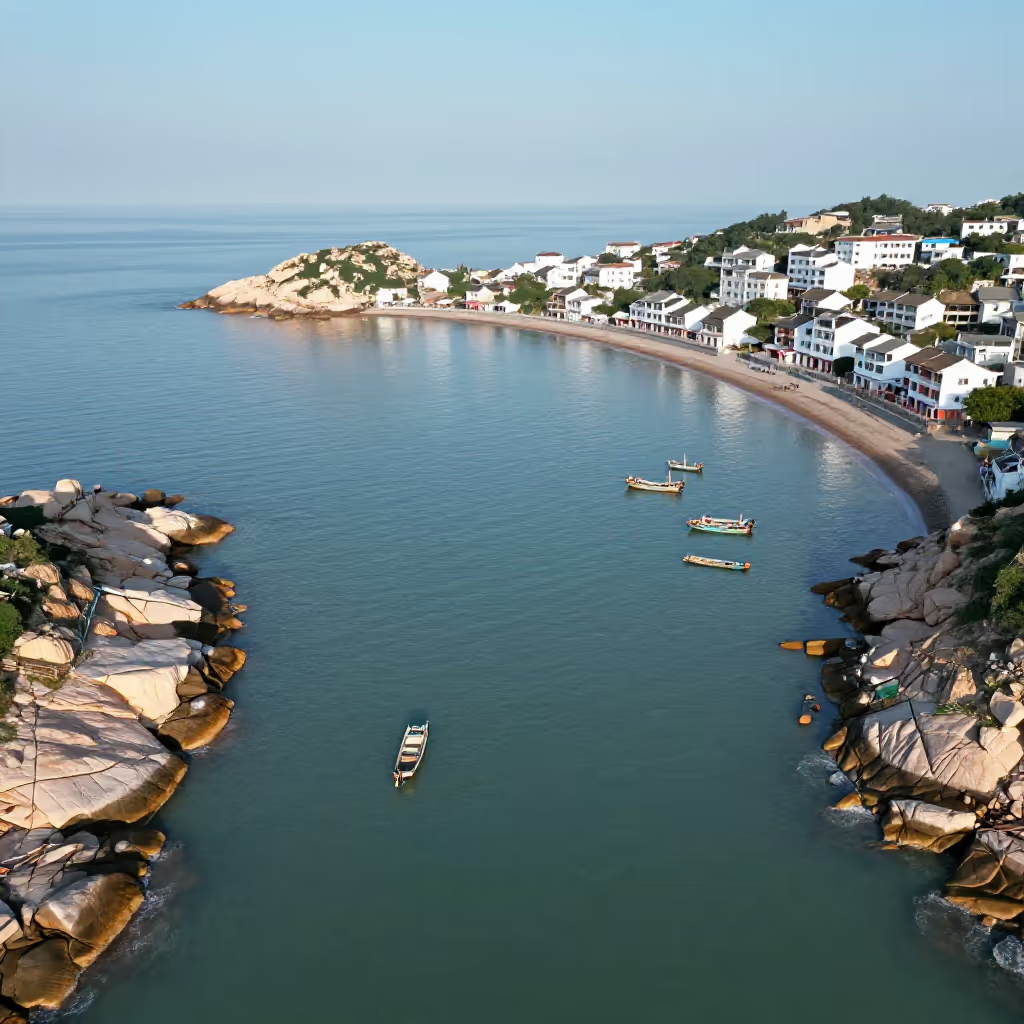
'die Bucht' and 'die Lagune' both have to do with water on the coast. A 'Bucht' is a part of the coast where the sea reaches into the land. It is usually open toward the open sea. A 'Lagune' is a shallow body of water that is separated from the open sea by a sandbank, a reef, or a similar natural barrier. They can be confused because both can seem calm and sheltered. The important difference is: a 'Bucht' is a coastal shape, while a 'Lagune' is a separated or almost separated body of water.
Lagune
Die Lagune ist sehr flach und nur durch eine schmale Sandbank vom Meer getrennt.
The lagoon is very shallow and separated from the sea only by a narrow sandbank.
Bucht
Vom Wanderweg aus sieht man eine breite Bucht mit hellem Sandstrand.
From the hiking trail, you can see a wide bay with a light sandy beach.