

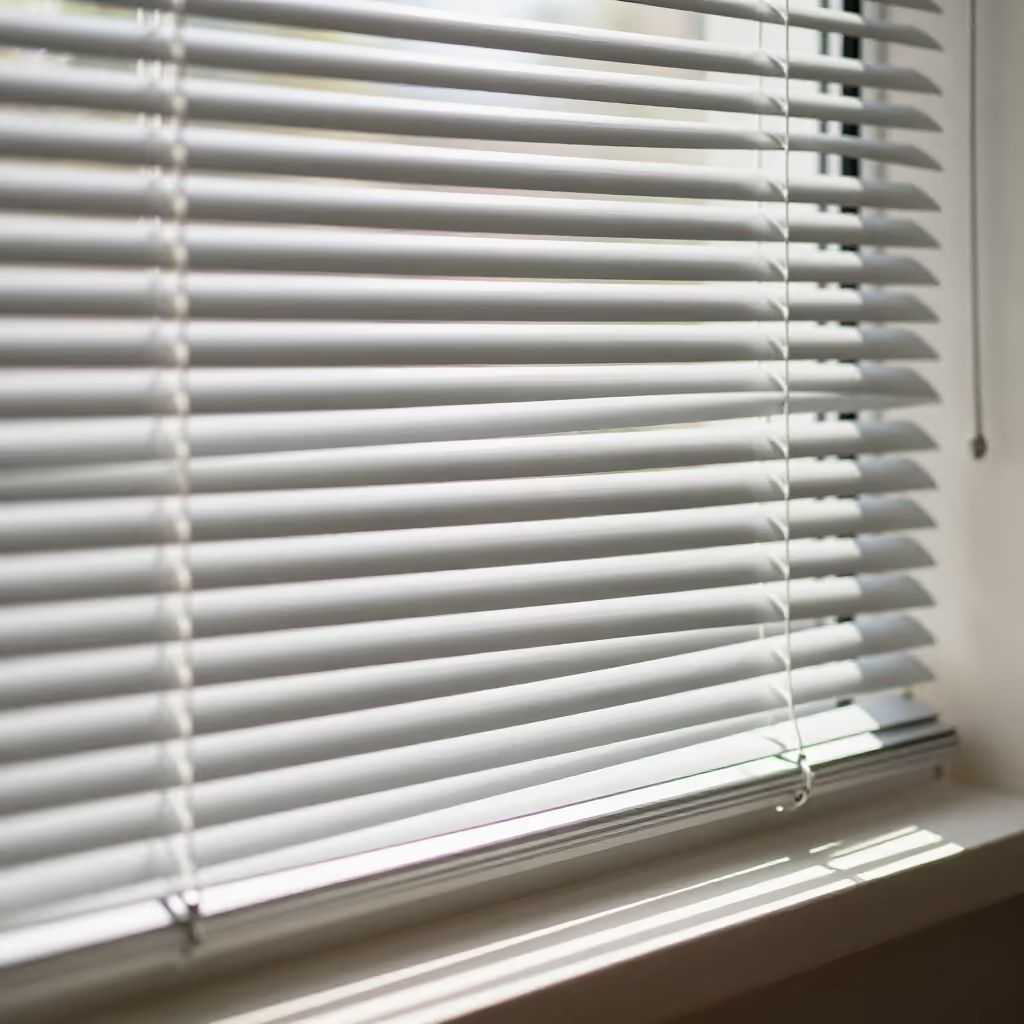
A thin, flat plate, small blade, or layer that is often arranged in a row with others. Lamellae can be found, for example, in blinds, on the gills of fish, or on the underside of mushroom caps.
example
Die Lamellen der Jalousie waren so gekippt, dass die Sonne nicht blenden konnte.
The slats of the blind were tilted so that the sun could not dazzle anyone.
Usage tips
Typical contexts
The word 'Lamelle' (slat/lamella) is used in different but very specific contexts: with blinds on a window, on the underside of mushrooms, or with the gills of fish.
EXAMPLE
Anhand der Lamellen konnte er den Pilz bestimmen.
He was able to identify the mushroom by its lamellae.
Typical verbs
In connection with blinds, verbs such as 'verstellen' (to adjust), 'kippen' (to tilt), 'öffnen' (to open), or 'schließen' (to close) are often used together with 'Lamellen' (slats).
EXAMPLE
Kannst du bitte die Lamellen etwas kippen? Die Sonne blendet.
Could you please tilt the slats a little? The sun is glaring.
Sentence structure
To specify what the lamellae or slats belong to, German usually uses the genitive or a 'von' construction. For example: 'die Lamellen der Jalousie' (the slats of the blind) or 'die Lamellen von einem Pilz' (the lamellae of a mushroom).
EXAMPLE
Die Reinigung der einzelnen Lamellen ist sehr aufwendig.
Cleaning the individual slats is very labor-intensive.
Compare with
near_synonym · confusable
Lamelle vs Streifen
stripe / film
'der Streifen' and 'die Lamelle' can both describe a narrow, flat shape. 'Streifen' is more general and means a long, narrow piece or a visible line, for example on fabric, paper, or a wall. 'Lamelle' is more specific and means a thin plate or small blade, often as part of a row, for example in blinds or on a mushroom. Learners may confuse the words because both can be narrow. If it is only about shape or color, 'Streifen' usually fits. If it is about an individual thin component or small blade, 'Lamelle' is the better fit.
Lamelle
Eine Lamelle der Jalousie ist kaputt und lässt sich nicht mehr drehen.
One slat of the blind is broken and can no longer be turned.