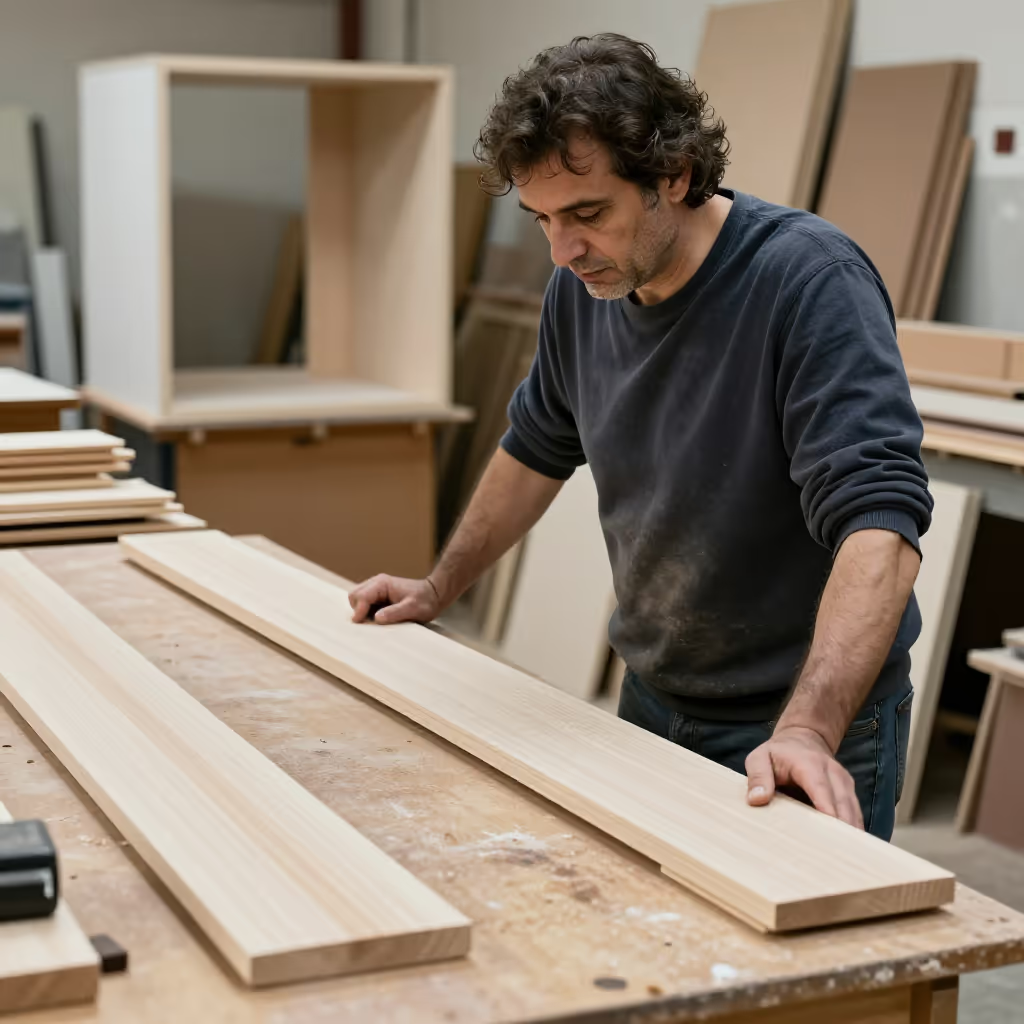
A long, relatively narrow bar made of wood, metal, or plastic, used in construction, for fences, or as part of furniture.
example
Für das neue Bettgestell müssen wir noch die Latten am Rahmen befestigen.
For the new bed frame, we still have to attach the slats to the frame.

Usage tips
False friend
'Die Latte' is not the coffee drink called 'latte' in English. The German word for that is 'der Milchkaffee' (milky coffee/café au lait). 'Die Latte' refers to a long bar made of wood or metal.
EXAMPLE
Der Fußball traf nur die Latte, nicht das Tor.
The football only hit the crossbar, not the goal.
Context clues
You can recognize the meaning of 'Latte' from the context. In sports, it refers to the crossbar; in construction or furniture contexts, it means a wooden or metal slat/bar. The idiom 'die Latte hoch legen' (to set the bar high) is a fixed expression for high expectations.
EXAMPLE
Der Hochspringer hat die Latte beim ersten Versuch gerissen.
The high jumper knocked the bar down on the first attempt.
Typical sports verbs
In a sports context, 'Latte' is often used with the verbs 'treffen' (to hit), 'reißen' (to knock down, in high jump), or 'prallen an/gegen' (to bounce off/against).
EXAMPLE
Der Elfmeter prallte von der Latte ab.
The penalty bounced off the crossbar.
Fixed expression
The idiom 'die Latte hoch legen' (to set the bar high) is fixed. An adverb like 'hoch' (high), 'höher' (higher), or 'niedrig' (low) always comes between 'Latte' and the verb 'legen'.
EXAMPLE
Die Konkurrenz hat mit ihrem neuen Produkt die Latte ganz schön hoch gelegt.
The competition really set the bar quite high with their new product.
Colloquial & vulgar
In this meaning, 'Latte' is a very colloquial and vulgar expression. It should only be used in very informal contexts and with great caution so as not to sound rude.
EXAMPLE
In der Umkleidekabine machten die Jungs ständig unanständige Witze.
In the changing room, the boys were constantly making dirty jokes.
Compare with
near_synonym
Latte vs Standard
standard
'der Standard' and 'die Latte hoch legen' both have to do with an expected level. 'Der Standard' means a level that is considered normal, good, or generally recognized. This can be in work, quality, or rules. 'Die Latte hoch legen' is a fixed expression and means that someone sets very high expectations. It sounds more figurative and often a little more colloquial. When speaking neutrally about a level, 'Standard' fits better. When you want to emphasize that the expectations are especially high, you say 'die Latte hoch legen' (to set the bar high).
Latte
Mit ihrem sehr guten Vortrag hat Anna die Latte für die anderen hoch gelegt.
With her very good presentation, Anna set the bar high for the others.
Standard
In diesem Hotel ist ein freundlicher Service der Standard.