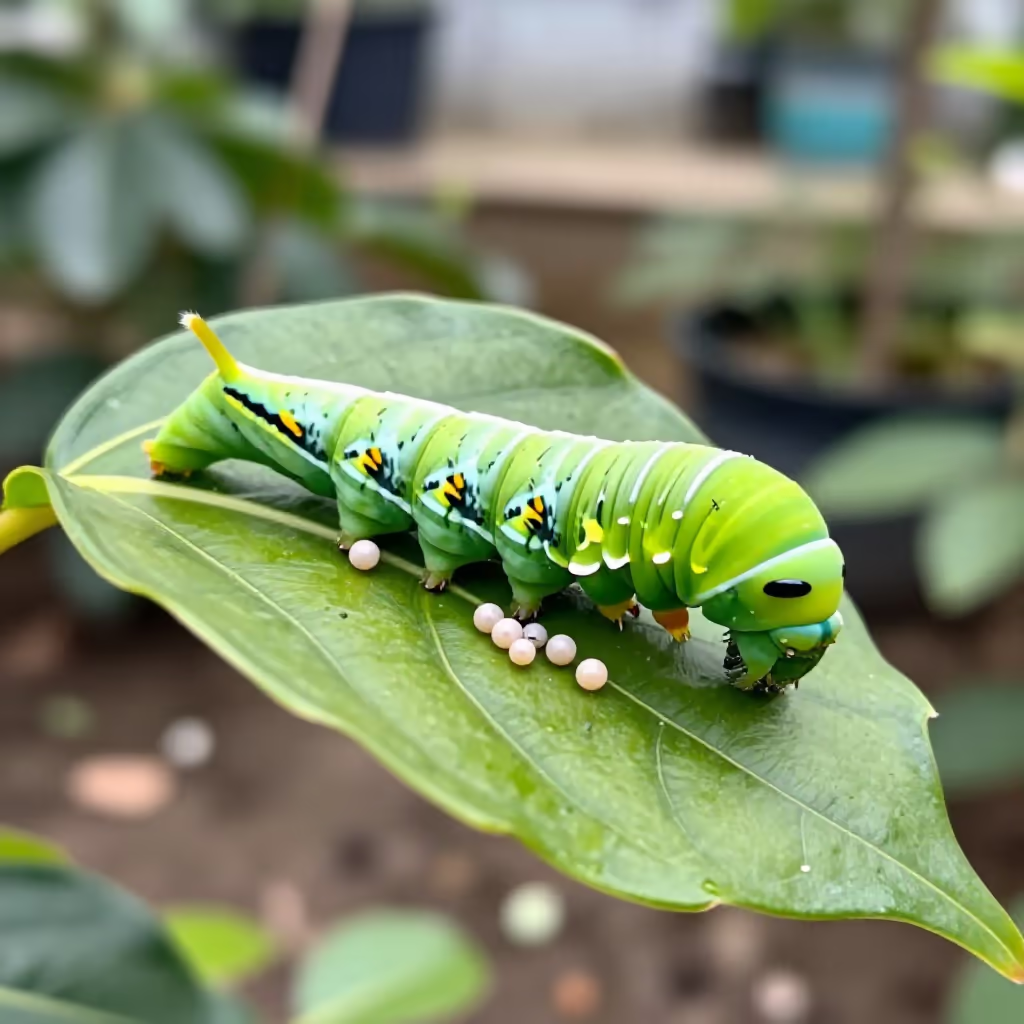
The developmental stage of many animals, especially insects and amphibians, between the egg and pupation or metamorphosis into the adult animal.
example
Aus der Raupe, der Larve des Schmetterlings, wird später ein Falter.
The caterpillar, the larva of the butterfly, later becomes a butterfly.

Usage tips
Context clue
The meaning of 'Larve' (larva / mask) depends heavily on the context. In a biological context (insects, animals), it means the developmental stage. In a cultural context (carnival, theater), it means a face mask.
EXAMPLE
Die Kaulquappe ist die Larve eines Frosches.
The tadpole is the larva of a frog.
Typical collocations
In the biological sense, 'Larve' (larva) is often used with verbs of development. Typical phrases are 'eine Larve entwickelt sich zu...' (a larva develops into...) or 'aus der Larve schlüpft...' (from the larva hatches...).
EXAMPLE
Die Larven der Mücken entwickeln sich im Wasser.
Mosquito larvae develop in water.
Regional use
The meaning 'Maske' (mask) is especially common in southern Germany, Austria, and Switzerland, above all in connection with Fastnacht or carnival.
EXAMPLE
Jede Zunft hat ihre eigenen, kunstvoll geschnitzten Larven.
Each guild has its own elaborately carved masks.
Use with verbs
When 'Larve' (mask) means a mask, it is often combined with verbs like 'tragen' (to wear), 'aufsetzen' (to put on), or 'schnitzen' (to carve).
EXAMPLE
Die Kinder hatten Angst vor den Männern, die unheimliche Larven trugen.
The children were afraid of the men who were wearing eerie masks.
Compare with
near_synonym · confusable
Larve vs Maske
mask
'die Maske' and 'die Larve' can both mean a covering for the face. 'Maske' is the normal and very common word for protection, disguise, Carnival, or certain professions. 'Larve' in this meaning is more specific and fits mainly with theater, Carnival, or traditional customs. Learners may confuse the words because 'Larve' can also be a mask. In everyday language, however, 'Maske' is almost always more natural. 'Larve' should only be used when this special cultural or traditional context fits.
Larve
Beim traditionellen Umzug trugen viele Teilnehmer geschnitzte Larven.
At the traditional parade, many participants wore carved masks.
Maske
Vor dem Termin setzt die Mitarbeiterin eine Schutzmaske auf.
Before the appointment, the employee puts on a protective mask.