

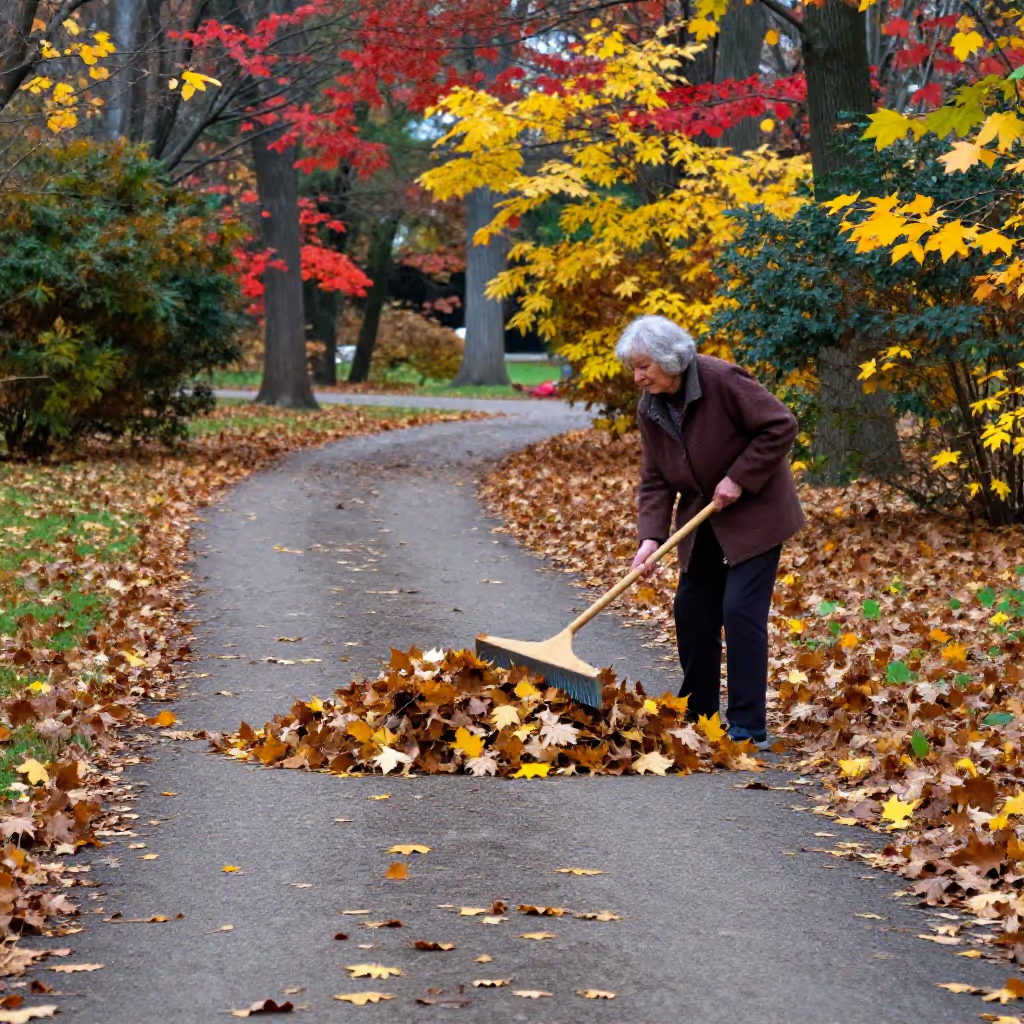
The leaves of deciduous trees and shrubs as a whole, especially the leaves that change color and fall to the ground in autumn.
example
Im Herbst müssen wir jedes Wochenende das Laub im Garten zusammenrechen.
In autumn, we have to rake up the leaves in the garden every weekend.
Usage tips
Collective noun
'Laub' (foliage / leaves) is a collective noun and refers to an indefinite amount of leaves. Therefore, it is always used in the singular and has no plural form.
EXAMPLE
Überall auf dem Weg liegt nasses Laub.
There are wet leaves lying all over the path.
Typical collocations
Common verbs connected with 'Laub' (foliage / leaves) are 'rechen' (or 'harken') (to rake), 'fegen' (to sweep), and 'zusammenkehren' (to sweep together). Typical adjectives are 'bunt' (colorful), 'trocken' (dry), or 'raschelnd' (rustling).
EXAMPLE
Die Kinder spielen gern im bunten Laub.
The children like playing in the colorful leaves.
Context: autumn
The word 'Laub' (foliage / leaves) is very strongly associated with the season autumn. A very common compound word is 'das Herbstlaub' (autumn leaves).
EXAMPLE
Der Geruch von feuchtem Herbstlaub lag in der Luft.
The smell of damp autumn leaves was in the air.
Compare with
near_synonym · confusable
Laub vs Blatt
leaf / sheet
'das Blatt' and 'das Laub' both have to do with the green or colorful parts of trees and shrubs. 'Blatt' means a single part of a plant. 'Laub' means many leaves together, especially on deciduous trees and often in autumn when they are lying on the ground. Learners may confuse the words because 'Laub' consists of 'Blätter'. If you mean one single part, you say 'Blatt'. If you mean the mass of leaves, you say 'Laub'.
Laub
Nach dem Essen fegt Tom das Laub vor der Haustür zusammen.
After lunch, Tom sweeps up the leaves in front of the front door.