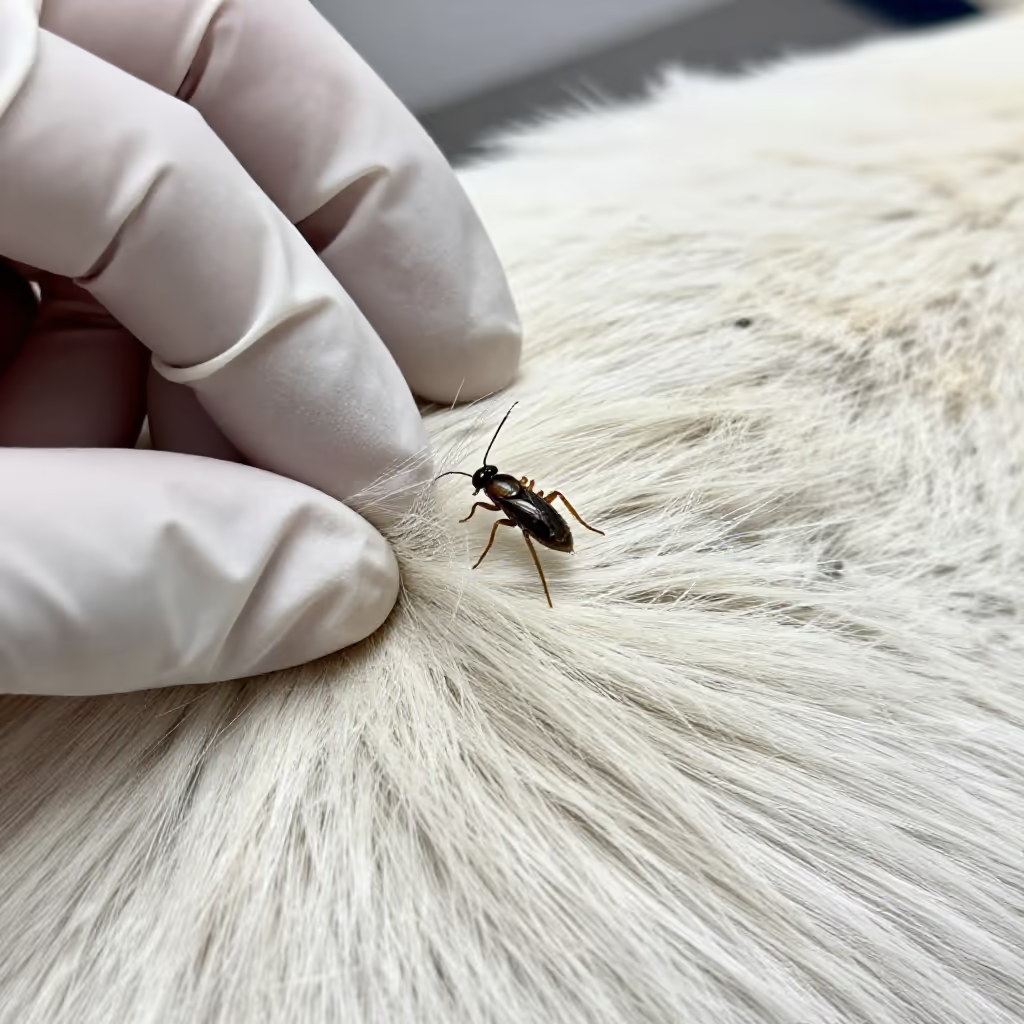
A small, wingless insect that lives as a parasite on the skin or in the hair of humans and other mammals.
example
Nach der Klassenfahrt mussten alle Kinder auf Läuse untersucht werden.
After the class trip, all the children had to be checked for lice.

Usage tips
Dative construction
The idiom 'jemandem ist eine Laus über die Leber gelaufen' (someone is in a bad mood; literally, a louse has run over someone's liver) always requires a person in the dative. This person is the one who is in a bad mood.
EXAMPLE
Was ist denn los mit dir? Ist dir eine Laus über die Leber gelaufen?
What's wrong with you? Are you in a bad mood?
Context clue
You can recognize the figurative meaning by the fixed combination with the word 'Leber' (liver). Without this part of the sentence, 'Laus' (louse) always refers to the insect.
EXAMPLE
Mein Chef war heute unerträglich. Ich glaube, dem ist eine Laus über die Leber gelaufen.
My boss was unbearable today. I think he's in a bad mood.
Typical collocations
In connection with the insect, 'Laus' (louse) is often used with the verbs 'haben' (to have) or 'bekommen' (to get). A common phrase is also 'jemanden auf Läuse untersuchen' (to check someone for lice).
EXAMPLE
Der Kindergarten hat uns informiert, dass einige Kinder Läuse haben.
The kindergarten informed us that some children have lice.
Compare with
near_synonym · confusable
Laus vs Floh
flea
'der Floh' and 'die Laus' are both small wingless insects that can live as parasites on people or animals. That makes them easy to confuse. The most important difference is the typical place: fleas jump and are often found on pets or in homes. Lice tend to live in hair or on the skin and are often discovered in children at school or kindergarten. If an animal is scratching, people often talk about fleas. If it is about hair on the head, 'Laus' usually fits better.
Laus
In der Schule wurde bei einem Kind eine Laus gefunden.
At school, a louse was found on one child.
Floh
Bei der Arbeit erzählt Yusuf, dass sein Hund einen Floh hatte.