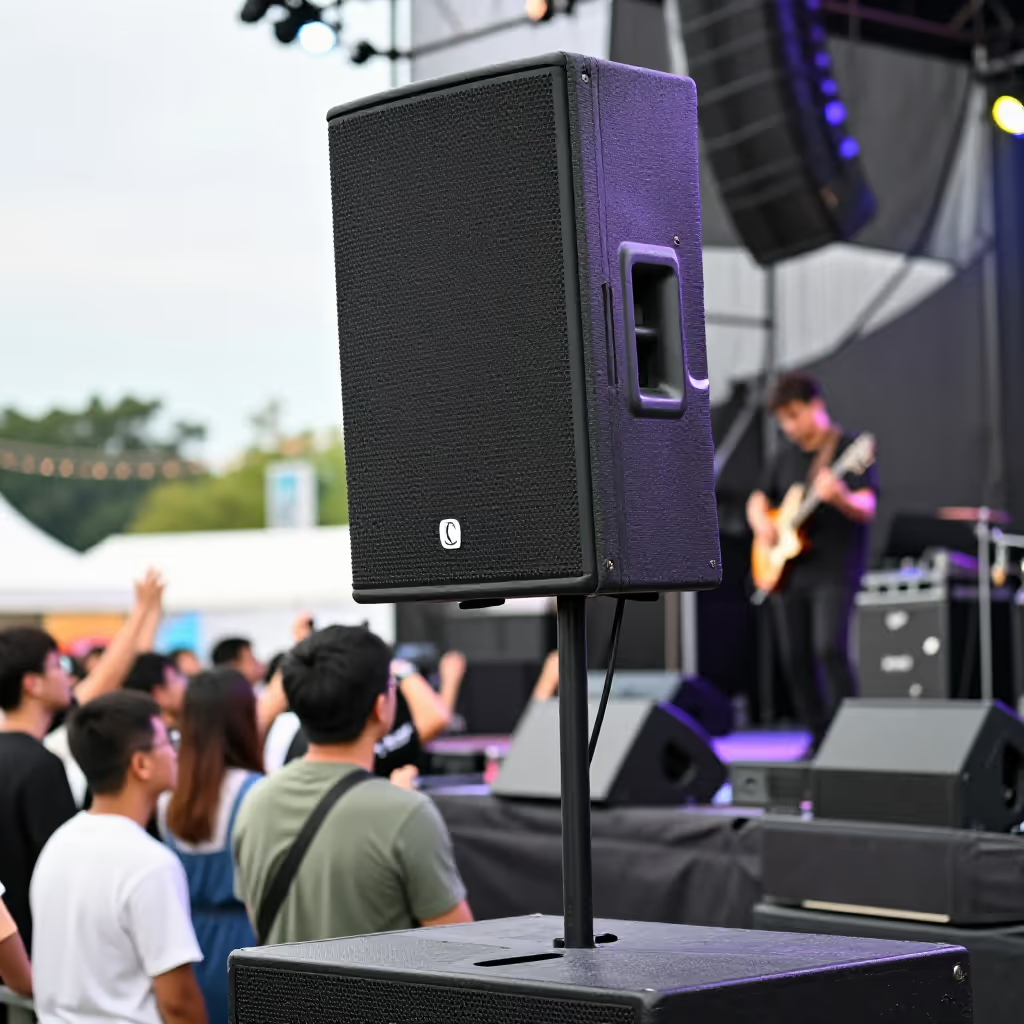
A device that converts electrical signals into audible sound waves in order to play sounds, music, or speech.
example
Könntest du die Musik bitte leiser machen? Die Lautsprecher sind voll aufgedreht.
Could you please turn the music down? The speakers are turned all the way up.

Usage tips
Word composition
The word is built very logically: it consists of 'laut' (loud) and 'der Sprecher' (the speaker). So a 'Lautsprecher' is literally a device that 'speaks loudly.'
EXAMPLE
Die Durchsage am Bahnhof kam über die Lautsprecher.
The announcement at the train station came over the speakers.
Context clue
You can recognize the meaning from the context. If it is about technology, music, or announcements, the device is meant. If it is about politics or social groups, the person as a mouthpiece is meant.
EXAMPLE
Ich brauche neue Lautsprecher für meinen Computer.
I need new speakers for my computer.
Typical verbs
When the device is meant, 'Lautsprecher' (speaker) is often used with verbs such as 'einschalten' (to switch on), 'ausschalten' (to switch off), 'aufdrehen' (to turn up), or 'leiser stellen' (to turn down).
EXAMPLE
Kannst du bitte die Lautsprecher etwas leiser stellen?
Can you please turn the speakers down a bit?
Fixed expression
The figurative meaning for a person is very often used in the fixed expression 'sich zum Lautsprecher für jemanden/etwas machen' (to make oneself a mouthpiece for someone/something).
EXAMPLE
Er hat sich im Stadtrat zum Lautsprecher für die Anliegen der jungen Familien gemacht.
In the city council, he made himself a mouthpiece for the concerns of young families.
Compare with
near_synonym · confusable
Lautsprecher vs Vertreter
representative / substitute
'der Vertreter' and 'der Lautsprecher' can both mean a person who speaks for others or presents their opinion to the outside world. 'Vertreter' is the normal, neutral word when someone officially acts on behalf of a person, group, or company. In this meaning, 'Lautsprecher' is more like a mouthpiece: someone makes a group's opinion known loudly and publicly. This can sound figurative and is not as neutral as 'Vertreter'. Learners may confuse the words because both have to do with 'speaking for others'. In official situations, 'Vertreter' usually fits better; 'Lautsprecher' is more appropriate when someone expresses a group's position in a particularly visible or vocal way.
Lautsprecher
Bei der Versammlung gilt sie als Lautsprecher der jungen Mitglieder.
At the meeting, she is seen as a mouthpiece for the young members.
Vertreter
Der Vertreter der Firma beantwortet die Fragen der Kunden.
The company's representative answers the customers' questions.