

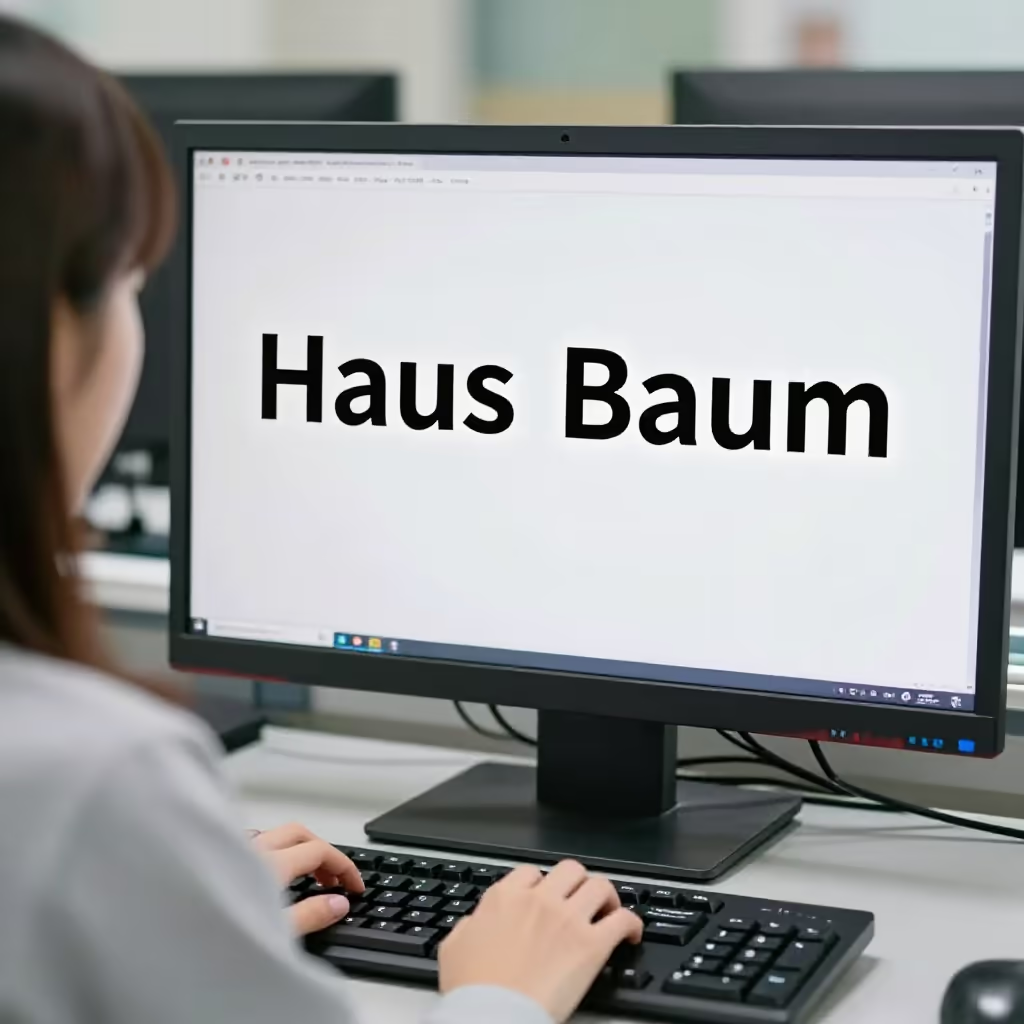
An empty character in a text that is used to separate words, numbers, or other characters. On a keyboard, it is usually produced by the space bar.
example
Bitte fügen Sie zwischen Vor- und Nachnamen ein Leerzeichen ein.
Please insert a space between first name and last name.
Usage tips
Word composition
The word is composed of the adjective 'leer' (empty) and the noun 'das Zeichen' (character/sign). So it literally describes an empty or invisible character.
EXAMPLE
Ein doppeltes Leerzeichen im Text ist meist ein Tippfehler.
A double space in a text is usually a typo.
Typical collocations
In connection with word processing, verbs such as 'einfügen' (to insert), 'setzen' (to place), 'löschen' (to delete), or 'entfernen' (to remove) are very typical.
EXAMPLE
Bitte entfernen Sie das überflüssige Leerzeichen am Satzende.
Please remove the unnecessary space at the end of the sentence.
Sentence structure and use
The position of the space is often described with the preposition 'zwischen' (between) to emphasize its separating function.
EXAMPLE
Zwischen den beiden Wörtern fehlt ein Leerzeichen.
There is a space missing between the two words.
Compare with
near_synonym · confusable
Leerzeichen vs Abstand
distance
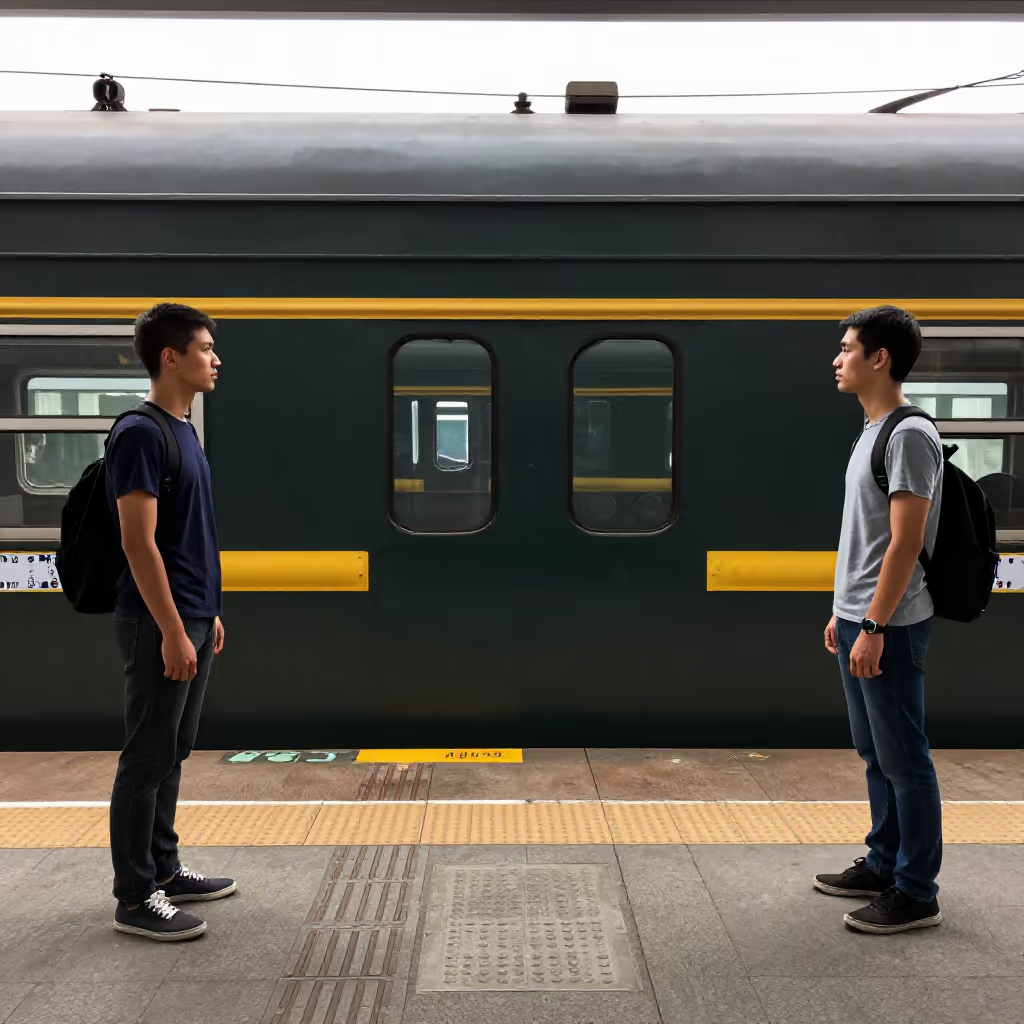
'Abstand' and 'Leerzeichen' both have to do with separation. 'Abstand' is the general word for a distance between people, things, or points. It can also refer to the visible space between elements. 'Leerzeichen' is much more specific: it is the empty character in a text that separates words or numbers. Learners may confuse the words when texts or writing are involved. In a text, the key or character is called 'Leerzeichen'. For the size of the space between lines, letters, or objects, 'Abstand' is more appropriate.
Leerzeichen
Nina hat zwischen Vorname und Nachname ein Leerzeichen vergessen.
Nina forgot a space between her first name and last name.
Abstand
Im Formular ist der Abstand zwischen den Zeilen sehr klein.
In the form, the spacing between the lines is very small.