

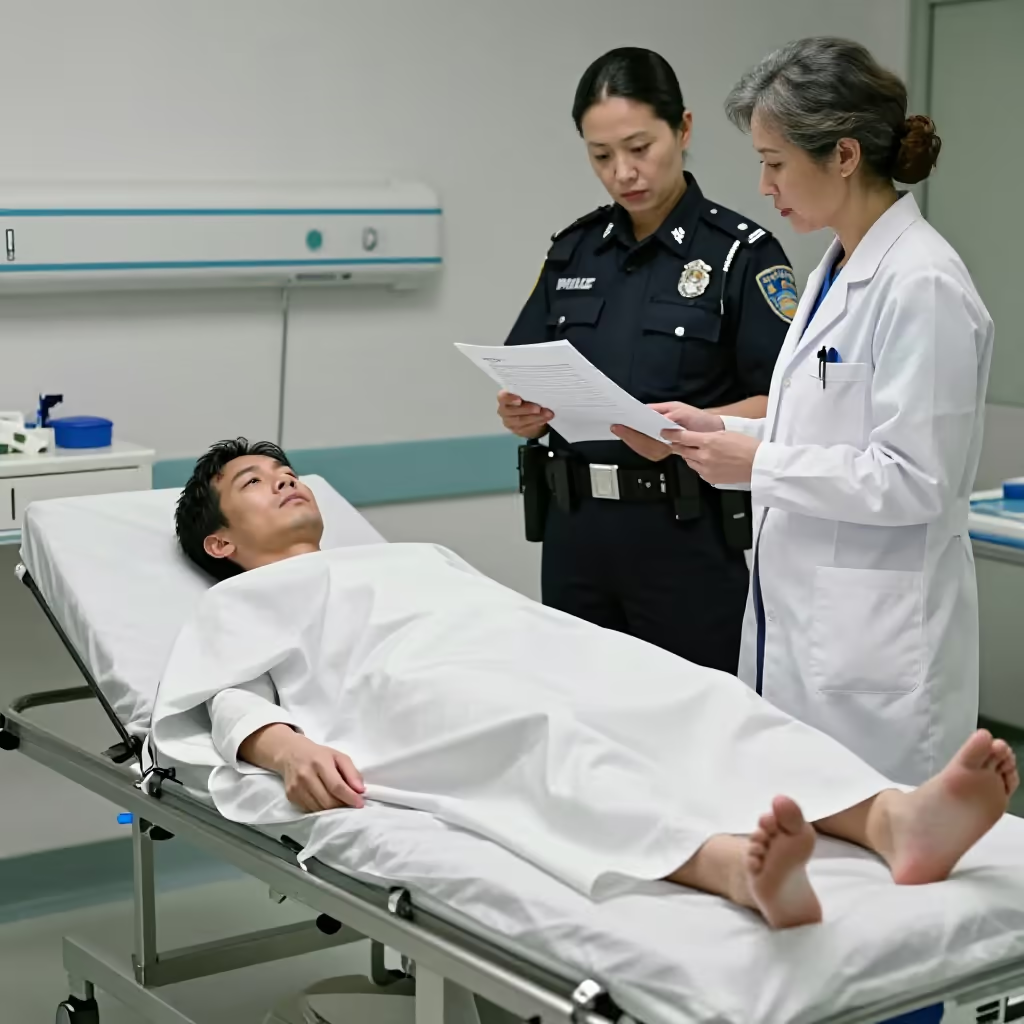
A formal and respectful expression for the dead body of a human being. Used mainly in official, medical, or legal contexts.
example
Der Leichnam wurde zur Obduktion in die Gerichtsmedizin gebracht.
The body was taken to forensic medicine for an autopsy.
Usage tips
Register and style
'Leichnam' (body) is a very formal word used almost exclusively in official contexts, such as with the police, in medicine, or in the news. You would not use it in everyday conversation.
EXAMPLE
Die Polizei hat den Leichnam am Flussufer gefunden.
The police found the body on the riverbank.
Word family
The word is closely related to 'die Leiche' (corpse/the body of a dead person). However, 'Leichnam' (body) is considered the more respectful and more formal variant.
EXAMPLE
Nach der Identifizierung wurde der Leichnam zur Bestattung freigegeben.
After identification, the body was released for burial.
Typical collocations
Common verbs used with 'Leichnam' (body) are 'bergen' (to recover), 'identifizieren' (to identify), 'obduzieren' (to perform an autopsy on), or 'überführen' (to transfer/repatriate). They describe official actions.
EXAMPLE
Die Feuerwehr konnte den Leichnam aus dem brennenden Haus bergen.
The fire department was able to recover the body from the burning house.
Compare with
near_synonym · confusable
Leichnam vs Tote
dead person
'der Tote' and 'der Leichnam' both refer to a person who has died. 'der Tote' means the deceased person and is relatively neutral in reports or conversations. 'der Leichnam' means the dead body, but sounds more formal and more respectful than 'die Leiche'. You often find this word in official, medical, or legal texts. The words can be confused because both are used in connection with death. In practical terms: 'der Tote' emphasizes the person, while 'der Leichnam' emphasizes the body and sounds very formal.
Leichnam
Der Leichnam wurde später von einem Arzt untersucht.
The body was later examined by a doctor.
Tote
Die Zeitung berichtet, dass der Tote aus der Nachbarstadt kam.
The newspaper reports that the dead person came from the neighboring town.