

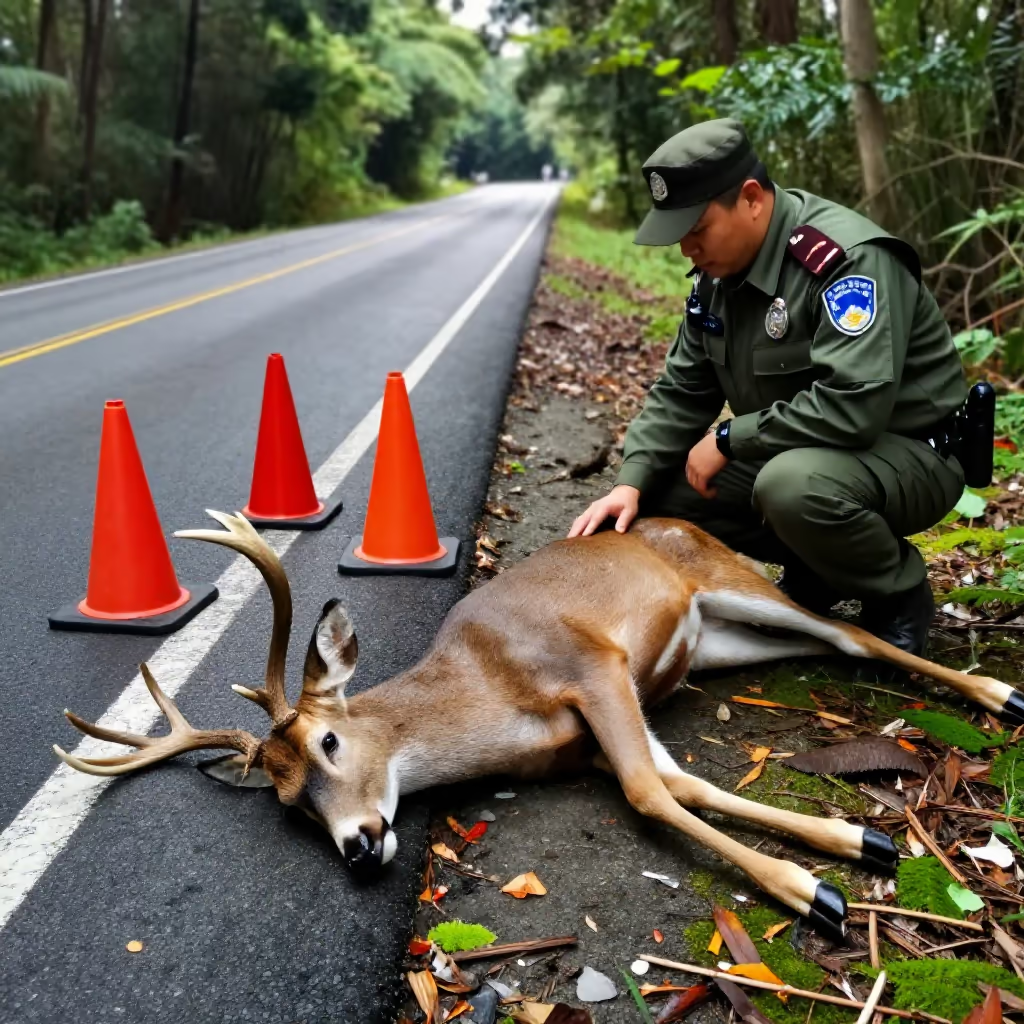
der Kadaver
carcass
The dead body of an animal.
EXAMPLE
Am Straßenrand lag der Kadaver eines Rehs.
The carcass of a deer lay by the side of the road.
carcass
Loading your saved state.
carcass
The dead body of an animal.
Am Straßenrand lag der Kadaver eines Rehs.
The carcass of a deer lay by the side of the road.

corpse
A derogatory and disrespectful term for a dead human body.
Die Täter ließen den Kadaver einfach im Wald zurück.
The perpetrators simply left the corpse in the forest.
Never use 'Kadaver' (carcass) for a human body unless you want to express extreme contempt and disrespect. In this context, it is a strongly derogatory and dehumanizing term.
Die Ermittler sprachen von der Leiche, nicht vom Kadaver.
The investigators spoke of the body, not the carcass.
When referring to the dead body of an animal, 'Kadaver' (carcass) is a neutral to technical term. It is often used in biology, by hunters, or by authorities.
Der Förster untersuchte den Kadaver des Wildschweins.
The forester examined the carcass of the wild boar.
In connection with animals, 'Kadaver' (carcass) is often combined with verbs like 'finden' (to find), 'entdecken' (to discover), or 'beseitigen' (to remove/dispose of). Scavenging animals feed on carcasses.
Geier kreisten über dem Kadaver in der Savanne.
Vultures circled over the carcass in the savanna.
corpse
Leiche and Kadaver can both refer to the dead body of a human being. Leiche is the neutral and usual term, while Kadaver sounds deliberately derogatory and disrespectful in this context. Leiche is therefore appropriate in factual or polite situations.

Der Reporter bezeichnete den toten Mann respektlos als Kadaver.
The reporter disrespectfully referred to the dead man as a carcass.
Die Polizei fand die Leiche des vermissten Mannes in der Wohnung.
The police found the missing man’s corpse in the apartment.