

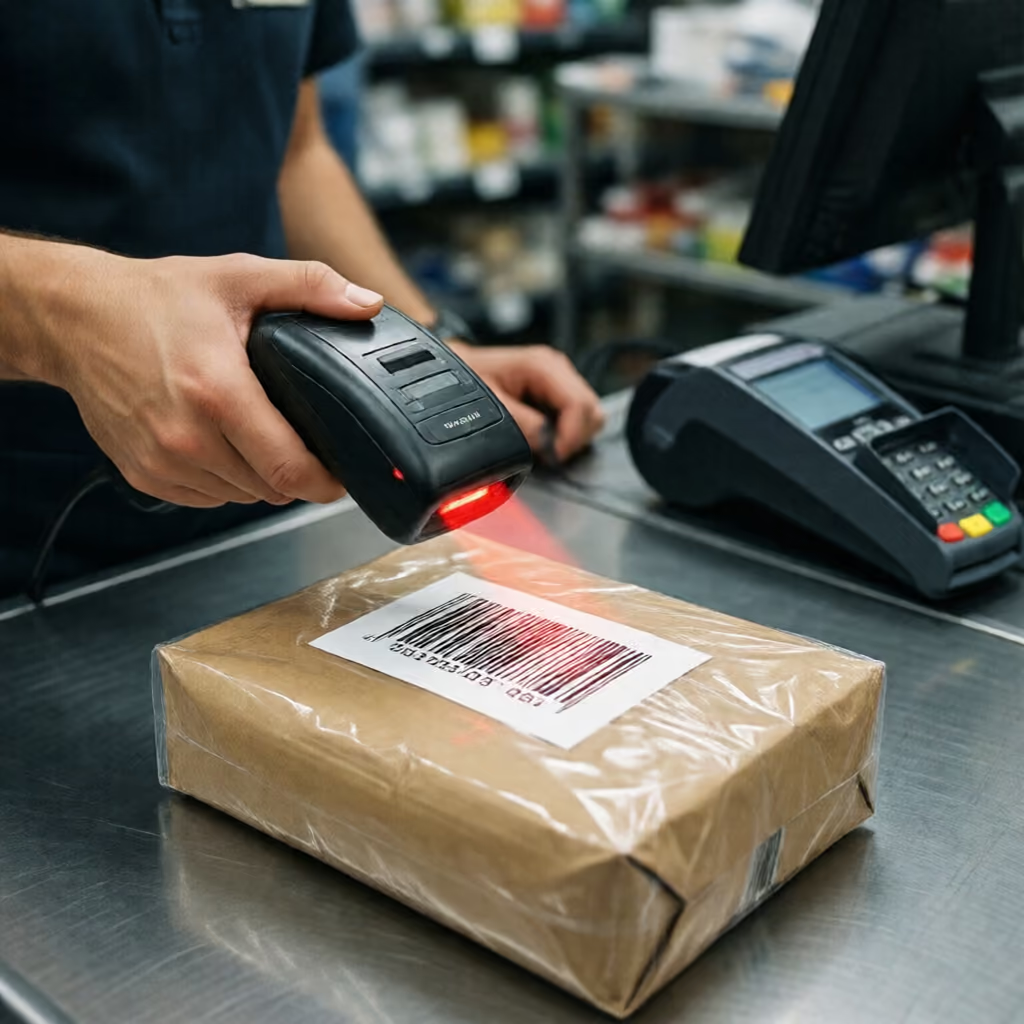
das Lesegerät
reader
A technical device used to read or capture information from a data carrier, such as a card, barcode, or electronic book.
Das Lesegerät erkennt den Barcode auf dem Produkt.
The reader recognizes the barcode on the product.
reader
das Lesegerät, die Lesegeräte
Loading your saved state.

reader
A technical device used to read or capture information from a data carrier, such as a card, barcode, or electronic book.
Das Lesegerät erkennt den Barcode auf dem Produkt.
The reader recognizes the barcode on the product.
| gender | neuter das |
|---|---|
| plural | die Lesegeräte |
| genitive | des Lesegerätes |
| singular | plural | |
|---|---|---|
| nominative | das Lesegerät | die Lesegeräte |
| accusative | das Lesegerät | die Lesegeräte |
| dative | dem Lesegerät | den Lesegeräten |
| genitive | des Lesegerätes des Lesegeräts | der Lesegeräte |
The article changes with the case; it is shown in colour.
'Lesegerät' is made up of 'lesen' (to read) and 'Gerät' (device). The base word 'Gerät' refers to a technical tool, while 'Lesen' describes its main function.
Das Lesegerät kann die Daten auf dem Ausweis schnell erfassen.
The reader can quickly capture the data on the ID card.
Verbs such as 'anschließen' (to connect), 'benutzen' (to use), 'einschalten' (to switch on), and 'erkennen' (to recognize) are often used with 'Lesegerät'. Cards, barcodes, or ID cards are often mentioned as the source of the information being read.
Die Mitarbeiterin schaltete das Lesegerät ein und las die Karte ein.
The employee switched on the reader and scanned the card.
'Lesegerät' is usually used in technical or organizational situations in which a device automatically captures data. The type of device meant can often be identified from the source mentioned, such as a card, barcode, or electronic book.
Am Eingang prüft ein Lesegerät die Daten auf dem elektronischen Ausweis.
At the entrance, a reader checks the data on the electronic ID card.