


liebevoll
loving
Characterized by love, affection, and care; in a tender and warm way.
EXAMPLE
Sie gab ihrem weinenden Kind eine liebevolle Umarmung.
She gave her crying child a loving hug.
loving / careful
Loading your saved state.
loving
Characterized by love, affection, and care; in a tender and warm way.
Sie gab ihrem weinenden Kind eine liebevolle Umarmung.
She gave her crying child a loving hug.
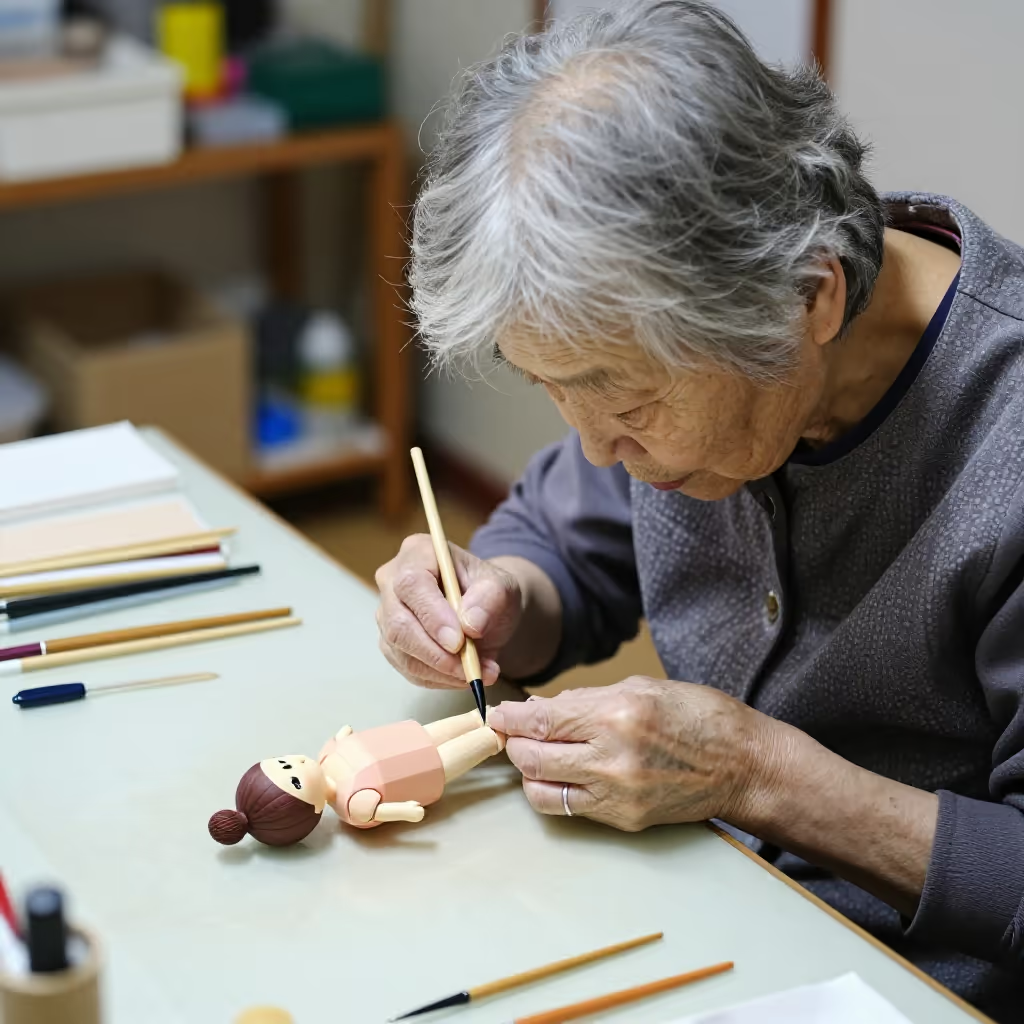
careful
Done with great care and devotion, as if out of love for the thing itself.
Der alte Schrank wurde von ihr liebevoll restauriert.
The old cabinet was carefully restored by her.
The word 'liebevoll' (loving/careful) is made up of the noun 'die Liebe' (love) and the suffix '-voll' (-ful). The suffix '-voll' means 'full of' and forms adjectives that express an abundance of something.
Er schrieb ihr einen liebevollen Brief zum Abschied.
He wrote her a loving farewell letter.
'Liebevoll' (loving/careful) can stand before a noun as an adjective or describe a verb as an adverb. As an adverb, it describes the way in which an action is carried out.
Das war eine sehr liebevolle Geste von dir.
That was a very loving gesture from you.
If 'liebevoll' (loving/careful) refers to how people are treated, it means 'zärtlich' (tender). If it refers to objects or activities, it means 'mit großer Sorgfalt und Hingabe' (with great care and devotion).
Der Gärtner pflegt seine Rosen sehr liebevoll.
The gardener tends his roses very carefully.
warm / heartfelt
Herzlich and liebevoll can both describe a warm, caring action. Herzlich primarily emphasizes open friendliness and inner warmth. Liebevoll additionally conveys affection and attentive care, so it is especially suitable when someone is tenderly caring for another person.

Die Gastgeberin legte dem kranken Gast liebevoll eine warme Decke über die Schultern.
The hostess lovingly draped a warm blanket over the sick guest’s shoulders.
Die Gastgeberin begrüßte den kranken Gast herzlich an der Tür.
The hostess warmly welcomed the sick guest at the door.