


der Löffel
spoon
A piece of cutlery with a small, oval bowl and a handle, used for eating soups, yogurt, or other liquid to mushy foods.
EXAMPLE
Für die Suppe brauchst du einen Löffel, keine Gabel.
For the soup, you need a spoon, not a fork.
spoon
Loading your saved state.
spoon
A piece of cutlery with a small, oval bowl and a handle, used for eating soups, yogurt, or other liquid to mushy foods.
Für die Suppe brauchst du einen Löffel, keine Gabel.
For the soup, you need a spoon, not a fork.

to kick the bucket
A colloquial and informal expression for 'to die'.
Nach einem langen Leben hat mein Urgroßvater mit 98 Jahren den Löffel abgegeben.
After a long life, my great-grandfather kicked the bucket at the age of 98.

bucket
The large scoop on an excavator, used to pick up and move soil or other material.
Der Baggerfahrer füllte den Löffel mit Sand und lud ihn auf den LKW.
The excavator operator filled the bucket with sand and loaded it onto the truck.

ears
In hunting language, the term for the long ears of a hare or rabbit.
Der Jäger erkannte den Hasen an seinen langen Löffeln.
The hunter recognized the hare by its long ears.
The meaning of 'Löffel' changes completely depending on the situation. In a food context, it is cutlery; on construction sites, it is a part of an excavator; and in hunting language, it is a hare’s ear.
Reich mir bitte den Löffel für die Suppe.
Please pass me the spoon for the soup.
'Löffel' (spoon) is the basis for two important units of measure in cooking and baking: 'der Esslöffel' (tablespoon, tbsp) for larger amounts and 'der Teelöffel' (teaspoon, tsp) for smaller amounts.
Bitte fügen Sie einen Teelöffel Zucker zum Teig hinzu.
Please add a teaspoon of sugar to the dough.
The expression 'den Löffel abgeben' means 'to die'. It is a fixed idiom, very colloquial, and should only be used in informal contexts.
Er war so krank, dass alle dachten, er würde bald den Löffel abgeben.
He was so ill that everyone thought he would soon kick the bucket.
The term 'Löffel' for the ears of a hare or rabbit belongs to hunters’ terminology ('Jägersprache'). In normal conversation, you would simply say 'Ohren' (ears).
Der Hase spitzte aufmerksam seine langen Löffel.
The hare attentively pricked up its long ears.
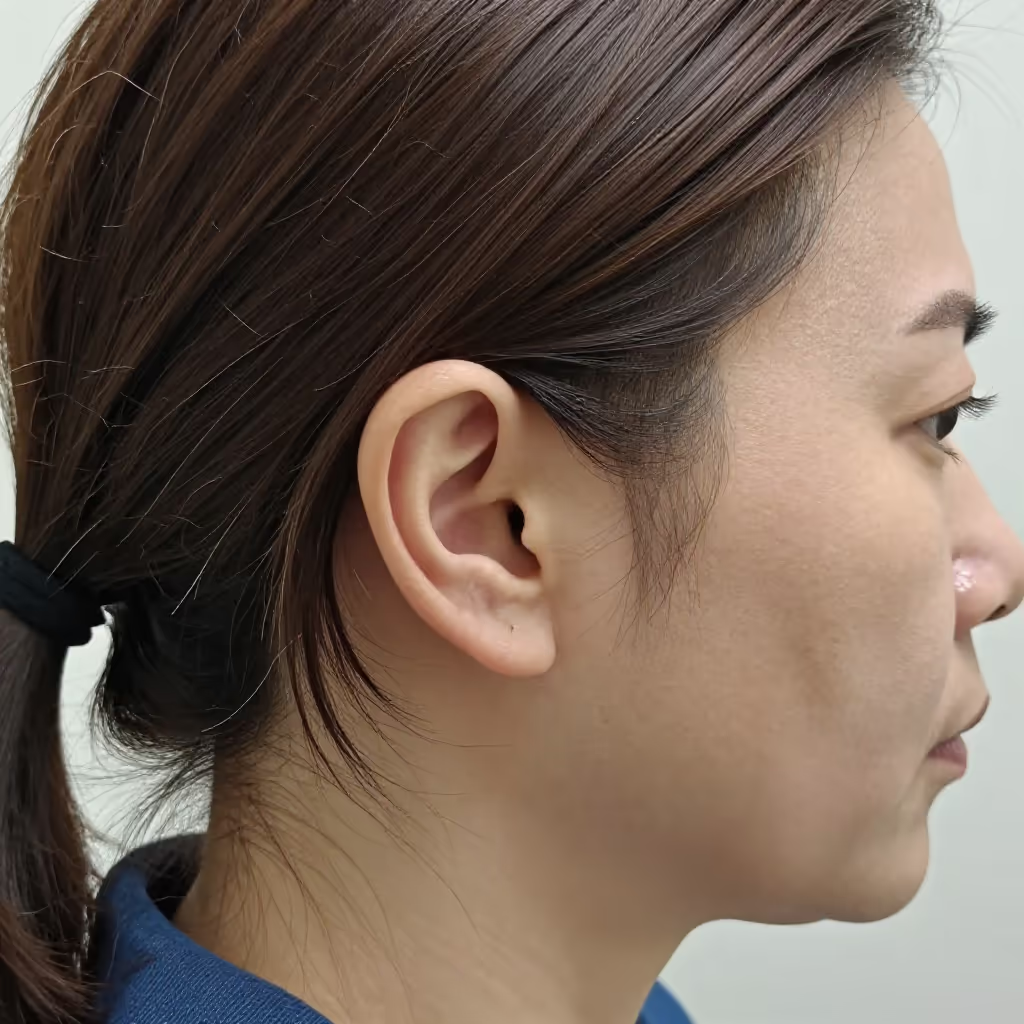
ear
Ohr is the neutral, general-language term for an animal’s hearing organ. In hunting language, Löffel refers to the long ears of a hare or rabbit. Ohr is therefore appropriate in normal conversation, while Löffel is used in a hunting context.
Der Jäger beobachtet, wie der Hase seine langen Löffel aufstellt.
The hunter watches as the hare raises its long ears.
Das Kaninchen stellt seine langen Ohren aufmerksam auf.
The rabbit raises its long ears attentively.