

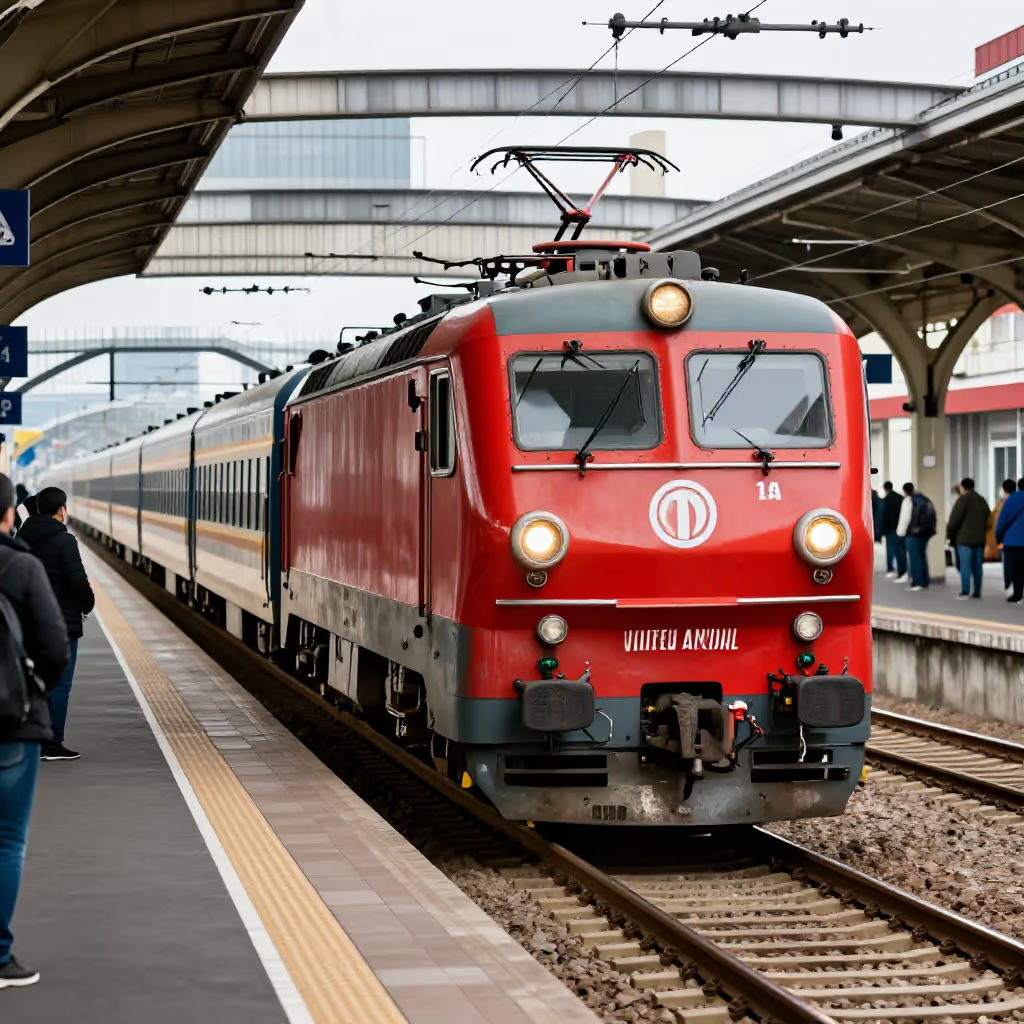
die Lokomotive
locomotive
A rail vehicle with its own engine that is used to pull a train. It is often referred to briefly as 'Lok' (locomotive).
EXAMPLE
Die alte Dampflokomotive steht heute im Museum.
The old steam locomotive is now in a museum.
locomotive
Loading your saved state.
locomotive
A rail vehicle with its own engine that is used to pull a train. It is often referred to briefly as 'Lok' (locomotive).
Die alte Dampflokomotive steht heute im Museum.
The old steam locomotive is now in a museum.

driving force
In a figurative sense, a person, group, or company that serves as the driving force behind a development or project.
Die Exportindustrie war die Lokomotive des wirtschaftlichen Aufschwungs.
The export industry was the driving force behind the economic upswing.
In everyday life and spoken language, 'Lokomotive' (locomotive) is very often shortened to 'Lok' (loco/locomotive). This short form is widespread and understood by everyone.
Die Kinder schauten fasziniert zu, wie die Lok in den Bahnhof einfuhr.
The children watched in fascination as the locomotive entered the station.
You can recognize the figurative meaning from the context. If it is about the economy, growth, or projects, 'Lokomotive' (locomotive) means the driving force. If it is about trains and tracks, the vehicle is meant.
Der Tourismus ist die wirtschaftliche Lokomotive der gesamten Region.
Tourism is the economic driving force of the entire region.
Depending on the type of drive, people speak of a 'Dampflokomotive' (steam locomotive), 'Diesellokomotive' (diesel locomotive), or 'Elektrolokomotive' (electric locomotive; short: E-Lok).
Die alte Diesellokomotive wird bald durch ein moderneres Modell ersetzt.
The old diesel locomotive will soon be replaced by a more modern model.
In the figurative meaning, the phrasing 'als Lokomotive für etwas dienen' (to serve as a driving force for something) or 'als Lokomotive fungieren' (to function as a driving force) is often used.
Das neue Technologiezentrum soll als Lokomotive für die lokale Wirtschaft fungieren.
The new technology center is intended to function as a driving force for the local economy.
engine / motor
In a figurative sense, both words can move a development or project forward. Motor emphasizes the driving force that generates and sustains progress, while Lokomotive refers to a leading force that pulls others along. Use “Motor” for the driving force itself and “Lokomotive” for the leading role.

Das erfahrene Start-up ist die Lokomotive des neuen Projekts und zieht andere Firmen mit.
The experienced start-up is the leading force behind the new project and brings other companies along with it.
Die Forschung ist der Motor des neuen Projekts und bringt es ständig voran.
Research is the driving force behind the new project and keeps moving it forward.