

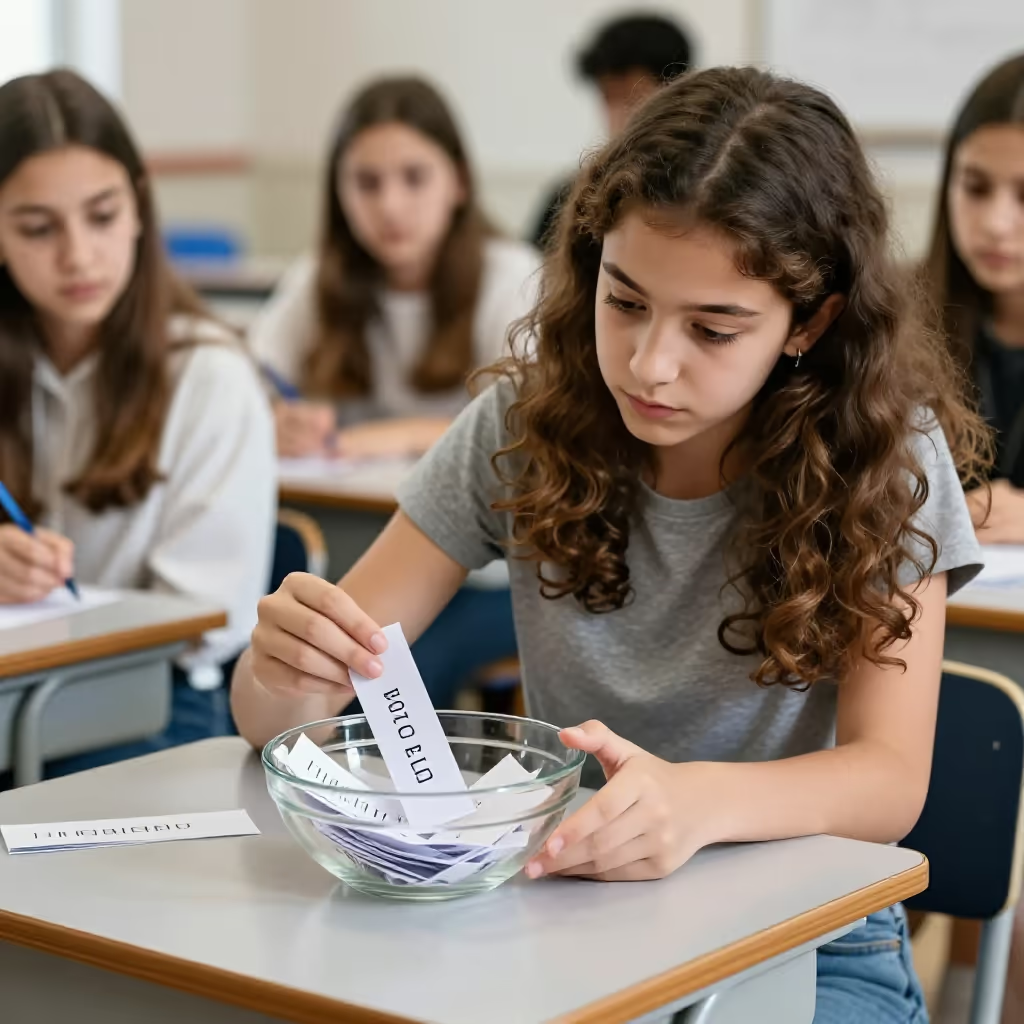
losen
to draw lots
To make a decision or distribute something through a random process, such as drawing lots.
EXAMPLE
Wir haben gelost, wer das letzte Stück Kuchen bekommt.
We drew lots to decide who gets the last piece of cake.
to draw lots
Loading your saved state.
to draw lots
To make a decision or distribute something through a random process, such as drawing lots.
Wir haben gelost, wer das letzte Stück Kuchen bekommt.
We drew lots to decide who gets the last piece of cake.
The verb 'losen' (to draw lots) comes directly from the noun 'das Los' (lot/ticket). A 'Los' is a slip of paper or another object that you draw in a lottery or for a random decision.
Wir hatten nur noch ein Ticket, also mussten wir losen.
We only had one ticket left, so we had to draw lots.
You can use 'losen' (to draw lots) to decide something (um + accusative) or to determine who should do something (subordinate clause with 'wer' (who)).
Die Kinder losten um den besten Platz.
The children drew lots for the best seat.
'Losen' is typically used in informal situations among friends, children, or groups to make a fair, random decision.
Da beide Teams gleich gut waren, wurde der Sieger durch Losen ermittelt.
Since both teams were equally good, the winner was determined by drawing lots.