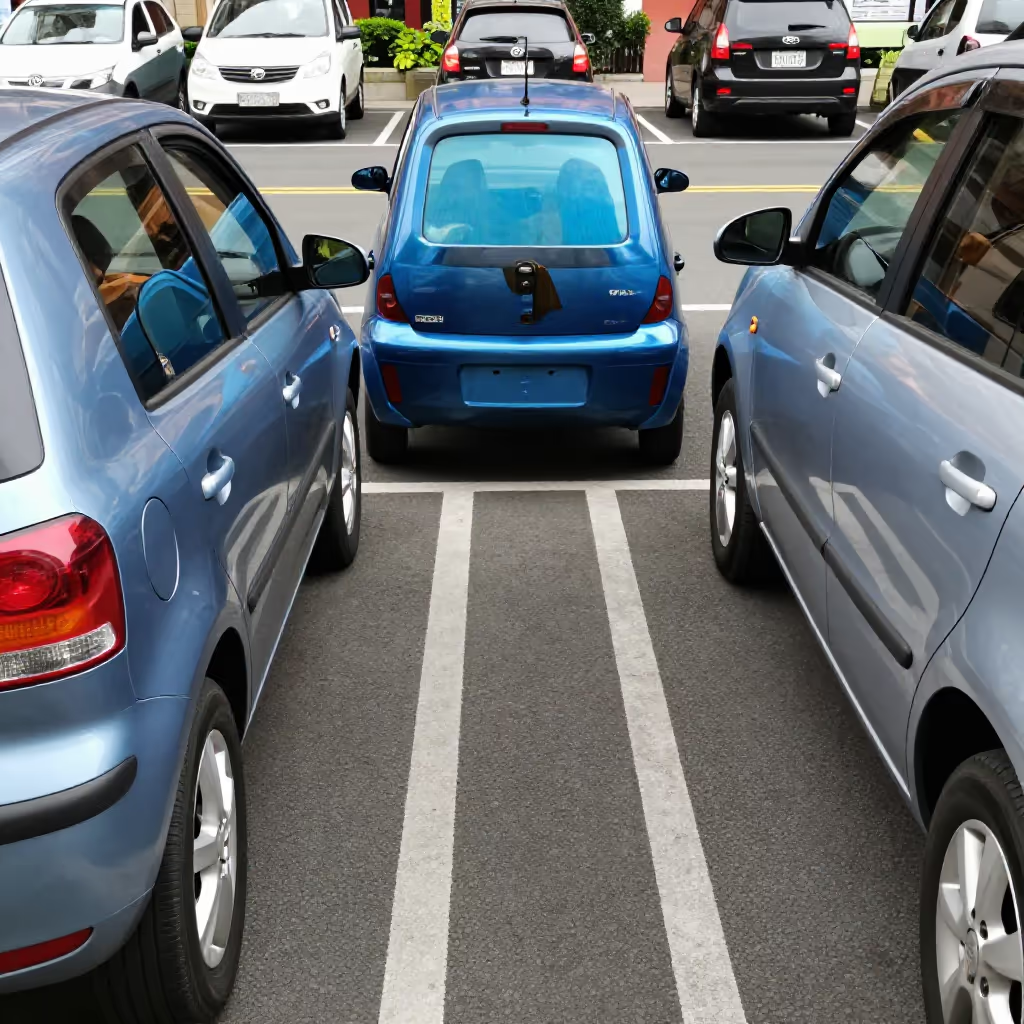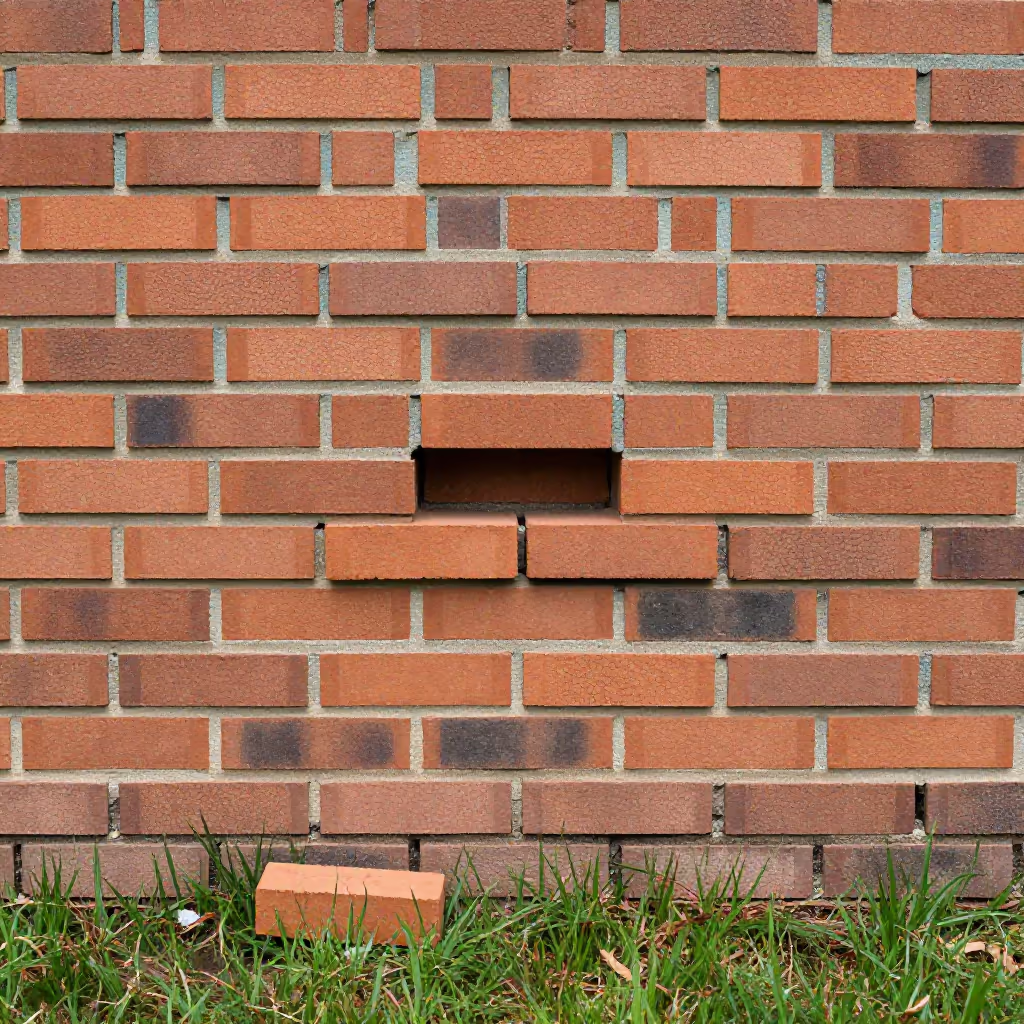
An empty space or open spot in something that should actually be closed or continuous, e.g. in a row, a text, or a wall.
example
Er hat eine Lücke in der Zahnreihe, seit ihm ein Zahn gezogen wurde.
He has a gap in his row of teeth since a tooth was pulled.

Usage tips
Typical verbs
Whether it is a physical or an abstract gap, the same verbs are often used. Typical combinations are 'eine Lücke füllen' (to fill a gap), 'eine Lücke schließen' (to close a gap), or 'eine Lücke finden' (to find a gap).
EXAMPLE
Mit diesem neuen Mitarbeiter wollen wir eine wichtige Lücke im Team schließen.
With this new employee, we want to close an important gap in the team.
Correct preposition
To say where a gap is located, the preposition 'in' with the dative is almost always used. For example: 'eine Lücke im Zaun' (a gap in the fence), 'eine Lücke im Lebenslauf' (a gap in one's résumé/CV), or 'eine Lücke im System' (a gap in the system).
EXAMPLE
Die Katze ist durch eine Lücke im Zaun geschlüpft.
The cat slipped through a gap in the fence.
Typical collocations
In the abstract meaning, 'Lücke' (gap/loophole) is often part of fixed terms. Common examples are 'Gesetzeslücke' (a case not regulated by the law; legal loophole), 'Sicherheitslücke' (a vulnerability in a system), or 'Marktlücke' (a gap in the market).
EXAMPLE
Das Software-Update schließt eine kritische Sicherheitslücke.
The software update closes a critical security vulnerability.
Context clue
The meaning 'parking space' is very specific. You recognize it from the context of driving. Typical words nearby are 'parken' (to park), 'einparken' (to park / to maneuver into a parking space), 'Auto' (car), or 'Parkplatz' (parking space/parking lot).
EXAMPLE
Ich habe eine enge Lücke gefunden und rückwärts eingeparkt.
I found a tight space and backed into it.
Compare with
near_synonym · confusable
Lücke vs Pause
break / pause
'die Pause' and 'die Lücke' can both refer to a free period of time. 'Pause' is a deliberate break: you stop an activity for a short time, often to rest or do something else. 'Lücke' is more like a free slot in an otherwise full schedule. This free time does not have to be for resting. The words can be confused when talking about time. If you actively stop working or studying, you say 'Pause'. If there is free time between two appointments, 'Lücke' fits better.
Lücke
Vor dem Termin hat Mehmet eine Lücke im Kalender gefunden.
Before the appointment, Mehmet found a gap in his calendar.
Pause
Nach der dritten Stunde braucht die Klasse eine Pause.