

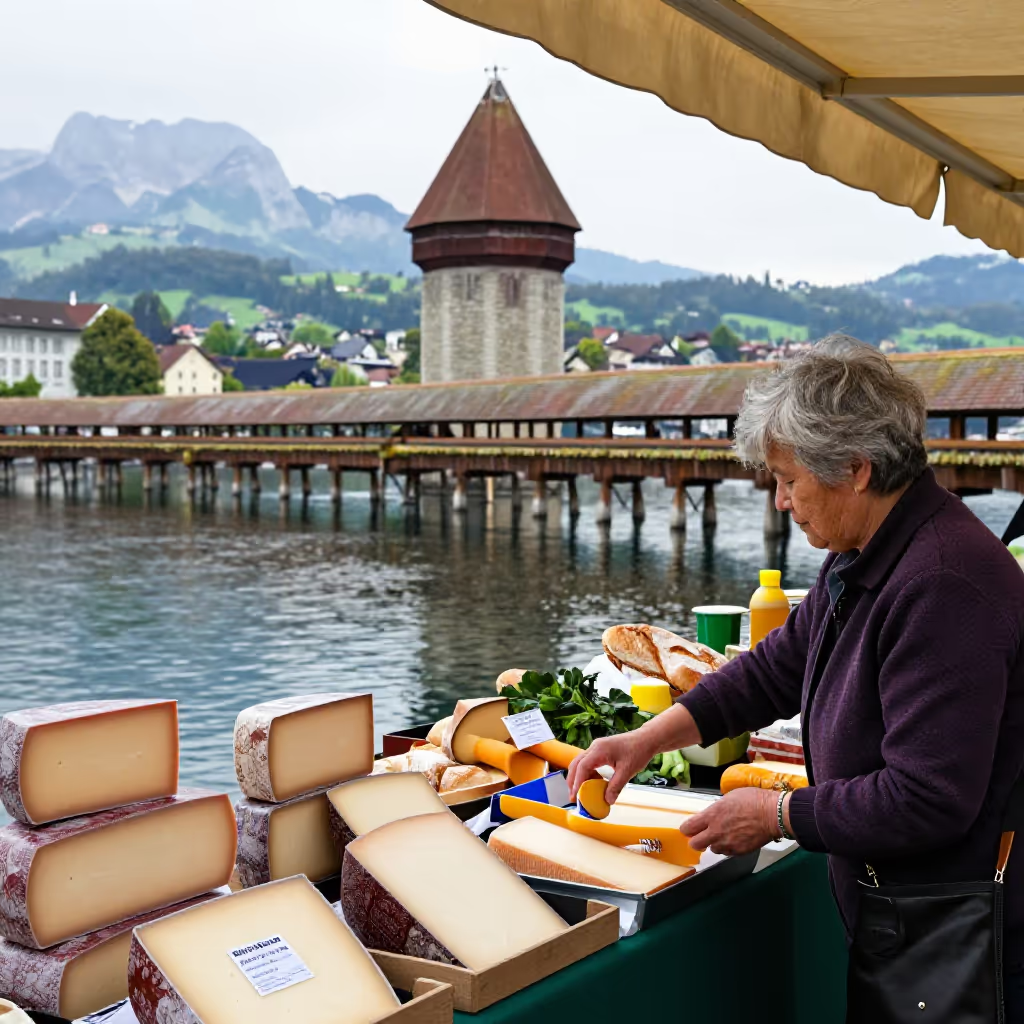
Refers to the city of Lucerne or the canton of Lucerne in Switzerland; originating from there or belonging to it. It is a non-declinable adjective.
example
Die Luzerner Fasnacht ist in der ganzen Schweiz bekannt.
The Lucerne Carnival is known throughout Switzerland.
Usage tips
No declension
Adjectives that are derived from a place name and end in '-er' are not declined. The form 'luzerner' (Lucerne) therefore always stays the same, regardless of the gender, case, or number of the noun.
EXAMPLE
Wir besuchten einen alten luzerner Freund.
We visited an old friend from Lucerne.
Word formation
This type of adjective is formed by adding the ending '-er' to the name of a place. This pattern is very productive in German, for example with 'Berliner' (Berlin), 'Hamburger' (Hamburg), or 'Wiener' (Vienna).
EXAMPLE
Das Wiener Schnitzel ist weltberühmt.
Wiener schnitzel is world-famous.
Capitalization
Since 'luzerner' (Lucerne) is derived from a proper noun (Luzern), it is usually capitalized, especially when it is part of a name.
EXAMPLE
Die Luzerner Zeitung berichtet täglich über regionale Ereignisse.
The Luzerner Zeitung reports daily on regional events.