

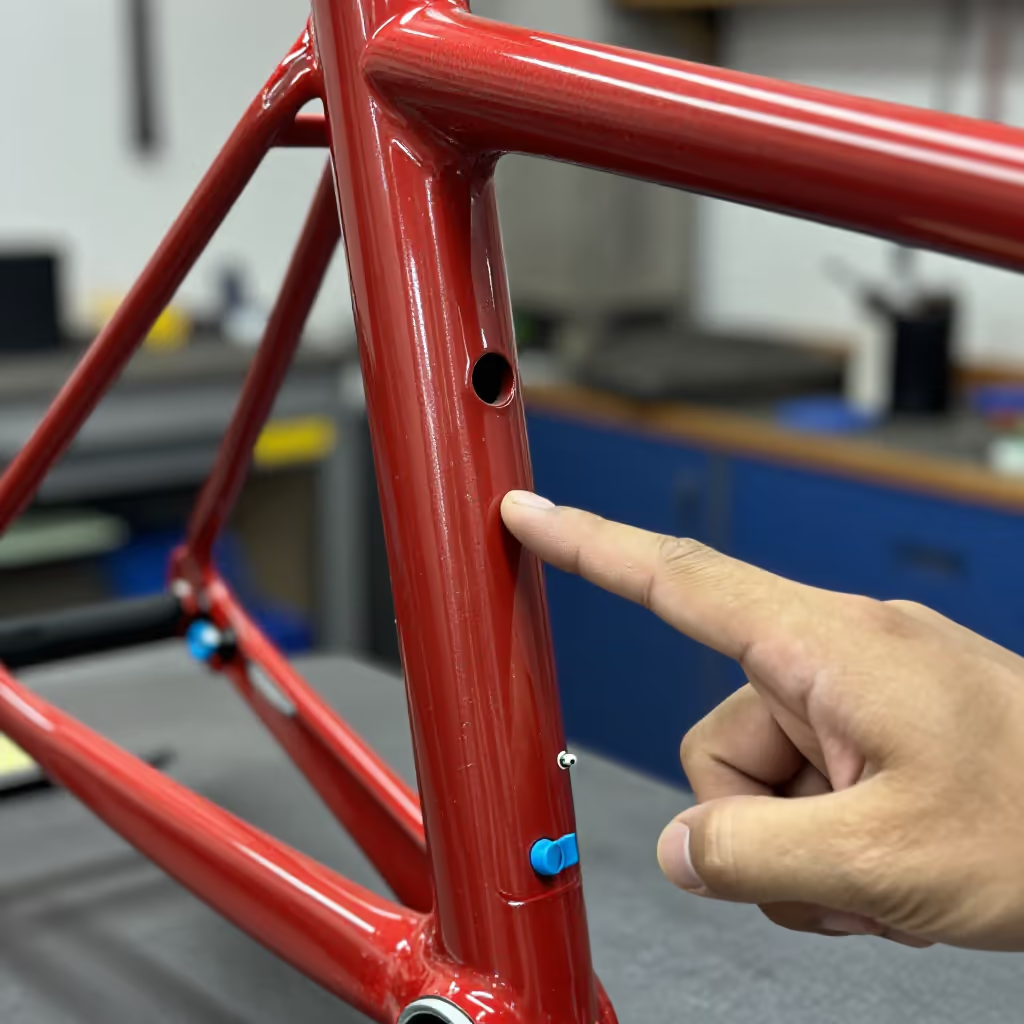
die Macke
flaw / dent
A small bit of damage, a scratch, or a dent on an object.
EXAMPLE
Das neue Fahrrad hat leider schon eine Macke im Lack.
Unfortunately, the new bicycle already has a flaw in the paint.
flaw / quirk
Loading your saved state.
flaw / dent
A small bit of damage, a scratch, or a dent on an object.
Das neue Fahrrad hat leider schon eine Macke im Lack.
Unfortunately, the new bicycle already has a flaw in the paint.
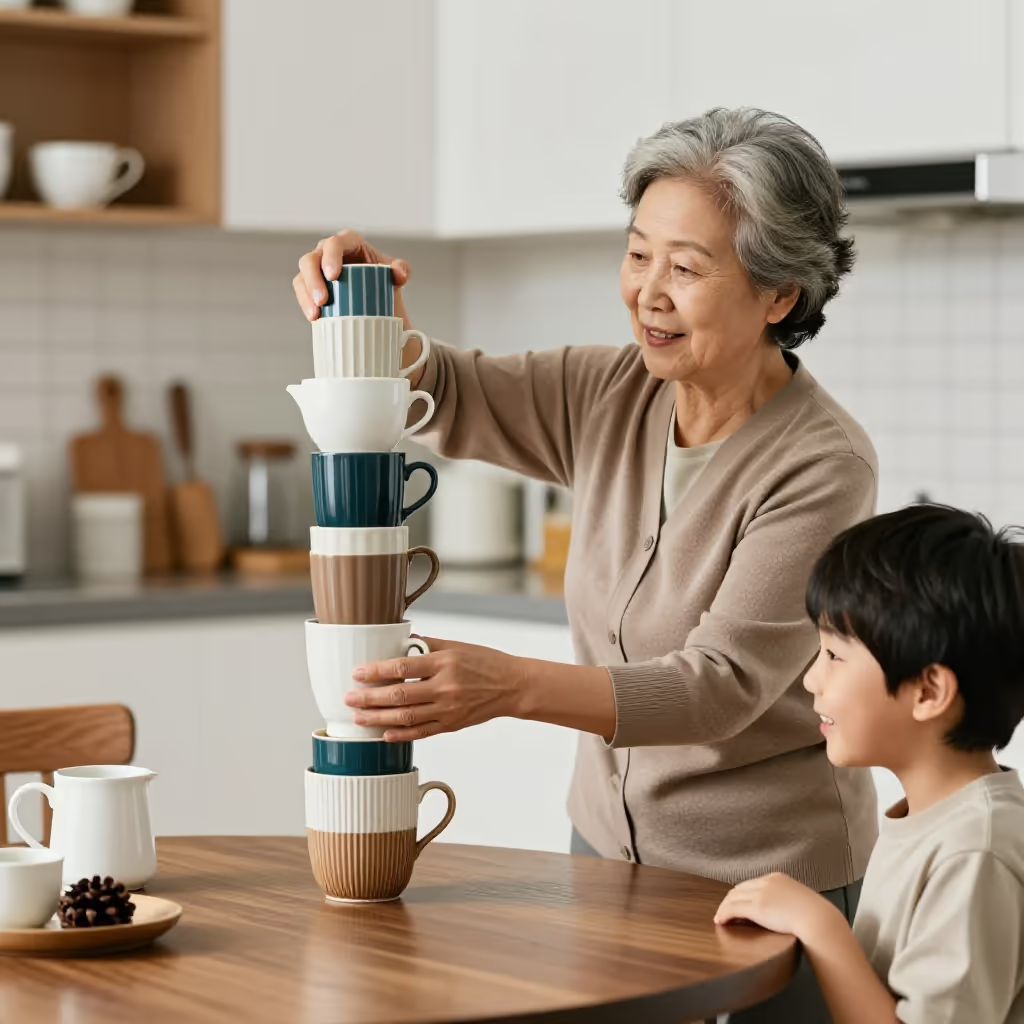
quirk
A strange habit or quirky characteristic of a person.
Er hat die Macke, seine Stifte immer nach Farben zu sortieren.
He has the quirk of always sorting his pens by color.

to be nuts
Colloquial for being crazy or not acting sensibly.
Du willst bei diesem Sturm nach draußen? Du hast wohl eine Macke!
You want to go outside in this storm? You must be nuts!
The word 'Macke' is used mainly in colloquial language in all its meanings. It sounds informal and is used more often in everyday speech than in formal texts.
Sei vorsichtig mit der Vase, sie hat schon eine kleine Macke.
Be careful with the vase; it already has a small flaw.
You can easily recognize the meaning of 'Macke' from the context. If the word refers to an object, it means damage. If people are talking about a person, it refers to a strange habit or to the idea that the person is crazy.
Mein Handy hat eine Macke im Display.
My phone has a flaw in the display.
When damage is meant, the position of the 'Macke' (flaw/dent) is often given with the preposition 'in' or 'an' plus dative. Typical phrases are 'eine Macke im Lack' (a flaw in the paint) or 'eine Macke am Tisch' (a dent/flaw on the table).
Der neue Schrank hat leider schon eine Macke an der Seite.
Unfortunately, the new cabinet already has a flaw on the side.
When talking about quirky characteristics, the plural 'Macken' (quirks) is often used. A very common expression is 'Jeder hat seine Macken' (Everyone has their quirks).
Er hat ein paar seltsame Macken, aber er ist ein guter Freund.
He has a few strange quirks, but he's a good friend.
The meaning 'to be crazy' is used almost exclusively in the fixed expression 'eine Macke haben' (to be nuts / to have a screw loose). It often appears in a rhetorical question.
Du willst bei dem Gewitter schwimmen gehen? Hast du eine Macke?
You want to go swimming in the thunderstorm? Are you nuts?
quirk / tic
Both words refer to an unusual personal habit or characteristic. A „Tick“ tends to emphasize a distinctive, often recurring pattern of behavior, while „Macke“ sounds more general and often more judgmental. When describing the specific ritual, „Tick“ is suitable; when judging the person more generally, „Macke“ is more appropriate.

Vor jeder Reise hat sie die Macke, ihren Koffer dreimal zu kontrollieren.
Before every trip, she has the quirk of checking her suitcase three times.
Vor jeder Reise hat sie den Tick, ihren Koffer dreimal zu kontrollieren.
Before every trip, she has the quirk of checking her suitcase three times.