

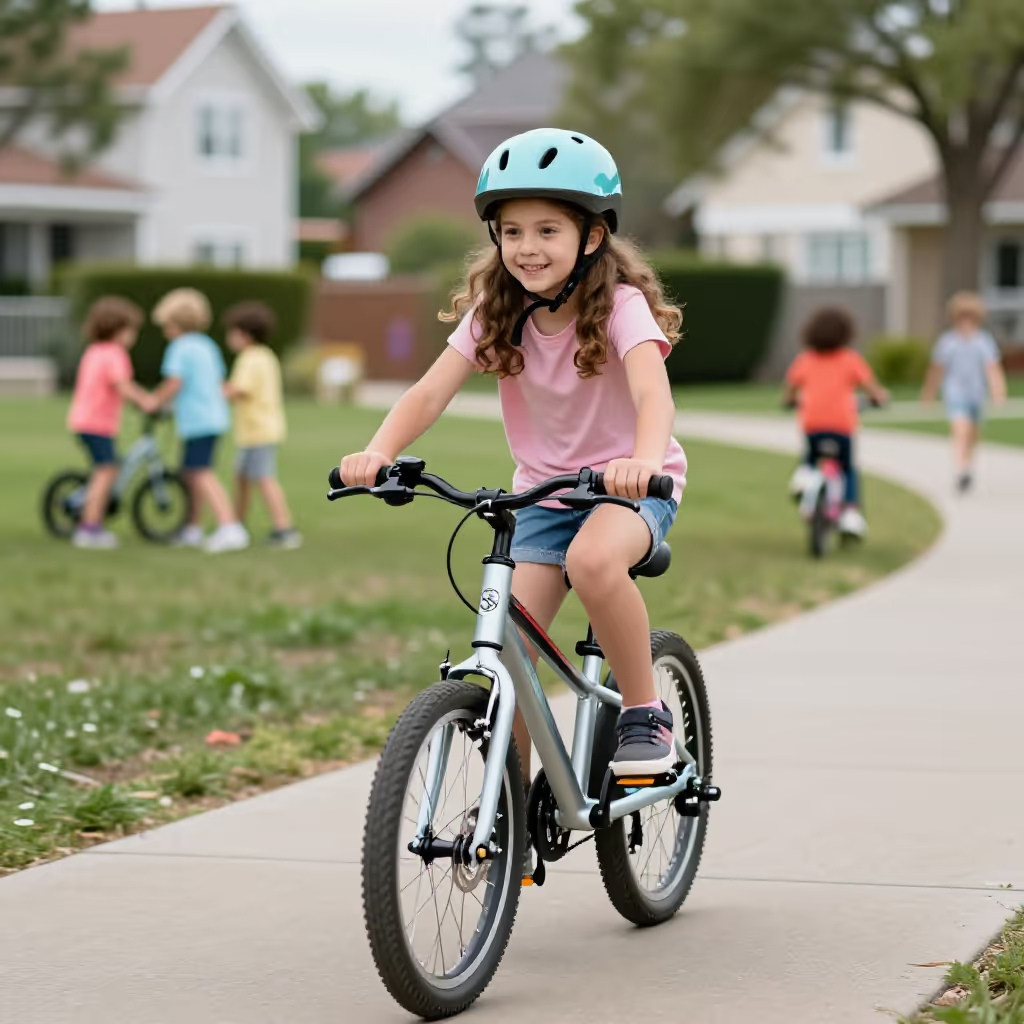
das Mädchen
girl
A female child or adolescent.
EXAMPLE
Die beiden Mädchen spielen zusammen im Sandkasten.
The two girls are playing together in the sandbox.
girl
Loading your saved state.
girl
A female child or adolescent.
Die beiden Mädchen spielen zusammen im Sandkasten.
The two girls are playing together in the sandbox.

girlfriend
A steady girlfriend or partner. This usage is rather rare or outdated today.
Er ging mit seinem Mädchen ins Kino.
He went to the movies with his girlfriend.
The word 'Mädchen' (girl) is a diminutive form. The ending '-chen' makes every noun neuter, regardless of the gender of the person or thing. That is why the article is 'das'.
Das kleine Mädchen wartet auf seine Mutter.
The little girl is waiting for her mother.
Although the noun is neuter ('das Mädchen' — the girl), the personal pronoun 'sie' (she), which matches the natural gender, is often used later in the sentence. Both are possible, but 'sie' is more common in spoken language.
Das Mädchen, das dort spielt, hat seine Jacke vergessen.
The girl who is playing over there has forgotten her jacket.
Using 'mein Mädchen' (my girl) for one's own steady girlfriend is very rare today and sounds outdated. It can also be perceived as condescending.
Er stellte sie stolz als „sein Mädchen“ vor, was alle etwas seltsam fanden.
He proudly introduced her as 'sein Mädchen' (his girl), which everyone found a bit strange.
woman / wife
Mädchen refers to a female child or adolescent, while Frau refers to an adult female person. Mädchen can be used for young adults, but it emphasizes their youth and can sound condescending. For an adult, Frau is therefore usually the more respectful choice.

Das siebzehnjährige Mädchen wurde von seinen Eltern für den Sprachkurs angemeldet.
The seventeen-year-old girl was registered for the language course by her parents.
Die erwachsene Frau meldete sich selbst für den Sprachkurs an.
The adult woman registered herself for the language course.