

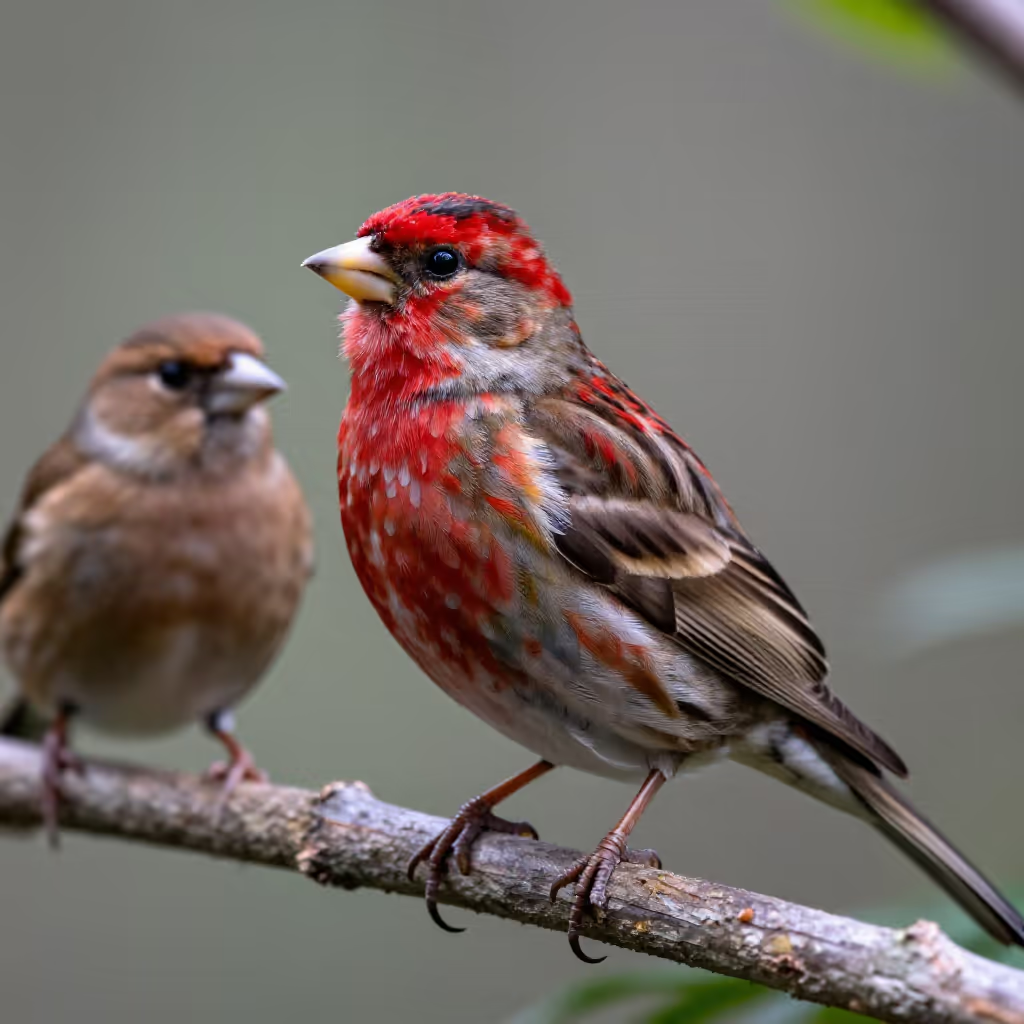
das Männchen
male
A male animal, especially when it is small or considered in contrast to a female.
EXAMPLE
Das Männchen des Guppys ist viel farbenprächtiger als das Weibchen.
The male guppy is much more colorful than the female.
male / little man
Loading your saved state.
male
A male animal, especially when it is small or considered in contrast to a female.
Das Männchen des Guppys ist viel farbenprächtiger als das Weibchen.
The male guppy is much more colorful than the female.

to sit up
The action of an animal, often a dog or rodent, sitting on its hind legs and raising its upper body.
Unser Zwergkaninchen macht Männchen, wenn es Futter riecht.
Our dwarf rabbit sits up when it smells food.
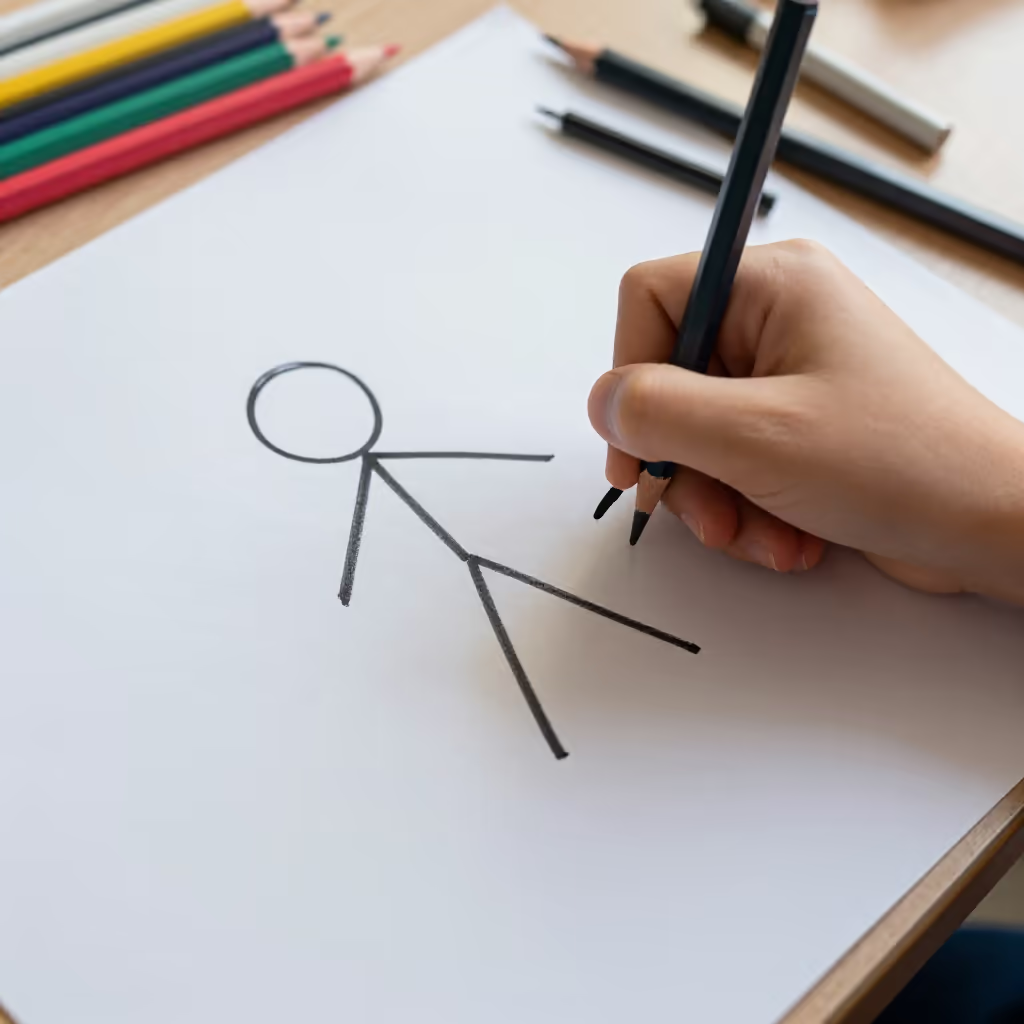
little figure
A simple, schematic drawing of a human figure, often as a stick figure.
An den Rand seines Notizblocks hatte er lauter kleine Männchen gekritzelt.
He had scribbled lots of little figures in the margin of his notepad.

little man
A small man. This term can sound neutral as a diminutive or slightly condescending.
Ein seltsames Männchen mit einem viel zu großen Hut fragte nach dem Weg.
A strange little man with a hat that was much too large asked for directions.
'Männchen' (little man/male) is the diminutive form of 'der Mann' (the man). The ending '-chen' makes the word neuter, so the article is 'das'.
Alle Nomen mit der Endung -chen sind sächlich, so auch „das Männchen“.
All nouns with the ending -chen are neuter, including 'das Männchen' (the little man/the male).
This meaning is almost always used in a biological context for animals, often in direct contrast to 'das Weibchen' (the female animal).
Bei vielen Vogelarten ist das Männchen bunter als das Weibchen.
In many bird species, the male is more colorful than the female.
The action in which an animal sits on its hind legs is expressed with the fixed phrase 'Männchen machen' (to sit up). The verb in this construction is always 'machen' (to make/do).
Unser Hund kann auf Kommando Männchen machen.
Our dog can sit up on command.
In this meaning, 'Männchen' (little figure) is often combined with verbs such as 'zeichnen' (to draw), 'malen' (to paint/draw), or 'kritzeln' (to scribble). A very common form is 'das Strichmännchen' (the stick figure).
Das Kind malte ein Strichmännchen mit einem lachenden Gesicht.
The child drew a stick figure with a smiling face.
When 'Männchen' (little man) is used for a man, it can sound condescending or derogatory. It often describes a person whom one does not take seriously or finds strange.
Da stand so ein komisches Männchen vor der Tür und wollte Geld.
There was some weird little man standing in front of the door asking for money.
man
Mann refers to an adult male person without indicating anything about his size. Männchen can refer to a small man and may sound diminutive or slightly condescending. Mann is suitable as a normal, neutral term for a person; Männchen may be appropriate when the person’s small size or the speaker’s evaluative attitude is relevant.

Vor dem hohen Tor steht ein winziges Männchen und wartet.
A tiny little man is standing in front of the tall gate and waiting.
Vor dem hohen Tor steht ein Mann und wartet.
A man is standing in front of the tall gate and waiting.