

nacheinander
one after another
Describes an order in which one action or event follows another; one after the other.
EXAMPLE
Die Redner traten nacheinander ans Pult.
The speakers stepped up to the podium one after another.
one after another
Loading your saved state.
one after another
Describes an order in which one action or event follows another; one after the other.
Die Redner traten nacheinander ans Pult.
The speakers stepped up to the podium one after another.
The word is made up of 'nach' (after) and 'einander' (one another). So it literally means that something happens 'one after the other.'
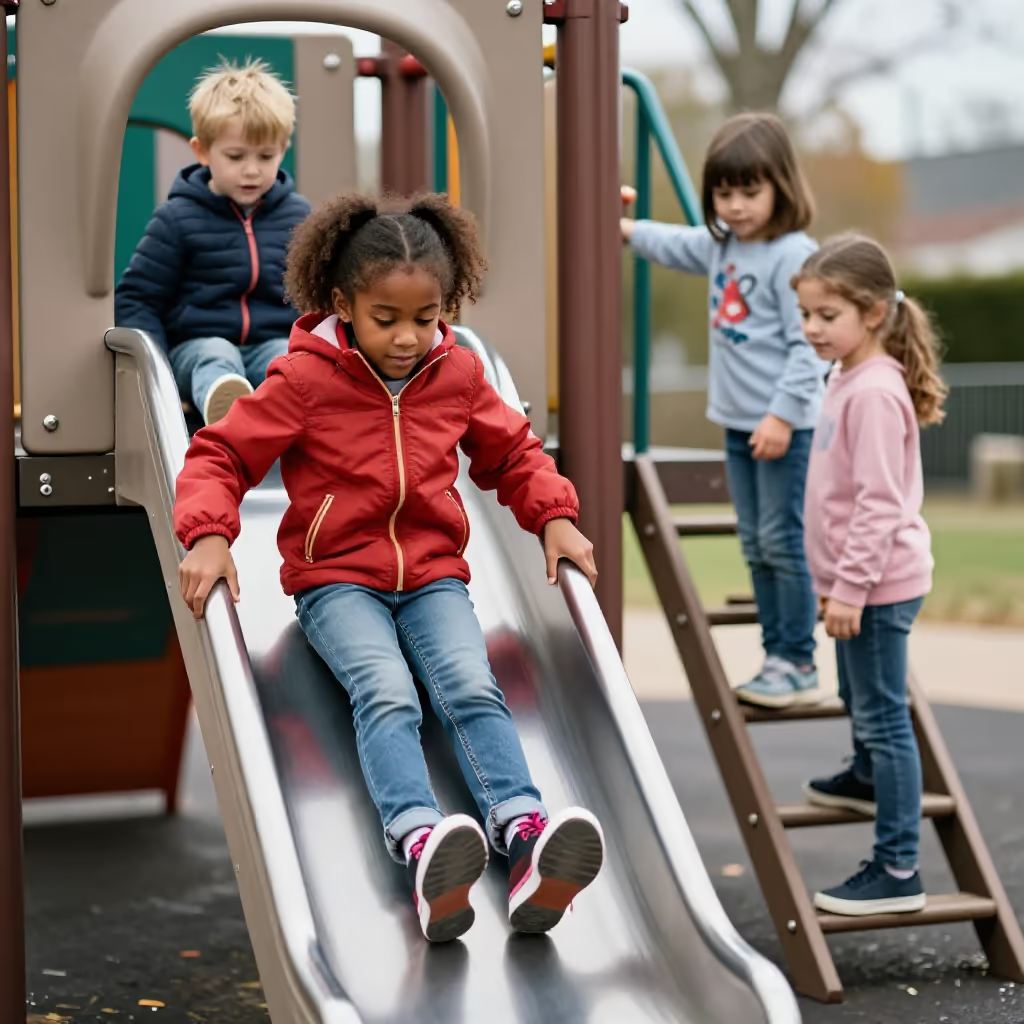
Die Kinder gingen nacheinander auf die Rutsche.
The children went down the slide one after another.
As an adverb, 'nacheinander' (one after another) usually comes after the conjugated verb. When it stands at the beginning of the sentence, the verb follows directly after it in position 2.
Wir haben die Aufgaben nacheinander bearbeitet.
We worked through the tasks one after another.
'Nacheinander' (one after another) is often used with verbs that describe a sequence of actions, such as 'eintreten' (to enter), 'sprechen' (to speak), 'bearbeiten' (to work through/process), or 'ankommen' (to arrive).
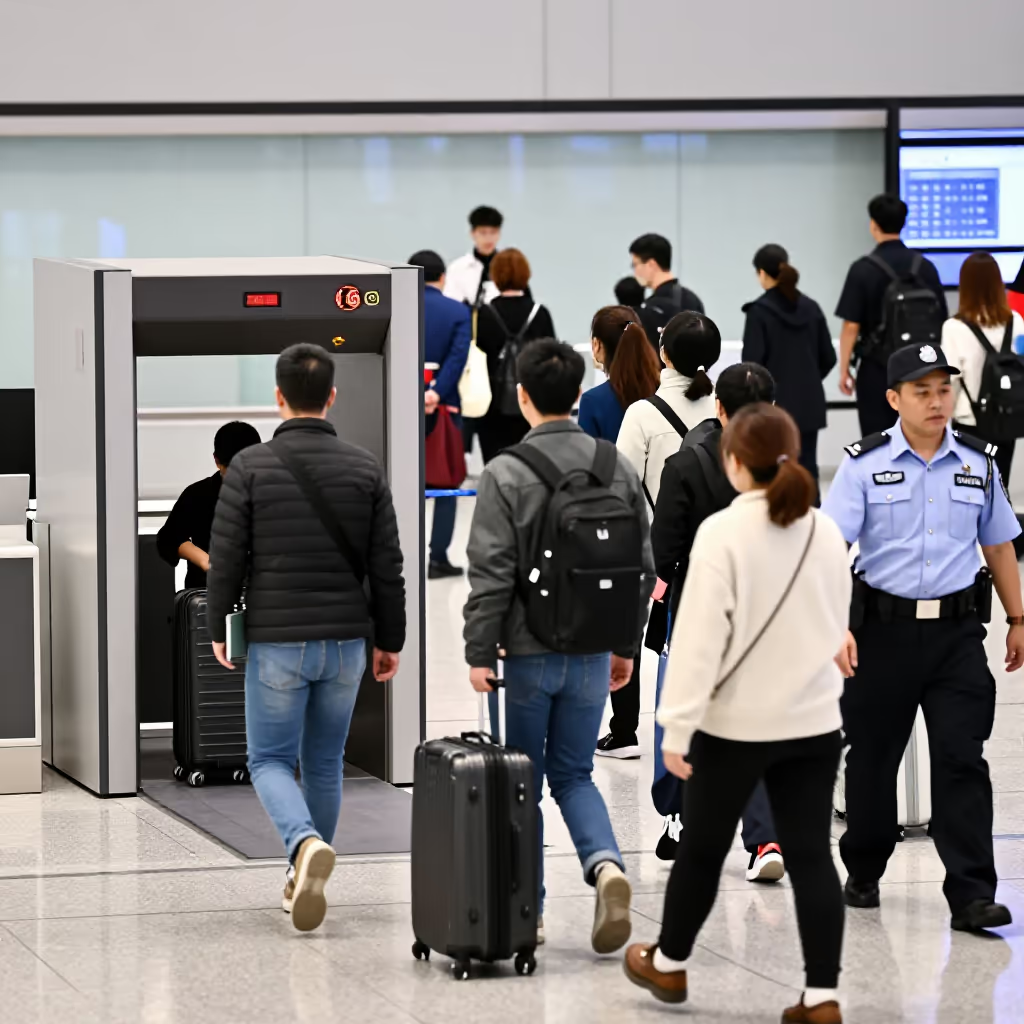
Die Bewerber wurden nacheinander zum Gespräch gebeten.
The applicants were invited to the interview one after another.
on each other / one after another
Aufeinander emphasizes in the case of events that one follows directly after the other. Nacheinander describes their temporal order more generally, often in the sense of one after another. For a sequence without a pause, aufeinander is especially appropriate; for an ordered succession, nacheinander is the better choice.
Die drei Redner hielten nacheinander ihre kurzen Vorträge.
The three speakers gave their short talks one after another.
Die drei kurzen Vorträge folgten ohne Pause aufeinander.
The three short talks followed one another without a break.