

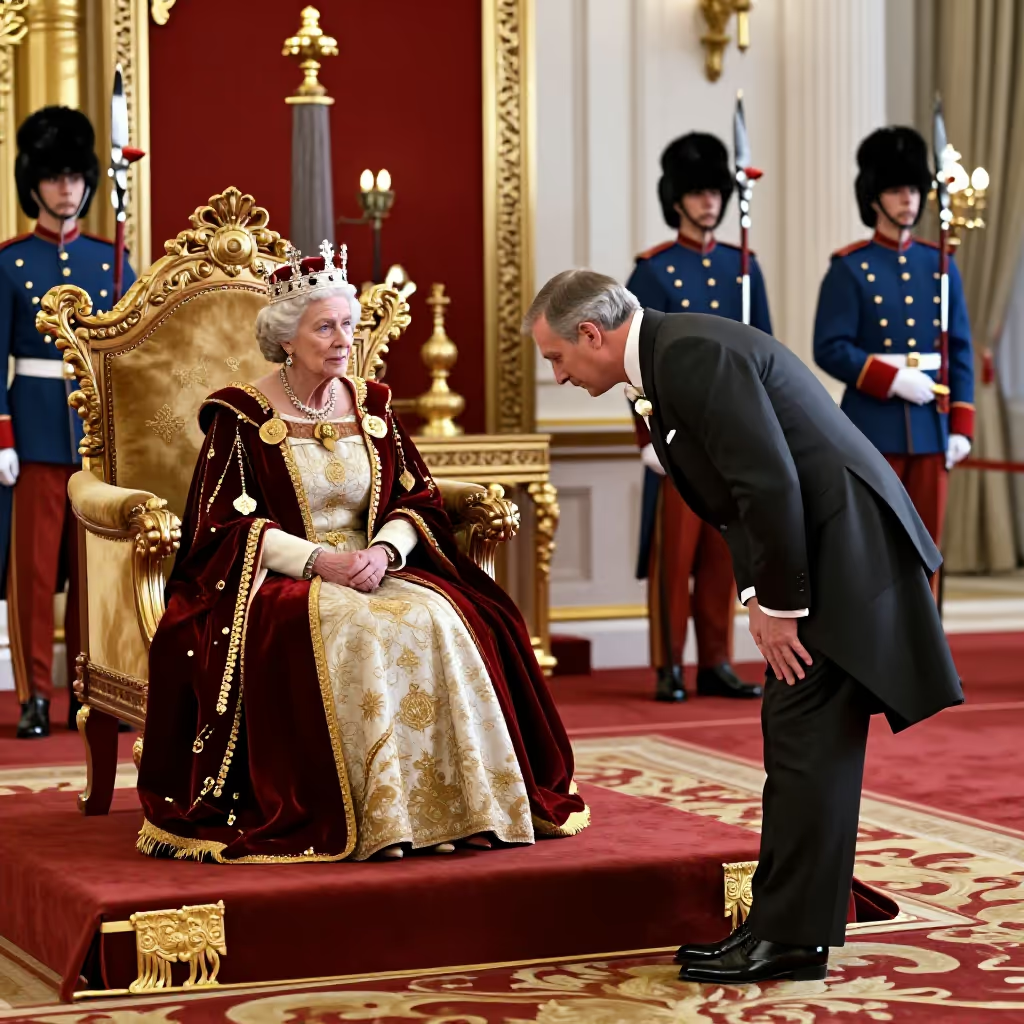
die Majestät
Majesty
A formal form of address or title for a monarch, such as a king or queen.
EXAMPLE
Ihre Majestät, die Königin, wird die Zeremonie eröffnen.
Her Majesty, the Queen, will open the ceremony.
majesty
Loading your saved state.
Majesty
A formal form of address or title for a monarch, such as a king or queen.
Ihre Majestät, die Königin, wird die Zeremonie eröffnen.
Her Majesty, the Queen, will open the ceremony.

majesty
The quality of being very sublime, dignified, and impressive.
Die Wanderer waren von der stillen Majestät der Berge tief beeindruckt.
The hikers were deeply impressed by the quiet majesty of the mountains.
Although 'Majestät' (Majesty/majesty) can also refer to a male monarch, the word is always grammatically feminine. So you say 'Seine Majestät, der König' (His Majesty, the King), but the article remains 'die Majestät' (the Majesty/majesty).
Die Majestät des Königs ist unbestritten.
The majesty of the king is undisputed.
When 'Majestät' (Majesty/majesty) is used with 'Ihre' (Her/Your) or 'Seine' (His), it usually refers to a monarch. If the word instead appears with a genitive such as 'der Berge' (of the mountains), it describes an impressive, sublime aura.
Ihre Majestät, die Königin, winkte der Menge zu.
Her Majesty, the Queen, waved to the crowd.
As a form of address for a monarch, 'Majestät' (Majesty) is used with a possessive pronoun: 'Ihre Majestät' (Her Majesty) for a queen and 'Seine Majestät' (His Majesty) for a king.
Seine Majestät der König wünscht nicht gestört zu werden.
His Majesty the King does not wish to be disturbed.
In the figurative meaning, 'Majestät' (majesty) is often used to describe the impressive effect of large, unmoving things. Typical phrases are 'die Majestät der Berge' (the majesty of the mountains), 'die Majestät der Natur' (the majesty of nature), or 'die Majestät eines alten Bauwerks' (the majesty of an old structure).
Die stille Majestät des Waldes beruhigte ihn.
The quiet majesty of the forest calmed him.
sovereignty / highness
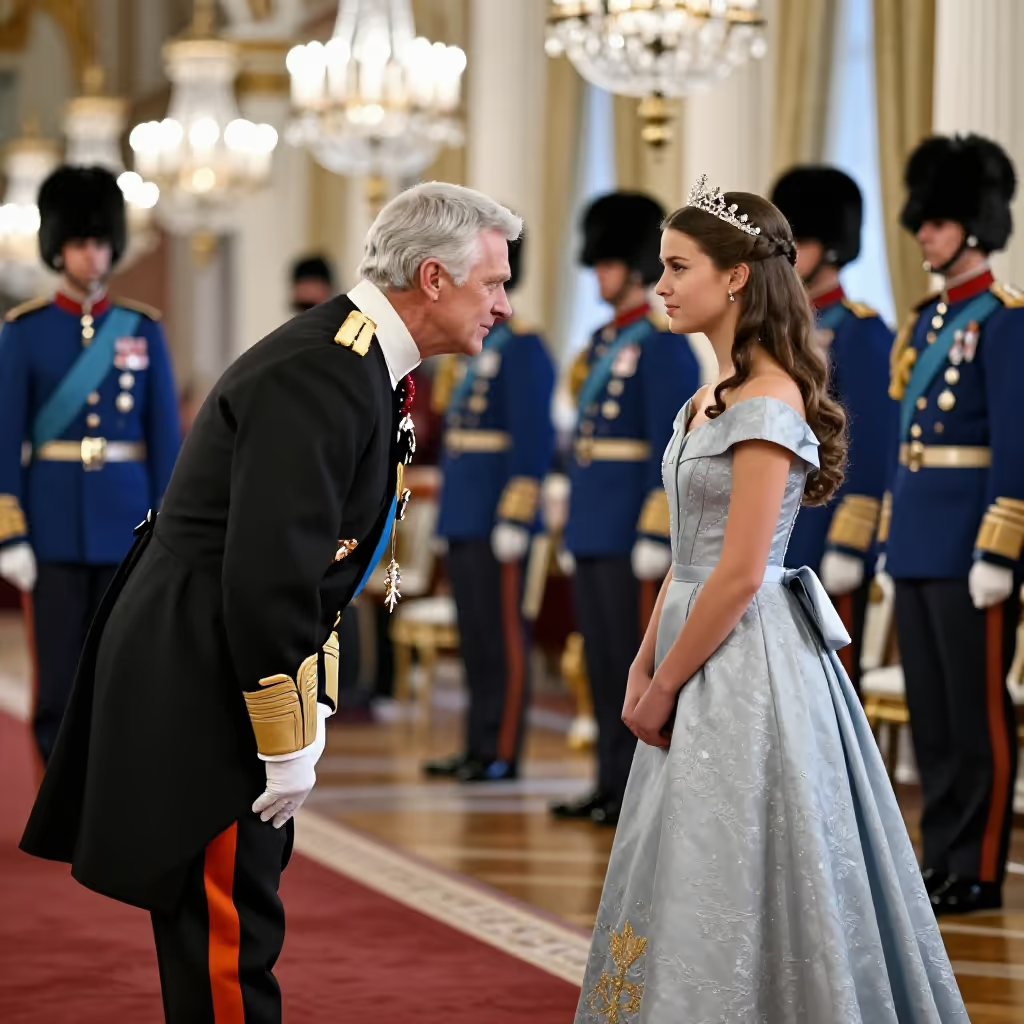
Majestät and Hoheit are formal forms of address, but they apply to different ranks. Majestät is used for a monarch such as a king or queen, while Hoheit is used for high-ranking members of the nobility such as princes or princesses. The appropriate form of address therefore depends on the person's position.
Der Minister begrüßte die Königin mit den Worten: „Eure Majestät.“
The minister greeted the queen with the words, “Your Majesty.”
Der Minister begrüßte die Prinzessin mit den Worten: „Eure Hoheit.“
The minister greeted the princess with the words, “Your Highness.”