


die Mama
mom
An affectionate and familiar term for one's own mother. Used mainly by children or within the family.
EXAMPLE
Mama, kannst du mir eine Geschichte vorlesen?
Mom, can you read me a story?
mom
Loading your saved state.
mom
An affectionate and familiar term for one's own mother. Used mainly by children or within the family.
Mama, kannst du mir eine Geschichte vorlesen?
Mom, can you read me a story?
The word 'Mama' (mom) is formed by doubling the simple syllable 'ma'. This type of word formation is typical of early language development in children and is found in many languages around the world.
Das erste Wort des Babys war „Mama“.
The baby's first word was 'Mama' (mom).
'Mama' (mom) is used both as a direct form of address when speaking to one's mother and as a term when speaking about her.
Mama, kommst du bitte?
Mom, are you coming, please?
Although 'Mama' (mom) is typical for children, many adults also continue to use the word when speaking to their mother or talking about her in an informal context. It expresses a close and affectionate relationship.
Selbst als Erwachsene ruft sie ihre Mutter noch „Mama“.
Even as an adult, she still calls her mother 'Mama' (mom).
mother / nut
Both words refer to one’s own mother. “Die Mutter” is neutral and also fits situations outside the family or factual conversations, while “die Mama” conveys affectionate family closeness and is used mainly within the family. Choose the word according to the desired family register.
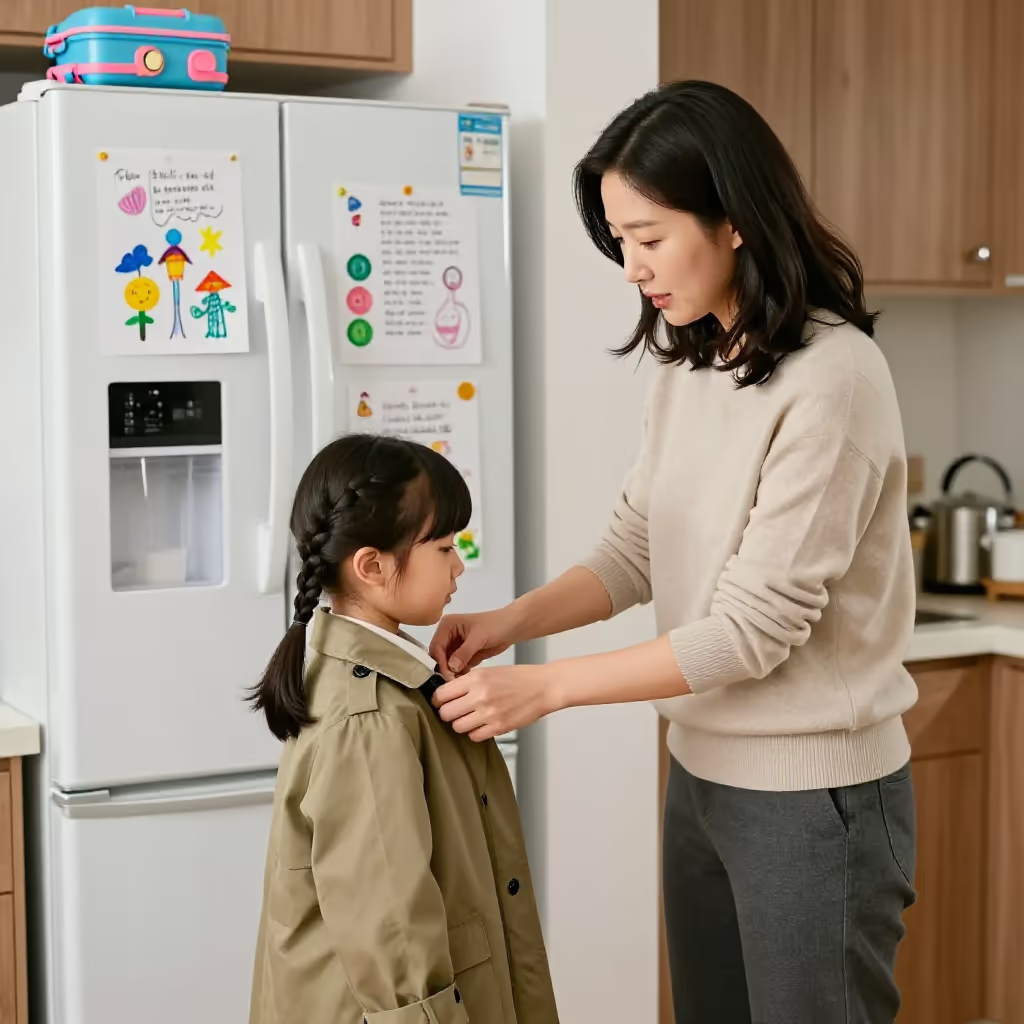
Zu Hause sagte Anna, dass ihre Mama sie später abholt.
At home, Anna said that her mom would pick her up later.
Im Gespräch mit der Lehrerin sagte Anna, dass ihre Mutter sie später abholt.
In conversation with the teacher, Anna said that her mother would pick her up later.