

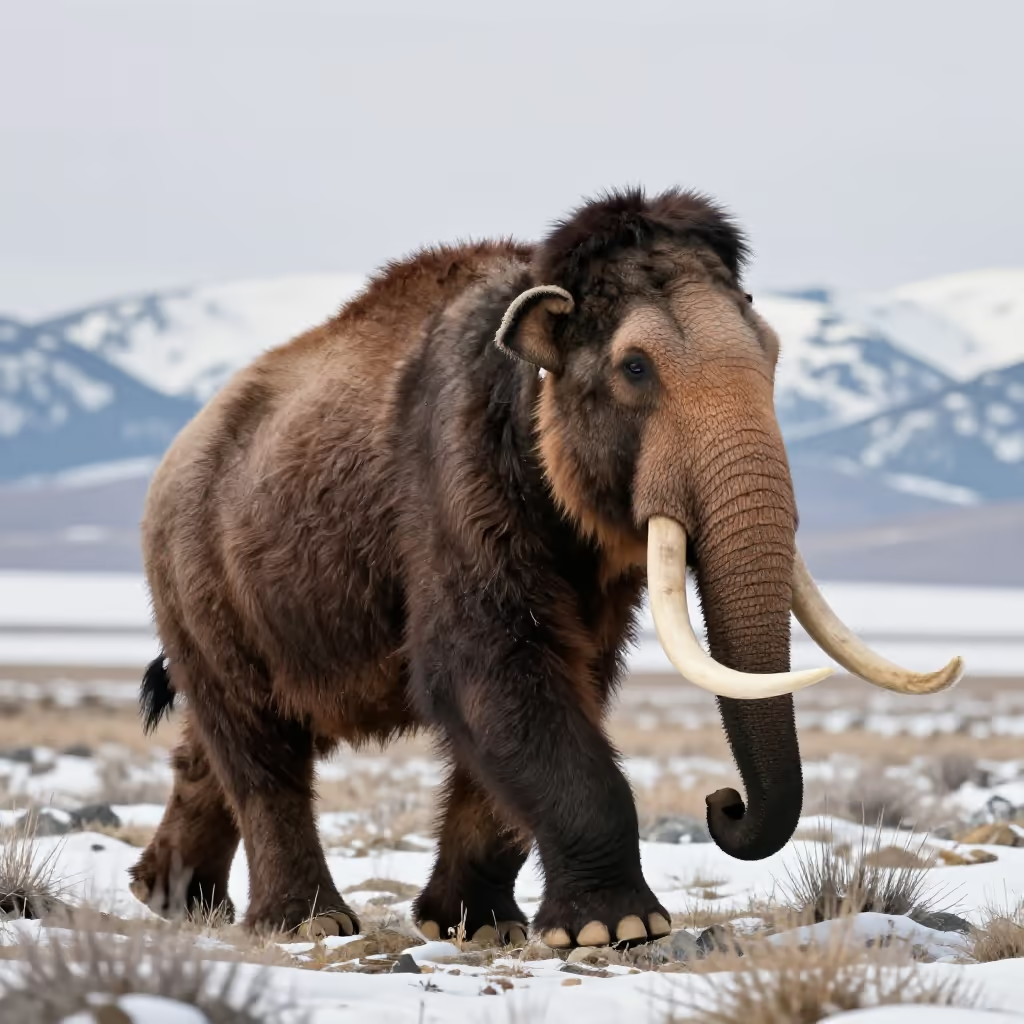
A large, elephant-like mammal with long, shaggy fur and large tusks that lived during the Ice Age and is now extinct.
example
Im Naturkundemuseum ist das vollständig erhaltene Skelett eines Mammuts ausgestellt.
The fully preserved skeleton of a mammoth is on display in the natural history museum.
Usage tips
Productive word element
The word element 'Mammut-' is very often used as a prefix to express that something is huge, enormous, or extremely demanding. It can be placed before many nouns.
EXAMPLE
Der Bau des neuen Flughafens war ein echtes Mammutprojekt.
The construction of the new airport was a real mammoth project.
Typical collocations
When referring to the animal, 'Mammut' (mammoth) is often used in connection with words like 'ausgestorben' (extinct), 'Eiszeit' (Ice Age), 'Skelett' (skeleton), or 'Stoßzahn' (tusk).
EXAMPLE
Forscher haben in Sibirien einen gut erhaltenen Mammut-Stoßzahn gefunden.
Researchers have found a well-preserved mammoth tusk in Siberia.
Register
The use of 'Mammut-' as a prefix for 'huge' is very common in everyday language and the media. It is a vivid way to emphasize the enormous size or scope of something.
EXAMPLE
Nach der Wahl kommt auf die neue Regierung eine Mammutsitzung zu.
After the election, the new government is facing a mammoth session.
Compare with
near_synonym · confusable
Mammut vs Elefant
elephant
'der Elefant' and 'das Mammut' both refer to very large animals with trunks and tusks. The important difference is time: elephants live today in Africa and Asia. Mammoths lived during the Ice Age and are extinct. Learners may confuse the words because mammoths look similar to elephants. If you are talking about an animal alive today in a zoo or in nature, you say 'Elefant'. If you are talking about an extinct animal from the Ice Age, you say 'Mammut'.
Mammut
Im Museum sahen die Kinder das Skelett eines Mammuts aus der Eiszeit.
At the museum, the children saw the skeleton of a mammoth from the Ice Age.
Elefant
Im Zoo fütterte die Pflegerin den Elefanten mit Äpfeln.