

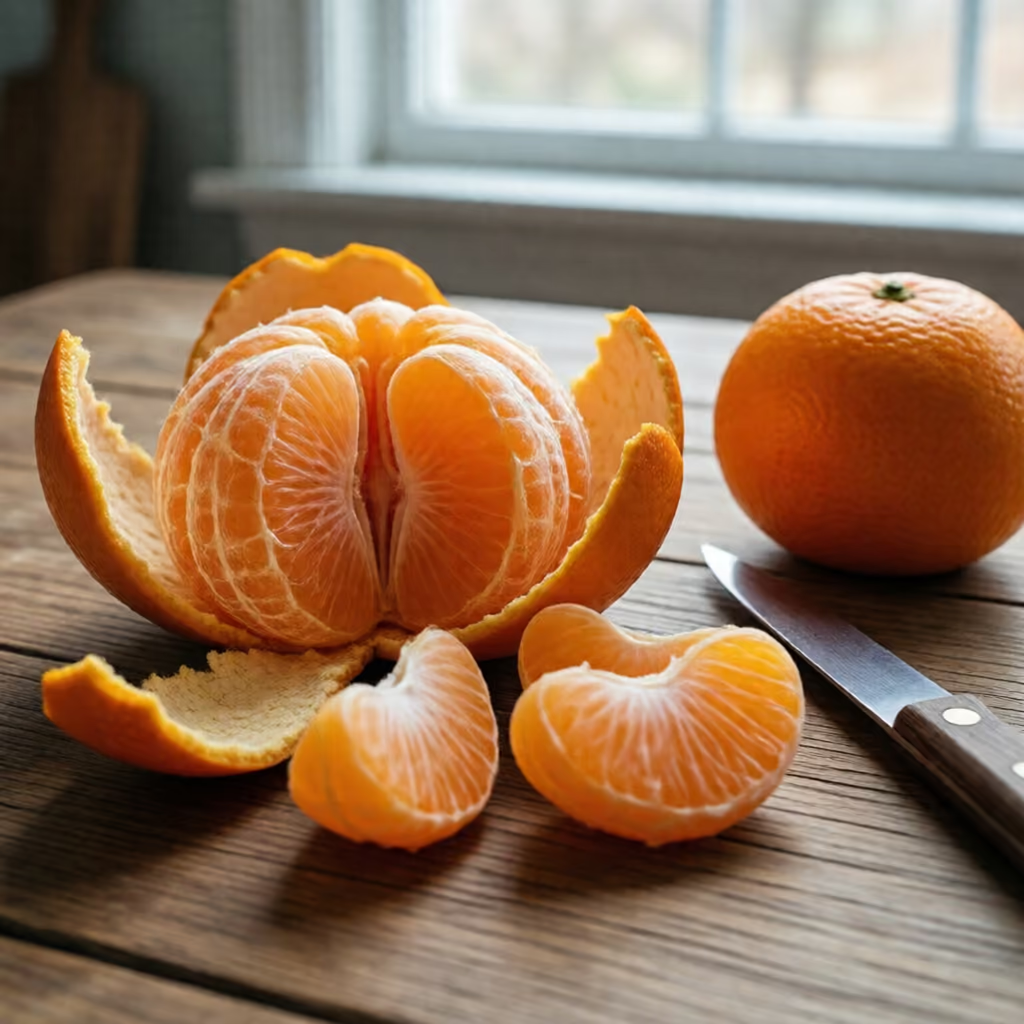
die Mandarine
mandarin
A small, usually orange-colored citrus fruit with an easily removed peel and sweet to tart flesh.
EXAMPLE
In der Winterzeit esse ich jeden Morgen eine Mandarine.
In winter, I eat a mandarin every morning.
mandarin
die Mandarine, die Mandarinen
Loading your saved state.
mandarin
A small, usually orange-colored citrus fruit with an easily removed peel and sweet to tart flesh.
In der Winterzeit esse ich jeden Morgen eine Mandarine.
In winter, I eat a mandarin every morning.
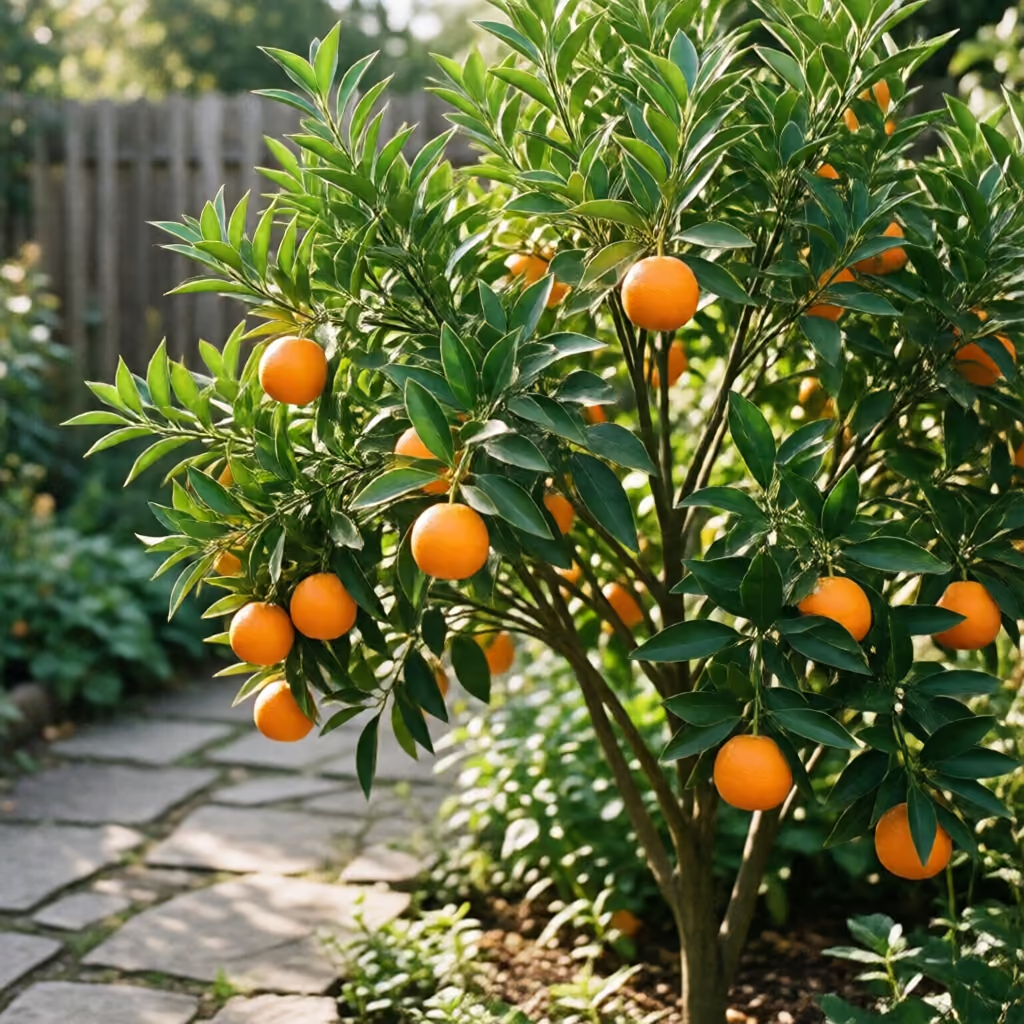
mandarin tree
The tree or shrub on which mandarins grow.
Im Garten meiner Großeltern steht eine Mandarine mit vielen reifen Früchten.
There is a mandarin tree with many ripe fruits in my grandparents’ garden.
| gender | feminine die |
|---|---|
| plural | die Mandarinen |
| genitive | der Mandarine |
| singular | plural | |
|---|---|---|
| nominative | die Mandarine | die Mandarinen |
| accusative | die Mandarine | die Mandarinen |
| dative | der Mandarine | den Mandarinen |
| genitive | der Mandarine | der Mandarinen |
The article changes with the case; it is shown in colour.
You can often tell whether “die Mandarine” (the mandarin) refers to the fruit or the plant from the verbs and location phrases: When eating or peeling it, the fruit is meant; with words like “wachsen” (to grow), “blühen” (to bloom), or “im Garten” (in the garden), it refers to the plant.
Vor dem Frühstück schält er eine Mandarine.
Before breakfast, he peels a mandarin.
Die Mandarine im Garten trägt dieses Jahr besonders viele Früchte.
The mandarin tree in the garden is bearing especially many fruits this year.
The fruit is often used with verbs such as “schälen” (to peel), “essen” (to eat), and “kaufen” (to buy). The expressions “eine süße Mandarine” (a sweet mandarin) and “die Schale einer Mandarine” (the peel of a mandarin) are also very common.
Das Kind schält vorsichtig eine Mandarine.
The child carefully peels a mandarin.
Auf dem Markt habe ich süße Mandarinen gekauft.
I bought sweet mandarins at the market.
When referring to the plant, “die Mandarine” (the mandarin tree) is often used with verbs such as “wachsen” (to grow), “blühen” (to bloom), and “Früchte tragen” (to bear fruit). Location phrases such as “im Garten” (in the garden) or “im Topf” (in a pot) often indicate that the plant is meant.
Die Mandarine wächst im Wintergarten besonders gut.
The mandarin tree grows especially well in the conservatory.
Unsere Mandarine trägt nach einigen Jahren zum ersten Mal Früchte.
After several years, our mandarin tree is bearing fruit for the first time.