

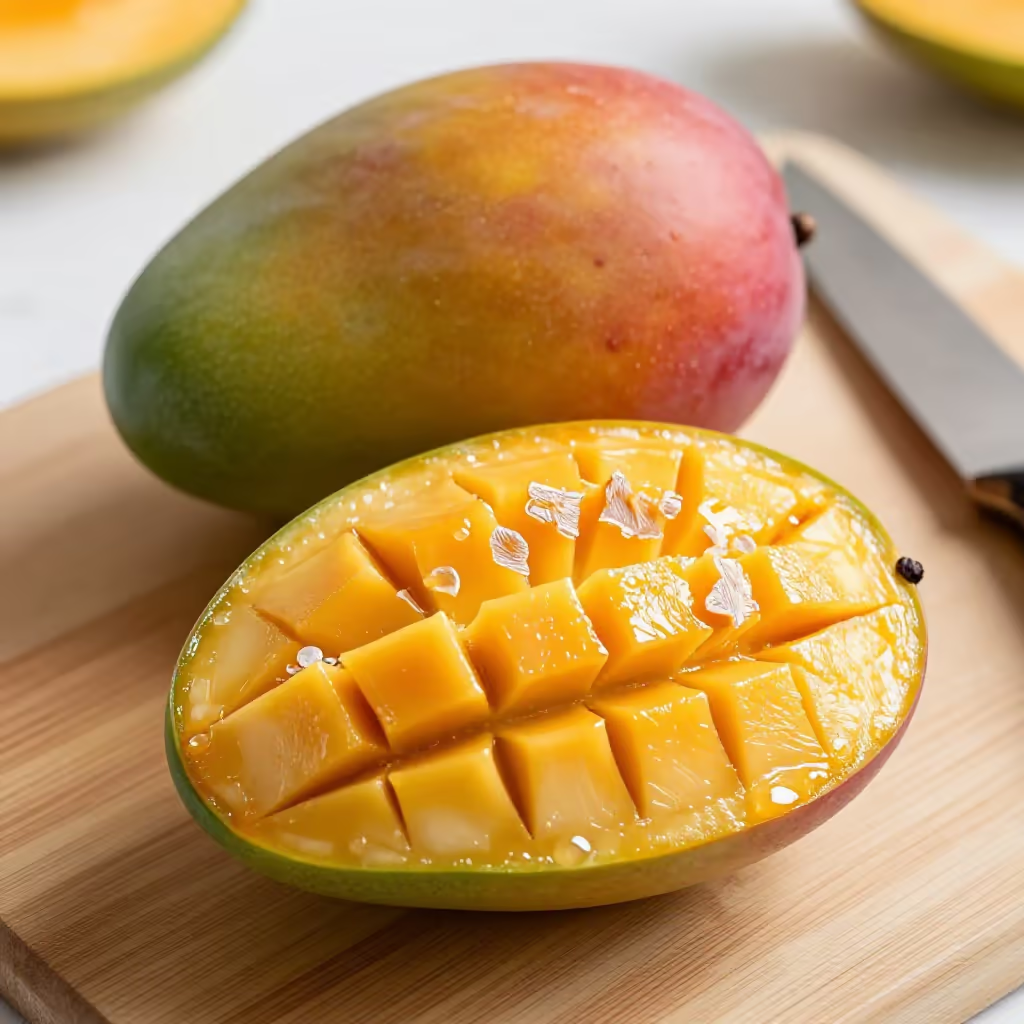
A large, oval, sweet tropical fruit with a large pit and usually yellow-red skin. Its flesh is juicy and orange-colored.
example
Für den Obstsalat schneide ich eine reife Mango in kleine Würfel.
For the fruit salad, I cut a ripe mango into small cubes.
Usage tips
Typical adjectives
A 'Mango' (mango) is often described with adjectives relating to its taste and condition. The most important ones are 'reif' (ripe), 'saftig' (juicy), and 'süß' (sweet).
EXAMPLE
Für einen guten Smoothie brauchst du eine sehr reife und saftige Mango.
For a good smoothie, you need a very ripe and juicy mango.
Describing preparation
Typical verbs that describe preparing a mango are 'schälen' (to peel), 'entkernen' (to remove the pit), and 'in Stücke schneiden' (to cut into pieces) or 'in Würfel schneiden' (to dice/cut into cubes).
EXAMPLE
Zuerst musst du die Mango schälen und dann das Fruchtfleisch vom Kern schneiden.
First you have to peel the mango and then cut the flesh away from the pit.
In recipe contexts
The word 'Mango' (mango) is frequently used in recipes for exotic dishes, desserts, smoothies, or fruit salads.
EXAMPLE
Dieses Curry-Rezept enthält Hähnchen und frische Mango.
This curry recipe contains chicken and fresh mango.
Compare with
confusable
Mango vs Pfirsich
peach
'die Mango' and 'der Pfirsich' are both sweet, juicy fruits with yellow-orange flesh. For that reason, you can mix them up when eating or shopping. A mango, however, is a large tropical fruit, usually oval and with a large pit. A peach is rounder and has soft, velvety skin. The article is also important: it is 'die Mango', but 'der Pfirsich'. When talking about a tropical fruit for smoothies or Asian dishes, 'Mango' usually fits. For a round summer fruit with soft skin, 'Pfirsich' fits.
Mango
Für den Smoothie schneidet Lisa eine reife Mango in kleine Stücke.
For the smoothie, Lisa cuts a ripe mango into small pieces.
Pfirsich
Im Sommer esse ich gern einen Pfirsich, weil er so saftig ist.
In summer, I like eating a peach because it is so juicy.