

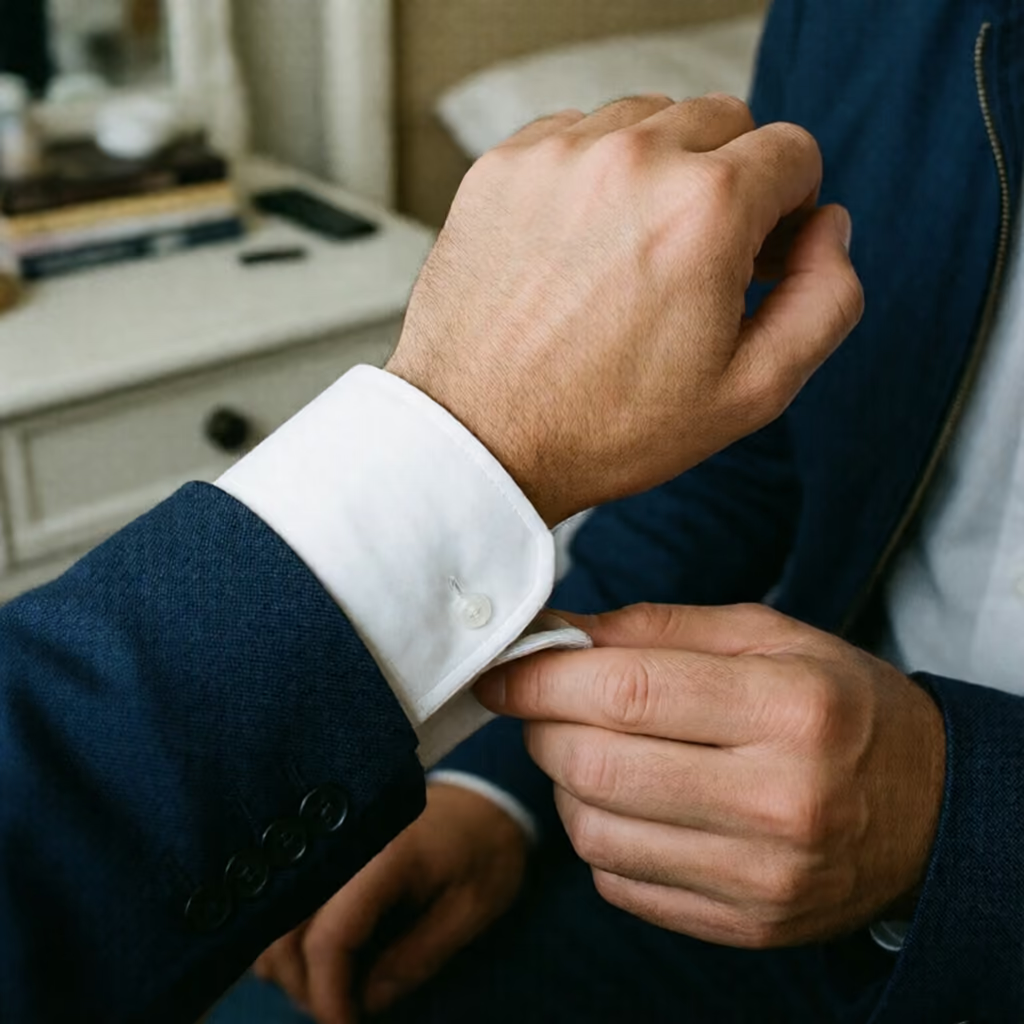
die Manschette
cuff
The usually folded or attached part of a sleeve that surrounds the wrist.
EXAMPLE
An seinem weißen Hemd war die Manschette eingerissen.
The cuff on his white shirt was torn.
cuff
die Manschette, die Manschetten
Loading your saved state.
cuff
The usually folded or attached part of a sleeve that surrounds the wrist.
An seinem weißen Hemd war die Manschette eingerissen.
The cuff on his white shirt was torn.

cuff
A band-shaped part that surrounds a body part or object and can exert pressure or secure something, for example on a blood pressure monitor.
Die Ärztin legte mir die Manschette um den Oberarm.
The doctor put the cuff around my upper arm.
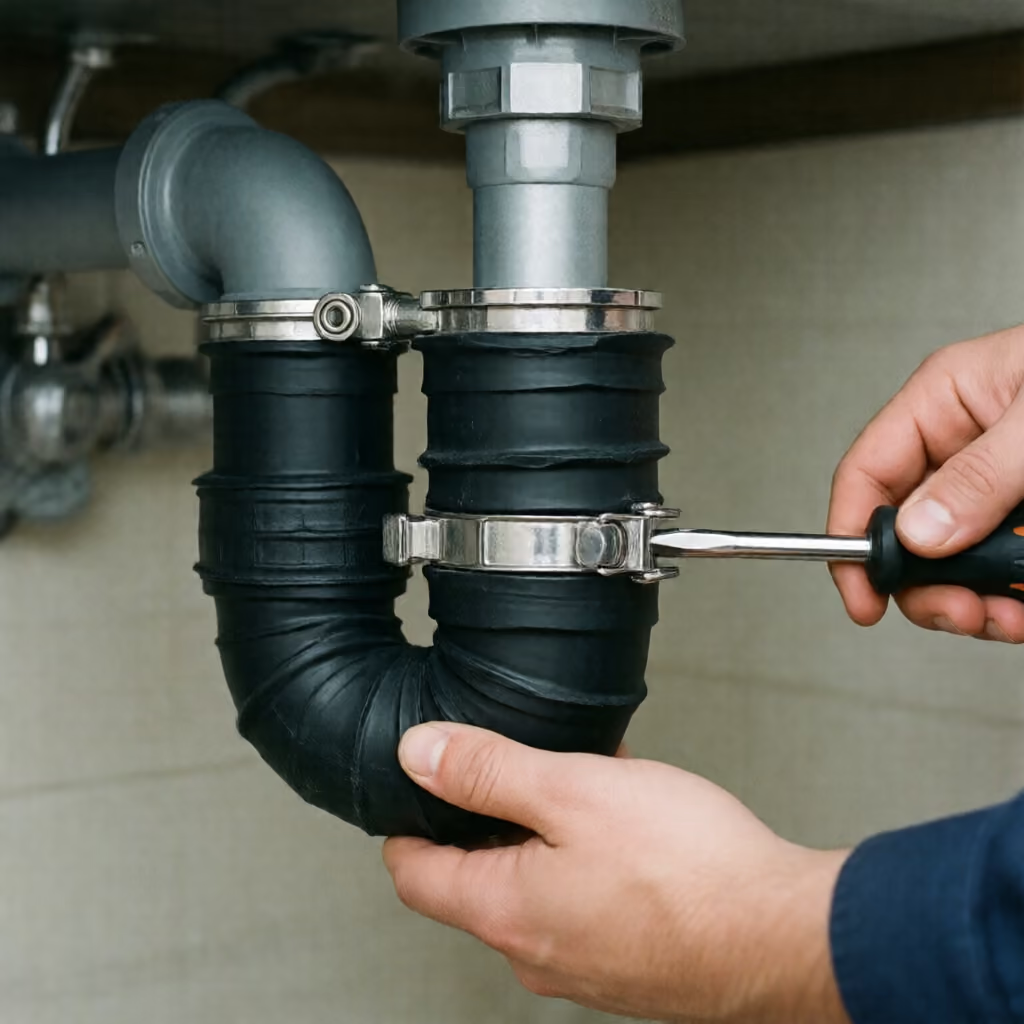
sleeve / collar
A ring-shaped component made of rubber, plastic, or metal that connects or protects two parts or seals a connection.
Der Installateur musste die undichte Manschette am Abfluss austauschen.
The plumber had to replace the leaking sleeve on the drain.

to be scared
To be or become afraid or apprehensive; the expression is colloquial.
Vor der schwierigen Prüfung bekam er ordentlich Manschetten.
He got really scared before the difficult exam.
| gender | feminine die |
|---|---|
| plural | die Manschetten |
| genitive | der Manschette |
| singular | plural | |
|---|---|---|
| nominative | die Manschette | die Manschetten |
| accusative | die Manschette | die Manschetten |
| dative | der Manschette | den Manschetten |
| genitive | der Manschette | der Manschetten |
The article changes with the case; it is shown in colour.
The intended meaning can usually be identified from the context: with shirts, it refers to clothing; with blood pressure monitors, to medicine; and with pipes or drains, to technology. In the fixed expression „Manschetten haben“ (to be scared), the word is usually used in the plural.
Die Manschette am Hemd muss gebügelt werden.
The cuff on the shirt needs to be ironed.
Die Ärztin pumpte die Manschette am Oberarm auf.
The doctor pumped up the cuff around the upper arm.
Die Manschette am Rohr war undicht.
The sleeve on the pipe was leaking.
In the context of clothing, common expressions include „eine Manschette bügeln“ (to iron a cuff), „eine Manschette schließen“ (to fasten a cuff), and „Manschettenknöpfe tragen“ (to wear cufflinks). This refers especially to the cuff of a shirt or blouse.
Er schloss die Manschette seines Hemdes mit einem kleinen Knopf.
He fastened the cuff of his shirt with a small button.
In medical contexts, a „Manschette“ (cuff) is usually put around a body part to surround it and measure or change pressure. Common expressions include „eine Manschette anlegen“ (to put on a cuff), „die Manschette aufpumpen“ (to inflate the cuff), and „den Druck der Manschette messen“ (to measure the cuff pressure).
Bei der Messung legt man zuerst die Manschette an und pumpt sie dann auf.
During the measurement, you first put on the cuff and then inflate it.
In technical contexts, „Manschette“ (sleeve / collar) often occurs with words such as „Rohr“ (pipe), „Abfluss“ (drain), „Dichtung“ (seal), or „Verbindung“ (connection). Common verbs include „eine Manschette einsetzen“ (to insert a sleeve), „mit einer Manschette abdichten“ (to seal with a sleeve), and „eine Manschette austauschen“ (to replace a sleeve).
Der Handwerker setzte eine neue Manschette in die Rohrverbindung ein.
The repair worker inserted a new sleeve into the pipe connection.
In the colloquial expressions „Manschetten haben“ or „Manschetten kriegen“ (to be or get scared), „Manschetten“ is almost always used in the plural. Words such as „ordentlich“ (seriously), „ganz schön“ (quite a lot), or „richtig“ (really) often intensify the statement.
Vor dem Gespräch mit der Direktorin hatte er ganz schön Manschetten.
He was really scared before the conversation with the director.