In an economic context, the difference between the purchase or production price and the selling price of a product; the profit margin.
example
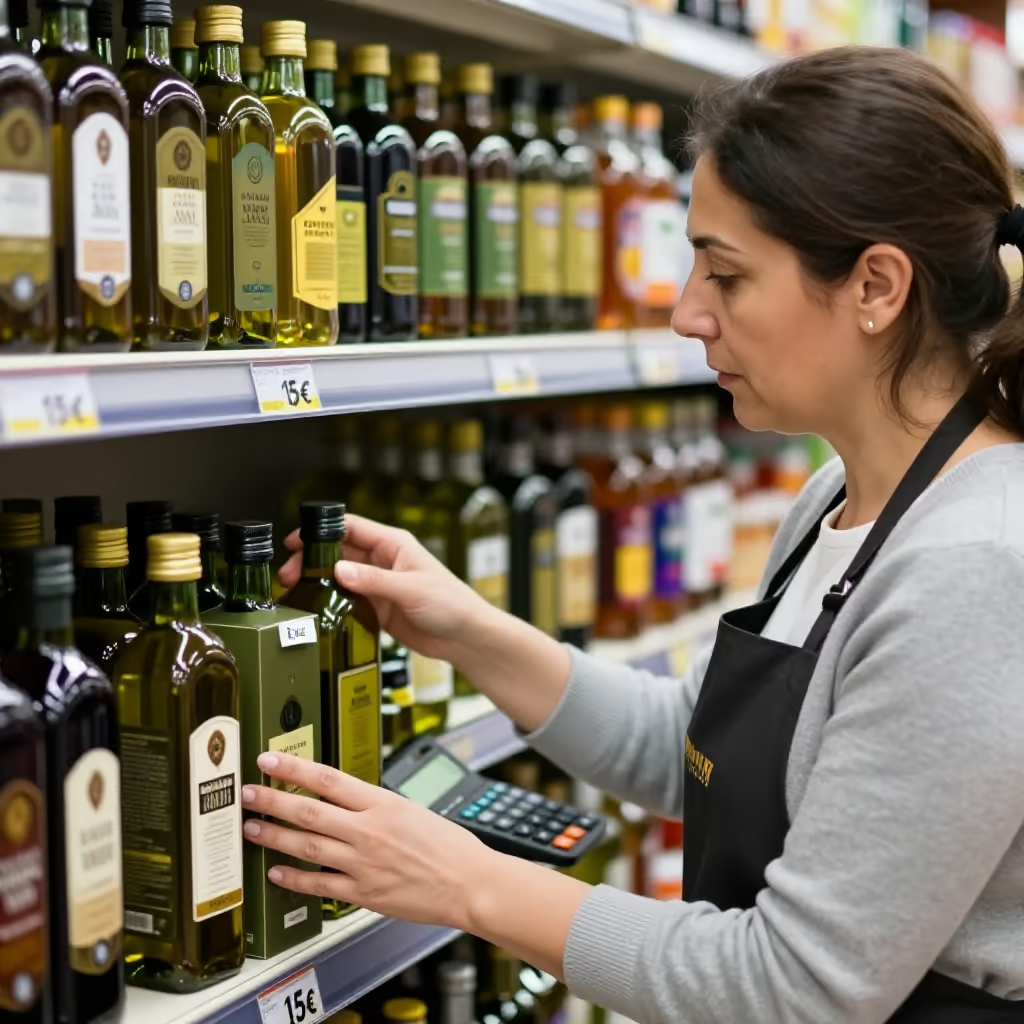
Der Einzelhändler arbeitet bei diesen Produkten nur mit einer sehr kleinen Marge.
The retailer works with only a very small profit margin on these products.

Usage tips
False friend
Although 'die Marge' looks like the English 'margin,' in German it is used almost exclusively in the economic sense of 'Gewinnspanne' (profit margin) or in the figurative sense of 'Spielraum' (leeway). For the edge of a page, the word is very unusual.
EXAMPLE
Mit einer so geringen Marge kann das Geschäft kaum überleben.
With such a small profit margin, the business can hardly survive.
Register and context
This is the most common meaning of the word. It is a technical term from economics and trade. You often hear and read it in the news or in business reports.
EXAMPLE
Die Margen im Lebensmittelhandel sind traditionell sehr niedrig.
Profit margins in the food retail sector are traditionally very low.
Typical collocations
In an economic context, 'Marge' (margin/profit margin) is often combined with adjectives such as 'hoch' (high), 'niedrig' (low), 'klein' (small), or 'groß' (large). Typical verbs are 'eine Marge haben' (to have a margin), 'die Marge berechnen' (to calculate the margin), or 'mit einer Marge arbeiten' (to work with a margin).
EXAMPLE
Der Verkäufer hat bei diesem Produkt eine sehr hohe Marge.
The seller has a very high profit margin on this product.
Rare use
This meaning is very rare in modern German. As a rule, the word 'der Seitenrand' (page margin) is used for the edge of a page. 'Marge' in this sense is found almost only in the technical language of book printing.
EXAMPLE
Der Lektor notierte seine Korrekturen auf der breiten Marge des Textes.
The editor noted his corrections in the wide margin of the text.
Compare with
confusable
Marge vs Gewinn
profit / prize
'der Gewinn' and 'die Marge' are both used in trade and in companies. 'der Gewinn' is the amount left over after all costs. 'die Marge' is the margin between the purchase or production price and the selling price of a product. So it shows how much leeway a product has when it is sold. The words can be confused because a high margin can lead to more profit. Still, it is not the same thing: further costs often still have to be paid out of the margin.
Marge
Bei diesem Produkt ist die Marge klein, weil der Einkaufspreis sehr hoch ist.
The profit margin on this product is small because the purchase price is very high.
Gewinn
Am Ende des Jahres war der Gewinn höher als erwartet.
At the end of the year, the profit was higher than expected.