

lockern
to loosen
To make something that is tight or tense less tight.
EXAMPLE
Nach der langen Autofahrt lockerte er seinen Gürtel.
After the long car ride, he loosened his belt.
to loosen
Loading your saved state.
to loosen
To make something that is tight or tense less tight.
Nach der langen Autofahrt lockerte er seinen Gürtel.
After the long car ride, he loosened his belt.
to loosen / relax
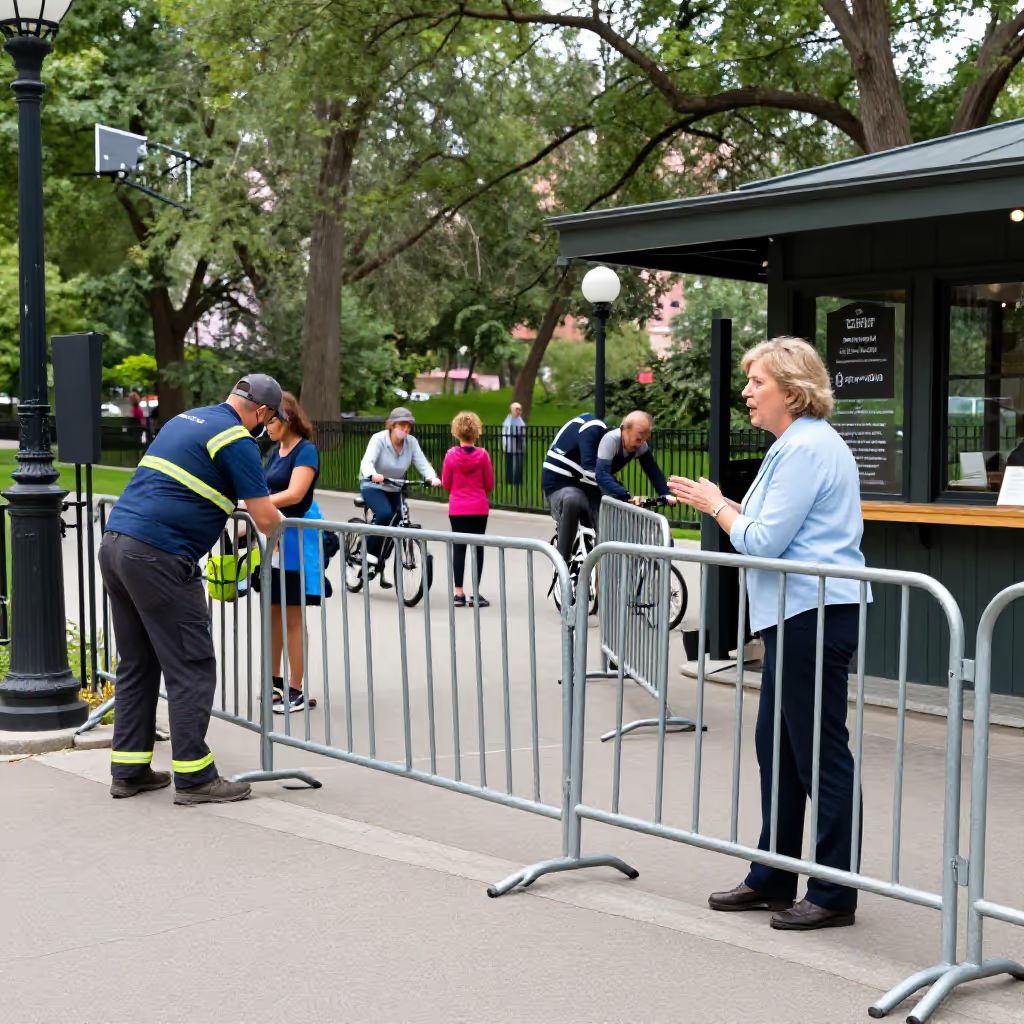
To make rules, laws, or restrictions less strict; to lift or ease them.
Die Regierung hat angekündigt, die Kontaktbeschränkungen zu lockern.
The government has announced that it will loosen the contact restrictions.
to come loose
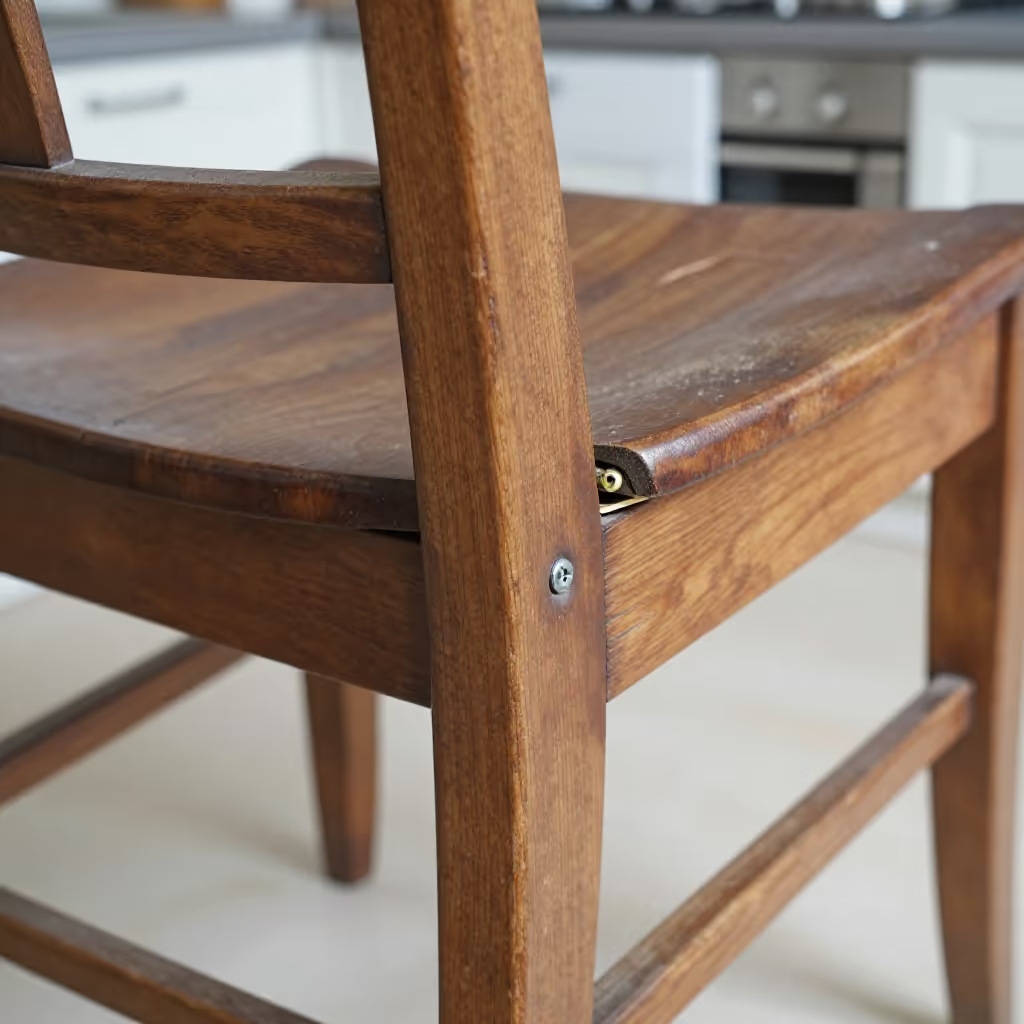
To become loose or less tight by itself.
Eine Schraube am Regal hat sich gelockert und muss wieder festgezogen werden.
A screw on the shelf has come loose and needs to be tightened again.

to loosen up
To relax muscles or joints through movement and make them more flexible.
Vor dem Joggen sollte man sich mit ein paar Übungen lockern.
Before jogging, you should loosen up with a few exercises.
The verb 'lockern' (to loosen) is derived from the adjective 'locker' (loose/relaxed). So it means to make something 'locker' or to put it into a loose or relaxed state.
Die Stimmung auf der Party lockerte sich nach einer Weile.
The mood at the party loosened up after a while.
'Lockern' (to loosen) can be used transitively ('jemand lockert etwas' — someone loosens something) or reflexively ('etwas lockert sich' — something comes loose). Transitively, it means actively making something less tight. Reflexively, it means that something becomes loose by itself or that you relax your own body.
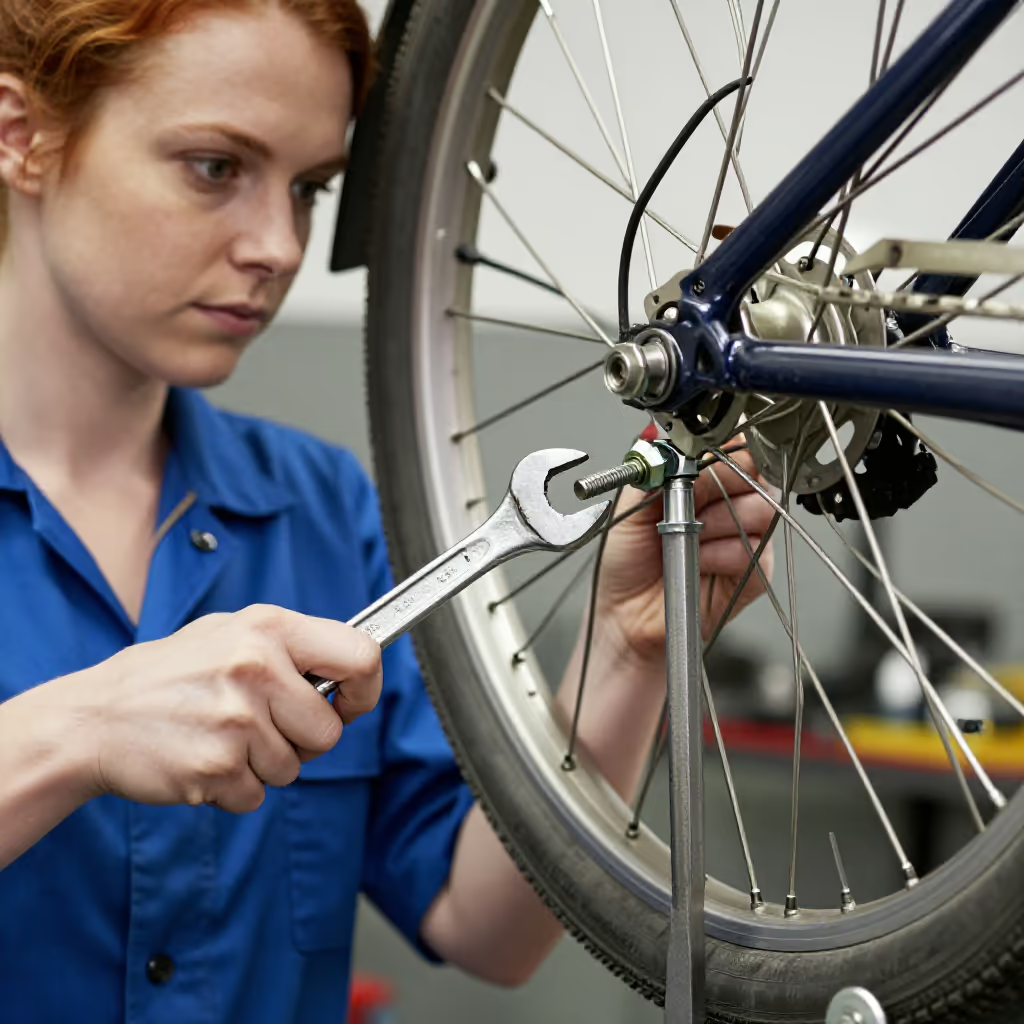
Der Mechaniker lockerte die Schrauben am Rad.
The mechanic loosened the screws on the wheel.
In the concrete meaning, 'lockern' (to loosen) is often combined with things that can be tightened. Typical objects are: 'einen Gürtel lockern' (to loosen a belt), 'einen Knoten lockern' (to loosen a knot), 'eine Krawatte lockern' (to loosen a tie), or 'den Griff lockern' (to loosen one's grip).
Er lockerte seine Krawatte, weil es im Raum sehr warm war.
He loosened his tie because it was very warm in the room.
In the figurative sense, 'lockern' (to loosen/relax) is used for abstract concepts. Common combinations are: 'die Regeln lockern' (to loosen the rules), 'die Maßnahmen lockern' (to relax the measures), or 'die Beschränkungen lockern' (to loosen the restrictions).
Die Firma plant, die strengen Kleidervorschriften zu lockern.
The company plans to loosen the strict dress code.
When referring to the body, 'lockern' (to loosen up) is used reflexively ('sich lockern' — to loosen up) or with body parts as the object. It describes relaxing the muscles, often before or after doing sports.
Vor dem Laufen lockere ich immer meine Beinmuskulatur.
Before running, I always loosen up my leg muscles.
to solve / loosen
Both verbs can make something fastened less tight, but lockern initially only means that it becomes less taut. Lösen usually goes further and refers to opening or undoing the fastening. Use lockern when it should still hold, and lösen when it is to be opened or removed.
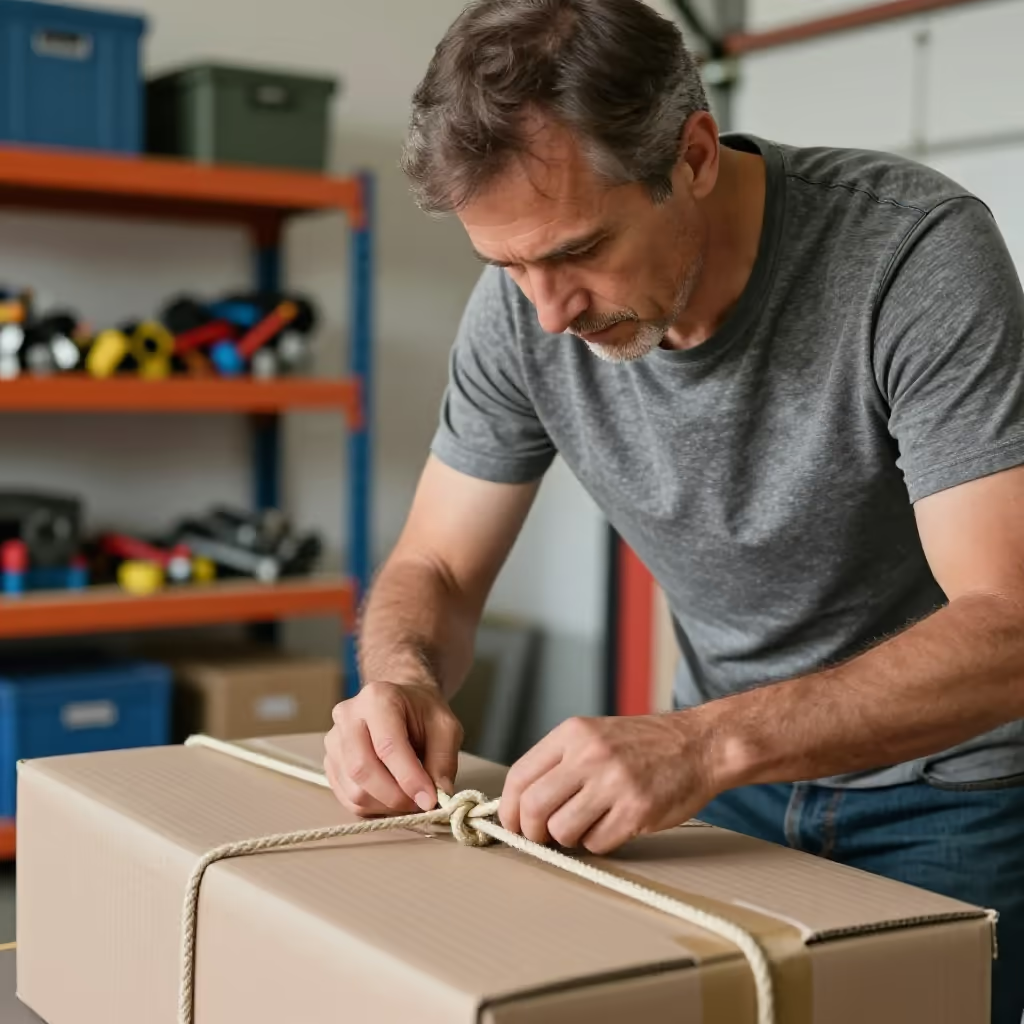
Vor dem Waschen lockerte er den Knoten nur ein wenig.
Before washing it, he loosened the knot just a little.
Vor dem Waschen löste er den Knoten vollständig.
Before washing it, he completely untied the knot.