

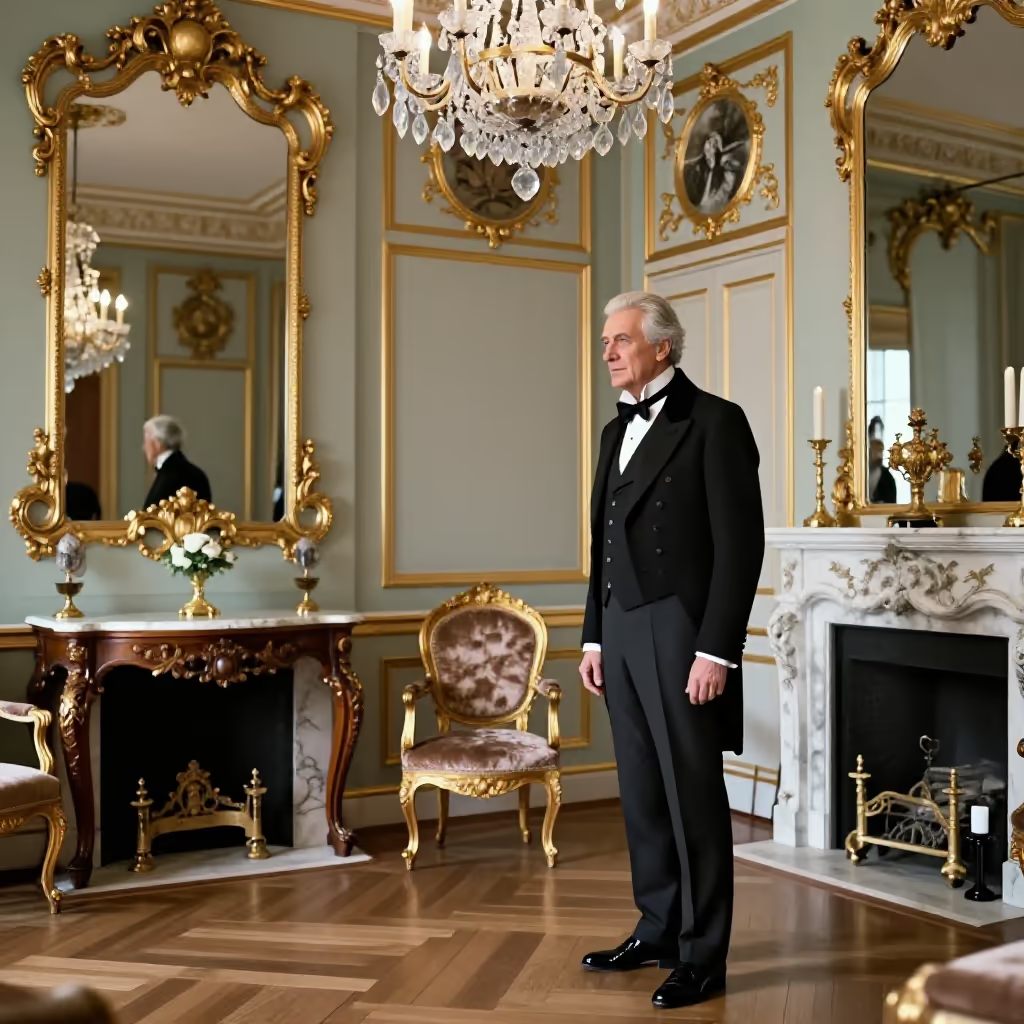
A very rare, invariable adjective form that refers to the noble title Marquis and describes a particularly refined or elegant style. It is usually used as an attribute after a noun.
example
Das Hotelzimmer war mit einer Eleganz Marquis eingerichtet.
The hotel room was furnished with marquis-style elegance.
Usage tips
Special grammar
This adjective is a rare exception. It is not declined, so it never takes an ending, and it always comes after the noun it describes.
EXAMPLE
Sie betrat den Raum mit einer Haltung Marquis.
She entered the room with a marquis-style bearing.
Literary style
The use of 'Marquis' (marquis-style) as an adjective is very rare and belongs to an elevated, almost literary style. In normal everyday life, you will hardly ever hear or read this word.
EXAMPLE
Sein ganzer Auftritt war eine Inszenierung Marquis.
His entire appearance was a marquis-style performance.
Origin of the word
The word derives from the French noble title 'Marquis'. It is meant to express a special, almost aristocratic elegance and refinement.
EXAMPLE
Er pflegte einen Lebensstil Marquis, obwohl er kein Geld hatte.
He cultivated a marquis-style way of life, even though he had no money.
Compare with
near_synonym
Marquis vs elegant
elegant
'elegant' and 'der Marquis' can both have to do with a refined, stylish impression. 'elegant' is the normal and often appropriate word for clothing, people, movements, or style. 'der Marquis' here is not a normal everyday form, but a very rare, invariable adjective form that alludes to an aristocratic style. It usually comes directly after a noun and feels especially specific or old-fashioned. For learners, the important point is: in almost all normal situations, you say 'elegant'. 'Marquis' is understood more as a special style label.
Marquis
Im Katalog steht ein Spiegel Marquis, der sehr vornehm wirken soll.
The catalog lists a marquis-style mirror that is meant to look very refined.
elegant
Für das Konzert hat Lena eine elegante Bluse ausgesucht.