

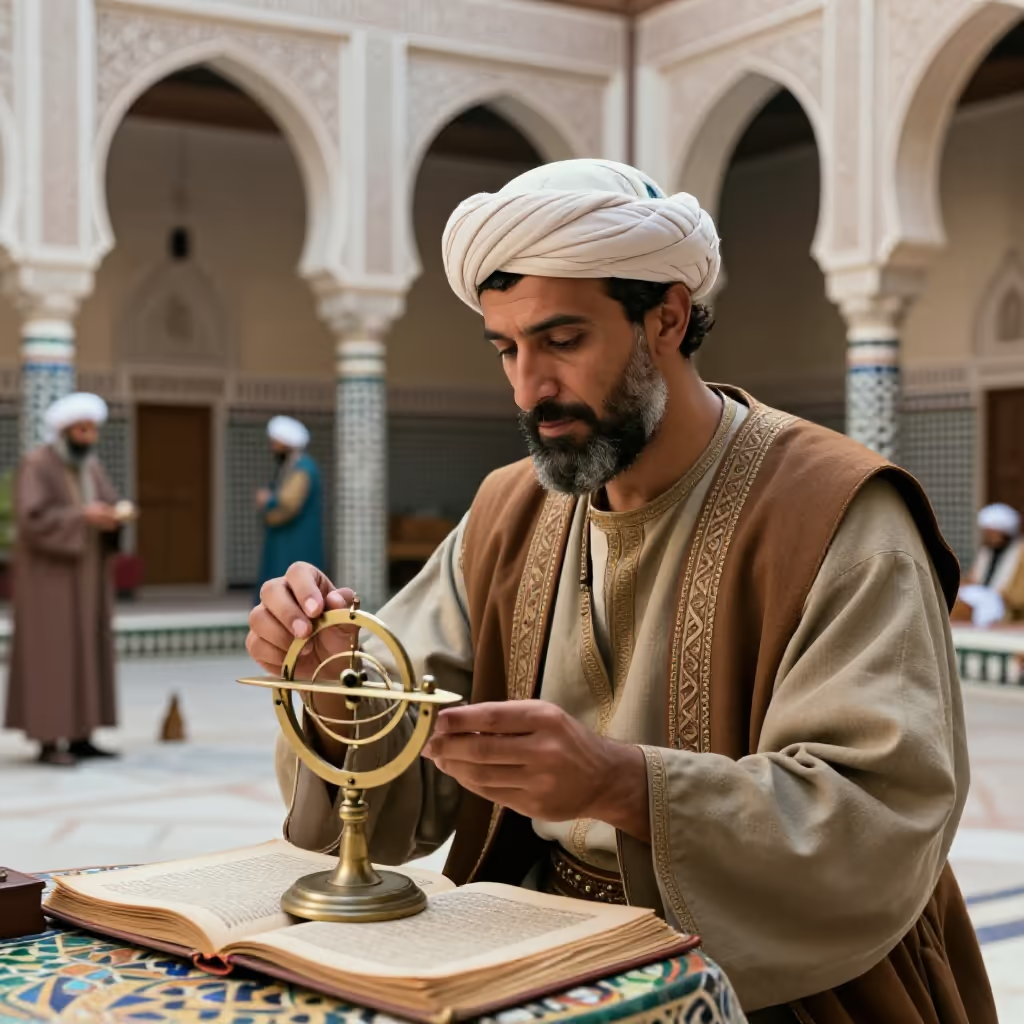
A historical term for the Islamic, mostly Berber and Arab population of northwestern Africa and the Iberian Peninsula in the Middle Ages.
example
Die Architektur der Alhambra ist ein beeindruckendes Zeugnis der Baukunst der Mauren.
The architecture of the Alhambra is an impressive testament to the Moors' architectural skill.
Usage tips
N-declension
'Maure' (Moor) is a weak noun (N-declension). This means it takes the ending '-n' in all cases except the nominative singular.
EXAMPLE
Die Geschichte der Mauren ist faszinierend.
The history of the Moors is fascinating.
Historical term
The word 'Maure' (Moor) is used today exclusively in a historical context. It refers to a specific era, mainly the Middle Ages in Spain and North Africa.
EXAMPLE
In der Schule lernen wir über den Einfluss der Mauren auf die europäische Kultur.
At school, we learn about the influence of the Moors on European culture.
Related adjective
The related adjective 'maurisch' (Moorish) is used very often to describe art, architecture, or culture from this period and region.
EXAMPLE
Die maurische Baukunst in Andalusien ist weltberühmt.
Moorish architecture in Andalusia is world-famous.
Compare with
confusable
Maure vs Muslim
Muslim
'der Muslim' and 'der Maure' can both be connected with Islam, but they belong in different contexts. 'Muslim' is a general word for a male follower of Islam and can be used normally today. 'Maure' is a historical term for certain Islamic populations in northwestern Africa and on the Iberian Peninsula in the Middle Ages. The words can be confused because Moors were usually Muslims. Even so, Muslims today are not simply called 'Mauren'. 'Maure' is mainly appropriate in historical texts.
Maure
Im Geschichtsunterricht lesen wir über einen Mauren, der im Mittelalter in Spanien lebte.
In history class, we are reading about a Moor who lived in Spain in the Middle Ages.
Muslim
In meiner Klasse ist ein Muslim, der uns etwas über den Ramadan erzählt hat.
There is a Muslim in my class who told us something about Ramadan.