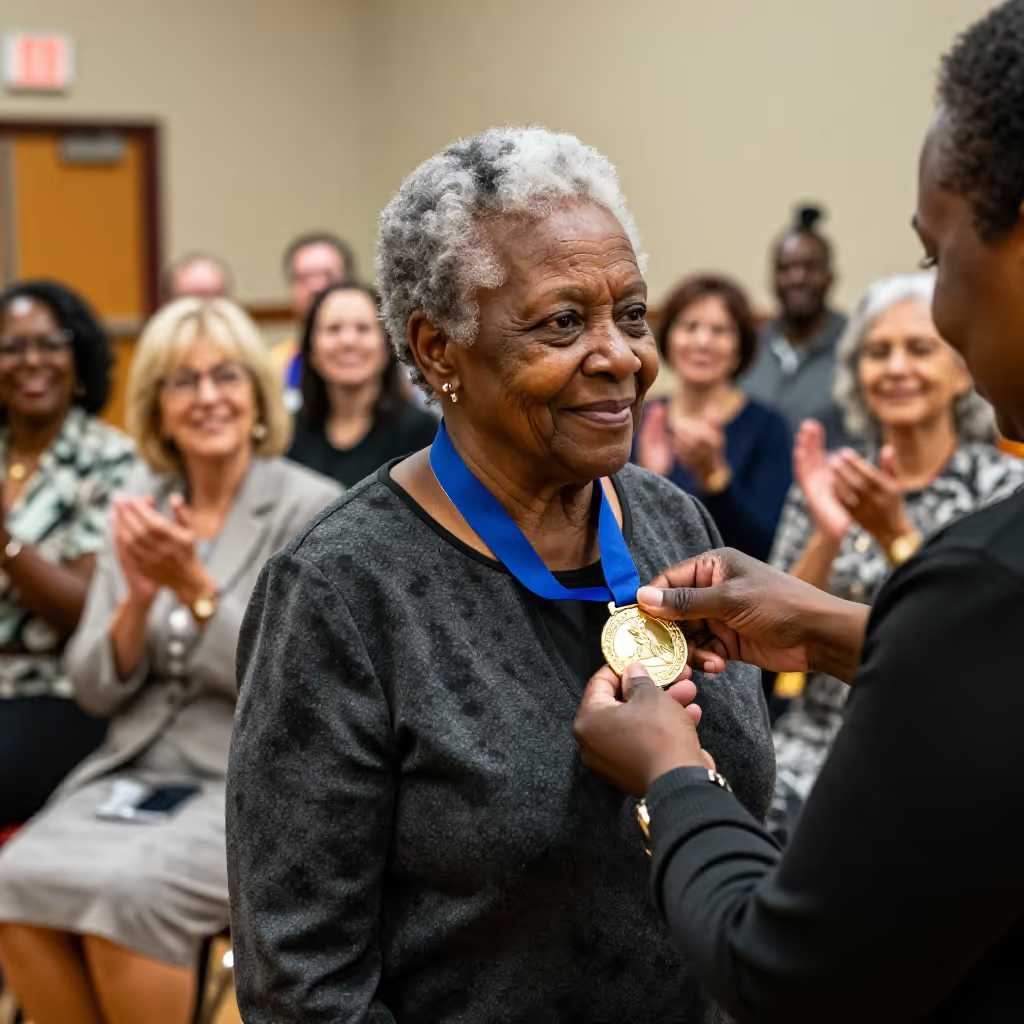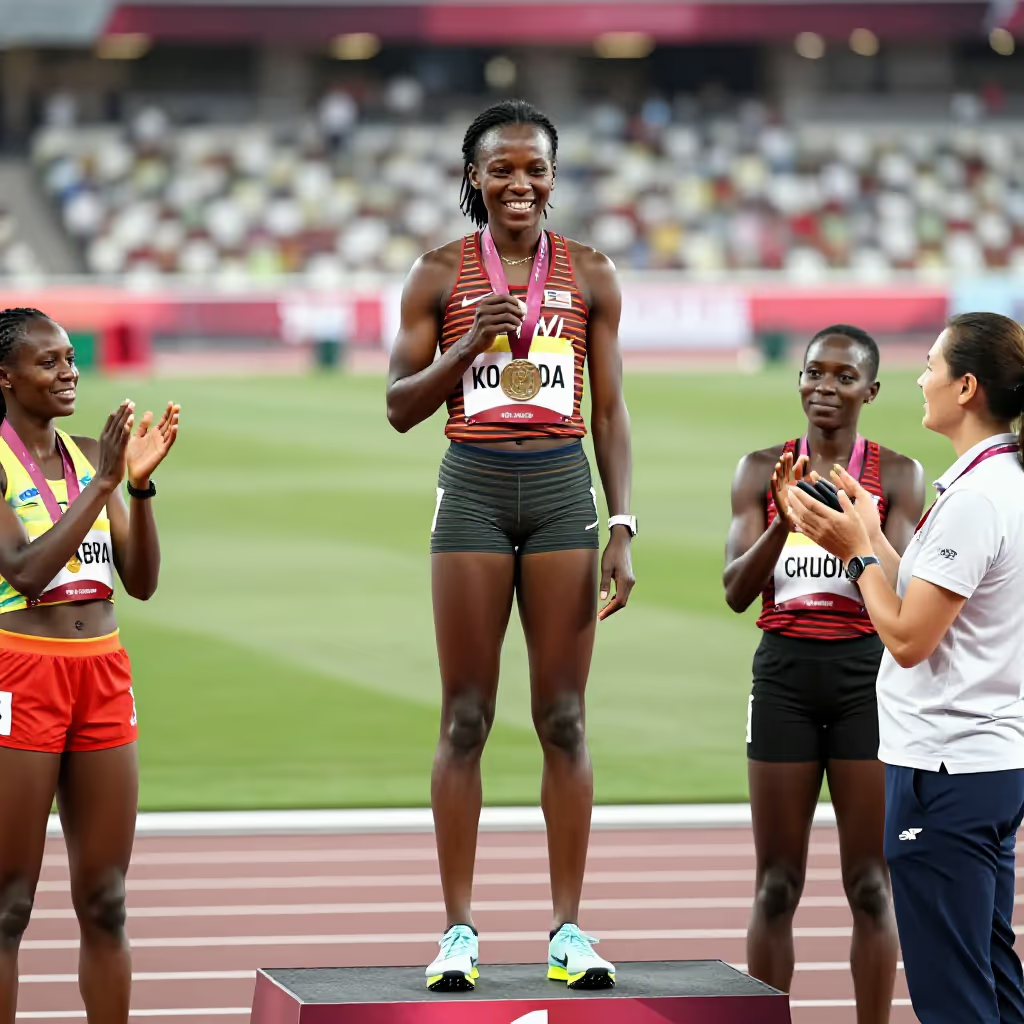
A usually round piece of metal awarded as a prize or honor for a special achievement, e.g. in sports.
example
Die Athletin gewann bei den Olympischen Spielen die Goldmedaille im 100-Meter-Lauf.
The athlete won the gold medal in the 100-meter race at the Olympic Games.

Usage tips
Typical verbs
In sports or competition contexts, 'Medaille' (medal) is often used with the verbs 'gewinnen' (to win), 'verleihen' (to award), or 'bekommen' (to receive/get).
EXAMPLE
Er hat hart trainiert, um eine Medaille zu gewinnen.
He trained hard to win a medal.
Typical compounds
Depending on the ranking, 'Medaille' (medal) is often compounded as 'Goldmedaille' (gold medal), 'Silbermedaille' (silver medal), or 'Bronzemedaille' (bronze medal).
EXAMPLE
Ihr größter Traum ist es, eine Goldmedaille zu gewinnen.
Her biggest dream is to win a gold medal.
Fixed expression
The expression 'die Kehrseite der Medaille' (the other side of the coin/the downside) is a fixed idiom. It is used to name the negative aspect of an otherwise positive thing.
EXAMPLE
Er verdient viel Geld, aber die ständigen Reisen sind die Kehrseite der Medaille.
He earns a lot of money, but the constant travel is the downside.
Compare with
near_synonym · confusable
Medaille vs Preis
price / prize
'der Preis' and 'die Medaille' can both be something you receive for a good performance. 'der Preis' is more general: it can be money, an object, a trip, or also an award. 'die Medaille' is more specific and means a particular round piece of metal, especially in sports. Learners may confuse the words because a medal is often a prize. But not every prize is a medal.
Medaille
Nach dem Lauf zeigte sie stolz ihre goldene Medaille.
After the race, she proudly showed her gold medal.