

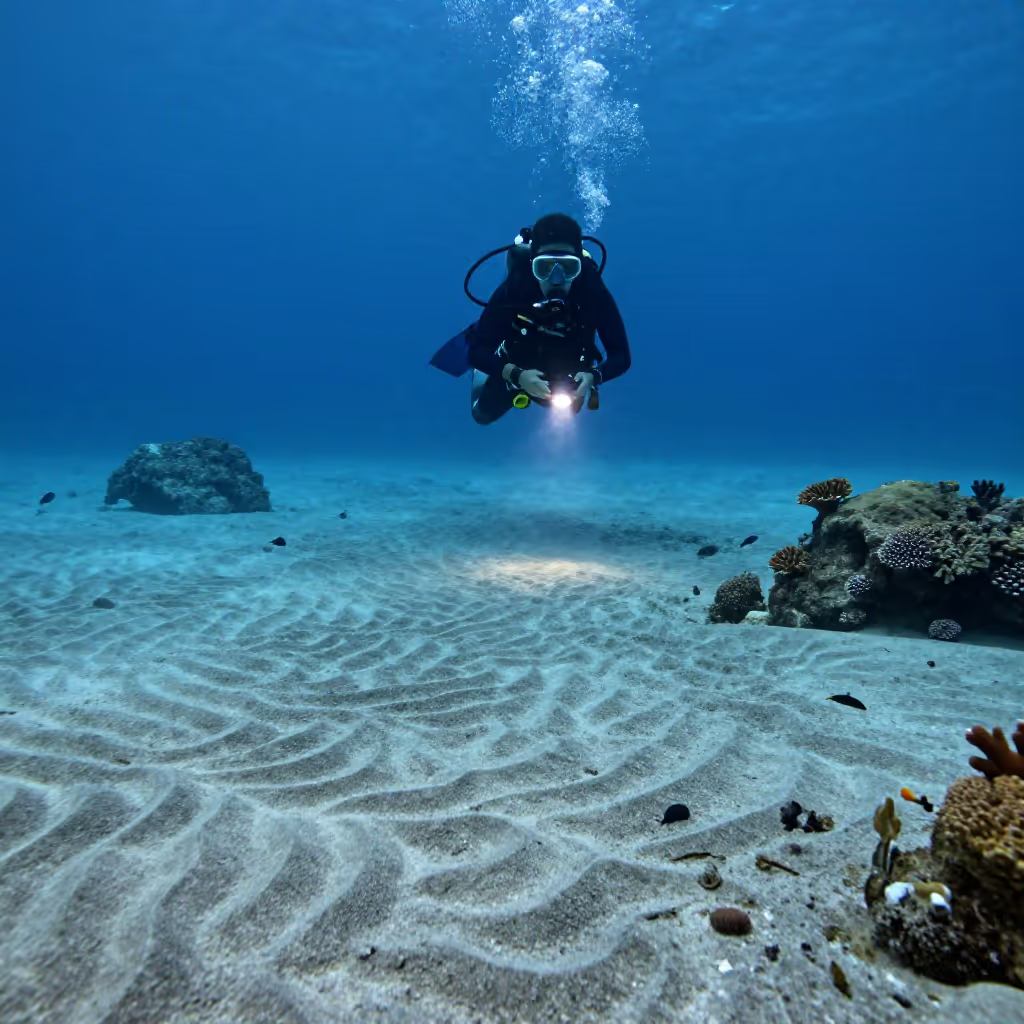
der Meeresboden
seabed
The solid ground at the bottom of a sea or ocean.
EXAMPLE
Wissenschaftler erforschen das Leben am tiefen Meeresboden.
Scientists are researching life on the deep seabed.
seabed
Loading your saved state.
seabed
The solid ground at the bottom of a sea or ocean.
Wissenschaftler erforschen das Leben am tiefen Meeresboden.
Scientists are researching life on the deep seabed.
The word is made up of 'Meeres-', the genitive form of 'das Meer' (the sea), and 'der Boden' (the ground/floor). So it literally means 'the floor of the sea.' The '-es-' is a typical linking element.
Ein U-Boot sank auf den Meeresboden.
A submarine sank to the seabed.
In connection with the seabed, verbs such as 'erforschen' (to research/explore), 'untersuchen' (to examine), 'erreichen' (to reach), or 'kartieren' (to map) are often used, mostly in scientific or technical contexts.
Ein Team von Forschern will den Meeresboden in dieser Region untersuchen.
A team of researchers wants to examine the seabed in this region.
To describe a position, you use 'auf dem Meeresboden' (on the seabed) or 'am Meeresboden' (at/on the seabed). Both prepositions take the dative.
Auf dem tiefen Meeresboden leben erstaunliche Kreaturen.
Amazing creatures live on the deep seabed.