

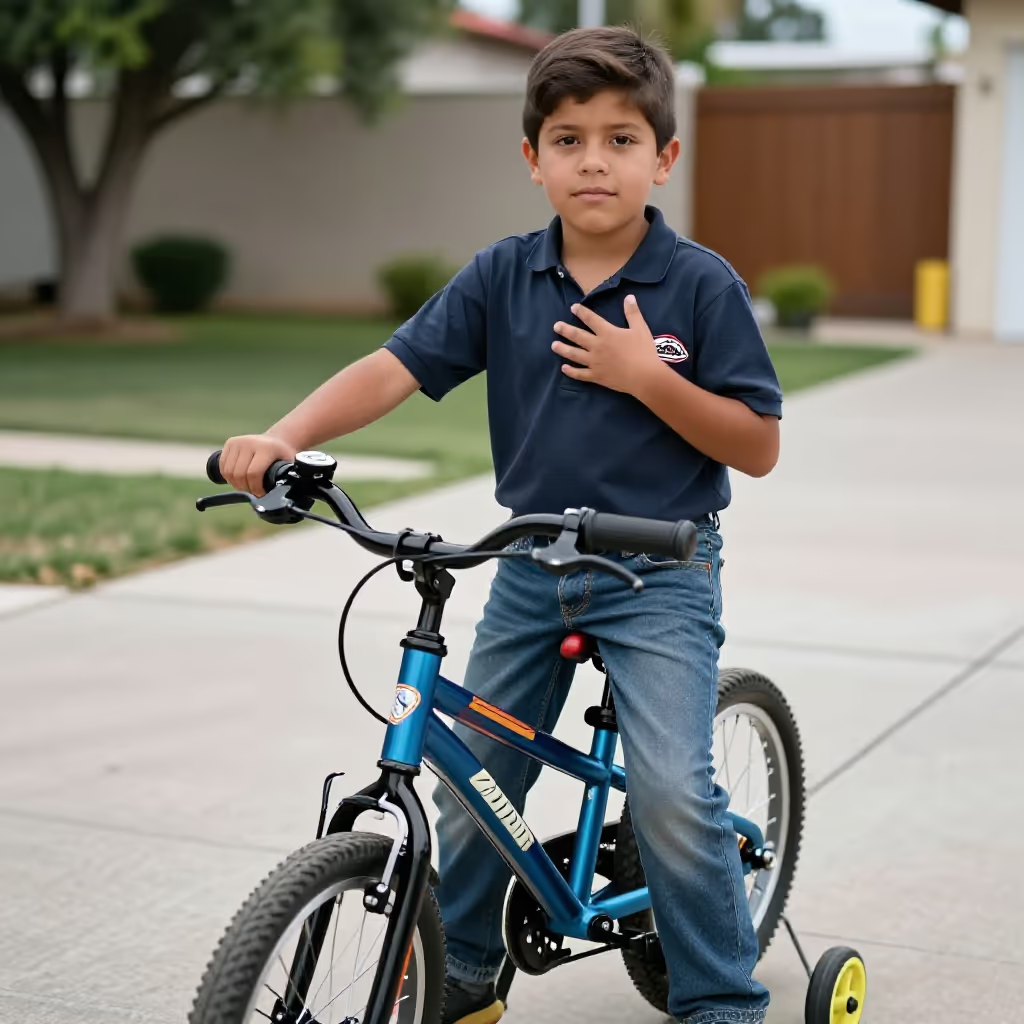
mein
my
Possessive article of the 1st person singular. It expresses that something belongs to the speaker or is related to them.
EXAMPLE
Ich habe mein Portemonnaie zu Hause vergessen.
I forgot my wallet at home.
my
Loading your saved state.
my
Possessive article of the 1st person singular. It expresses that something belongs to the speaker or is related to them.
Ich habe mein Portemonnaie zu Hause vergessen.
I forgot my wallet at home.
The possessive article 'mein' is declined in the singular just like the indefinite article 'ein'. So if you know the endings of 'ein', 'eine', 'einen', 'einem', etc., you can also use 'mein' correctly.
Hier ist ein Stift. Hier ist mein Stift.
Here is a pen. Here is my pen.
'Mein' can also stand alone as a pronoun and then replaces a noun. In this case, it gets a strong ending that indicates gender and case.
Wessen Tasche ist das? – Das ist meine.
Whose bag is that? – That's mine.
'Mein' expresses not only possession (mein Haus (my house), mein Buch (my book)), but also personal relationships (meine Familie (my family), mein Freund (my friend)) or belonging to abstract things (meine Idee (my idea), meine Meinung (my opinion)).
Mein Bruder wohnt in einer anderen Stadt.
My brother lives in another city.
own / peculiar
mein and eigen can both express possession or belonging. mein shows the relationship to the speaker, while eigen places greater emphasis on the fact that something belongs to a particular person personally or is not foreign to them. Use mein as the normal possessive determiner and eigen for this special contrast.

Das ist mein Fahrrad, das ich jeden Tag benutze.
This is my bicycle, which I use every day.
Das ist mein eigenes Fahrrad, deshalb muss ich niemanden darum bitten.
This is my own bicycle, so I don't have to ask anyone for one.