


eigen
own
Expresses possession of or belonging to a specific person or thing.
EXAMPLE
Das ist mein eigenes Fahrrad, nicht das von meinem Bruder.
That is my own bike, not my brother's.
own / peculiar
Loading your saved state.
own
Expresses possession of or belonging to a specific person or thing.
Das ist mein eigenes Fahrrad, nicht das von meinem Bruder.
That is my own bike, not my brother's.
distinctive / peculiar
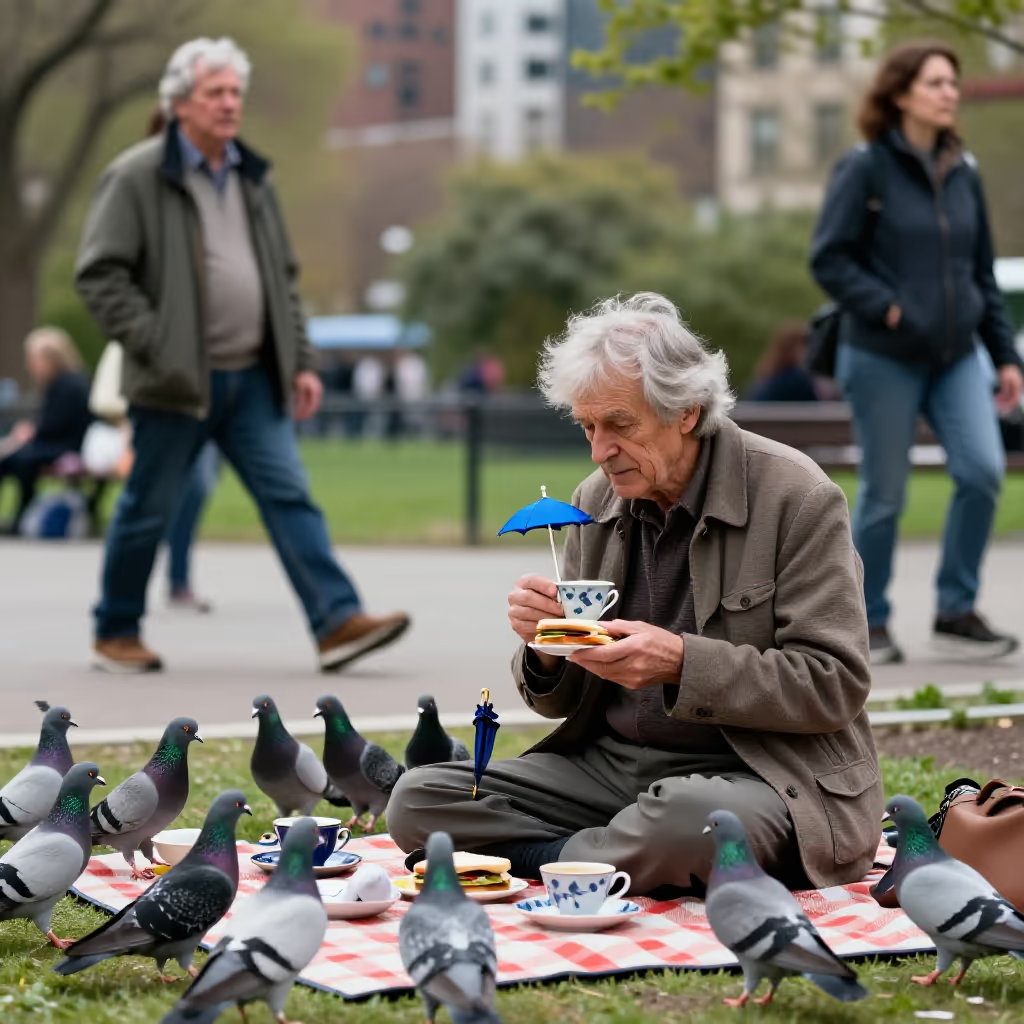
Special, characteristic, or also strange and odd.
Er hat einen ganz eigenen Humor, den nicht jeder versteht.
He has a very distinctive sense of humor that not everyone understands.

inherent
Describes something that is inherent in a thing or person, or specific to them.
Die dem System eigenen Schwächen wurden schnell offensichtlich.
The weaknesses inherent in the system quickly became obvious.
to adopt as one's own
To adopt an idea, a method, or even someone else's property and regard or use it as one's own.
Sie hat sich die Philosophie des Minimalismus komplett zu eigen gemacht.
She has completely adopted the philosophy of minimalism as her own.
The word 'eigen' (own) is very often used directly after a possessive pronoun (e.g. mein, dein, ihr). In this position, it strengthens the idea of personal ownership and emphasizes exclusivity.
Viele junge Leute träumen von einer eigenen Wohnung.
Many young people dream of having their own apartment.
'Eigen' (own) is the root for words related to possession and character. These include 'das Eigentum' (property), 'die Eigenschaft' (quality/characteristic), and the verb 'sich eignen für' (to be suitable for).
Geduld ist eine wichtige Eigenschaft für diesen Beruf.
Patience is an important quality for this profession.
In the meaning of 'besonders' (special) or 'charakteristisch' (characteristic), 'eigen' (distinctive/peculiar) is often combined with abstract nouns. Typical collocations are 'ein eigener Stil' (a distinctive style), 'ein eigener Kopf' (a mind of one's own), or 'eine eigene Welt' (a world of its own).
Der Regisseur ist für seinen ganz eigenen visuellen Stil bekannt.
The director is known for his very distinctive visual style.
To express that something is inherent in a thing, a formal structure is often used: the noun appears in the dative, followed by 'eigen' (inherent). This construction is typical of academic or technical texts.
Die dem Gerät eigenen Sicherheitsrisiken wurden unterschätzt.
The safety risks inherent in the device were underestimated.
The expression 'sich etwas zu eigen machen' (to adopt something as one's own) has a fixed grammatical structure. The person adopting something is in the dative (sich), while the thing being adopted is in the accusative.
Er hat sich die Denkweise seines Mentors völlig zu eigen gemacht.
He completely adopted his mentor's way of thinking as his own.
my
mein and eigen can both express possession or belonging. mein shows the relationship to the speaker, while eigen places greater emphasis on the fact that something belongs to a particular person personally or is not foreign to them. Use mein as the normal possessive determiner and eigen for this special contrast.
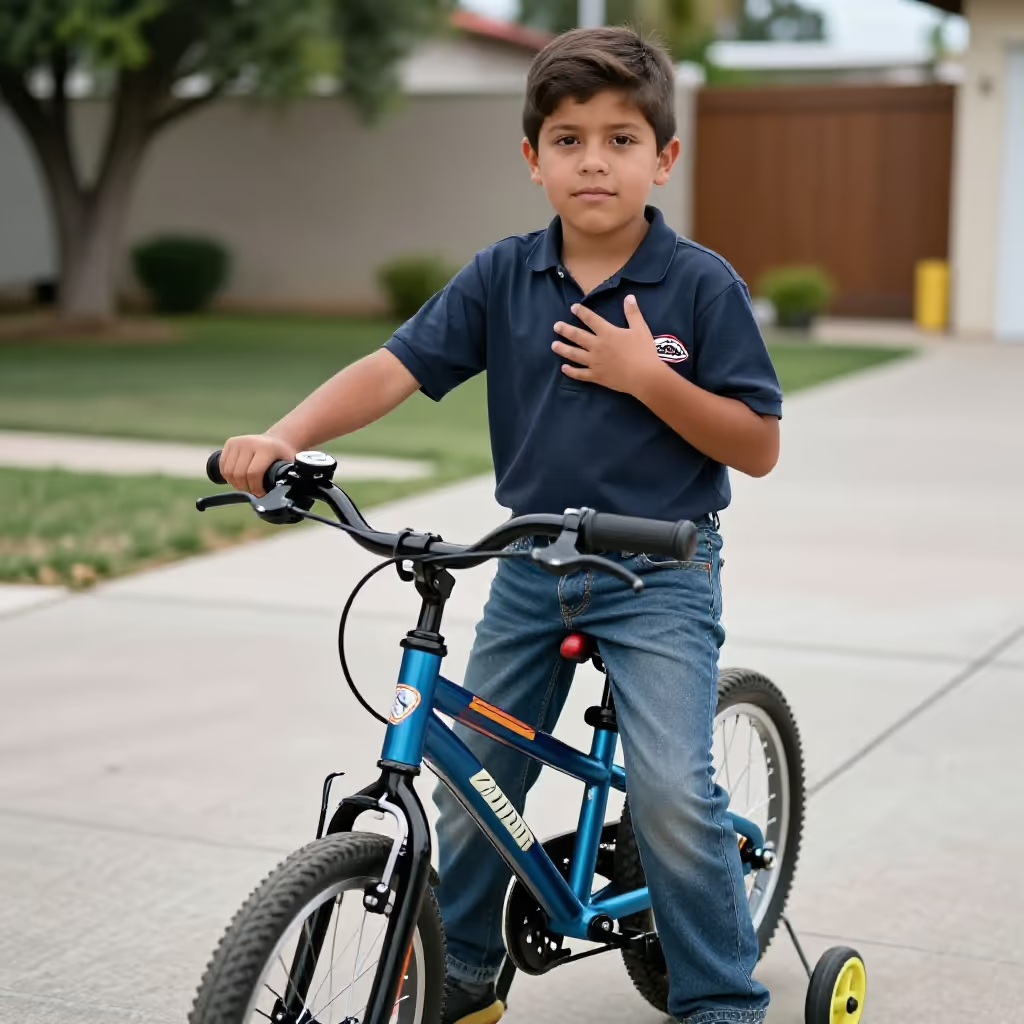
Das ist mein eigenes Fahrrad, deshalb muss ich niemanden darum bitten.
This is my own bicycle, so I don't have to ask anyone for one.
Das ist mein Fahrrad, das ich jeden Tag benutze.
This is my bicycle, which I use every day.