

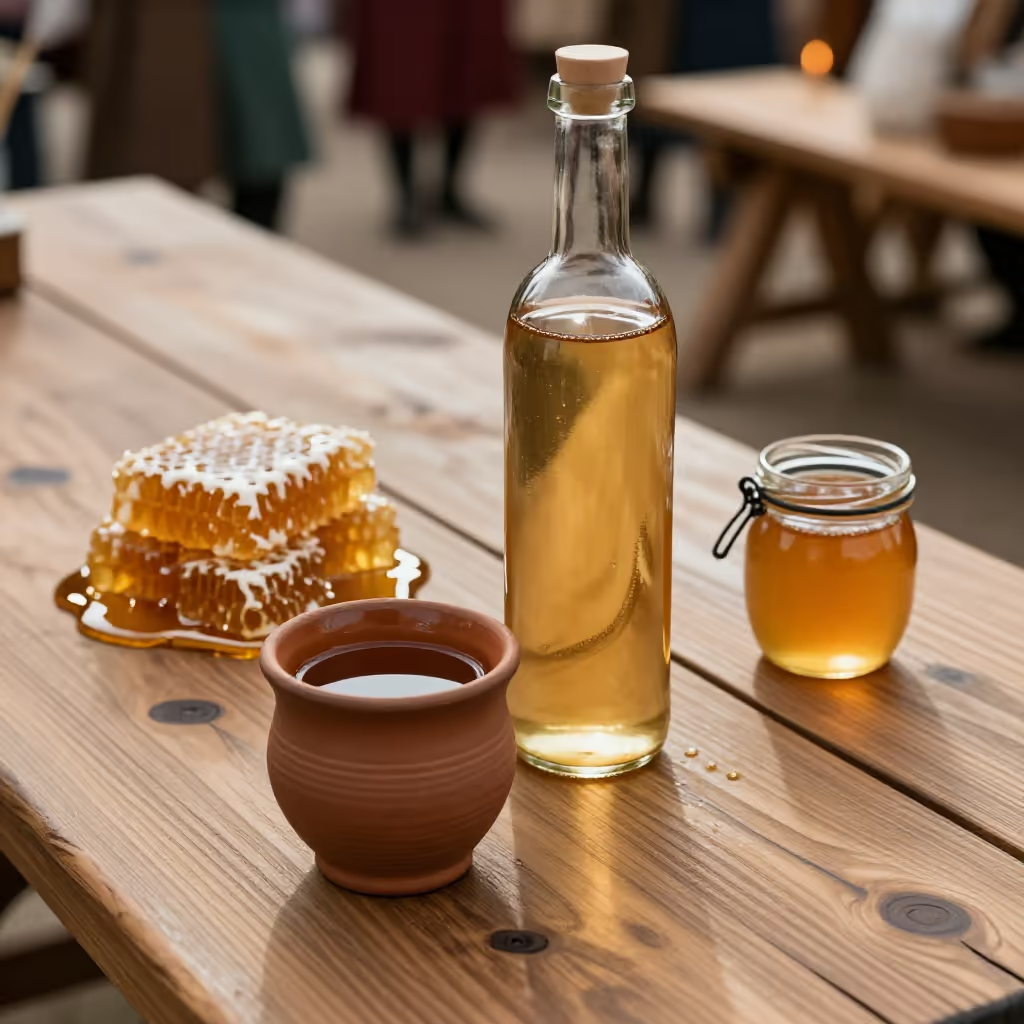
der Met
mead
An alcoholic drink made by fermenting honey with water. It is also called honey wine.
EXAMPLE
Auf dem Mittelaltermarkt haben wir einen Becher warmen Met getrunken.
At the medieval market, we drank a mug of warm mead.
mead
der Met
Loading your saved state.
mead
An alcoholic drink made by fermenting honey with water. It is also called honey wine.
Auf dem Mittelaltermarkt haben wir einen Becher warmen Met getrunken.
At the medieval market, we drank a mug of warm mead.
| gender | masculine der |
|---|---|
| genitive | des Mets |
| singular | plural | |
|---|---|---|
| nominative | der Met | – |
| accusative | den Met | – |
| dative | dem Met | – |
| genitive | des Mets des Metes | – |
The article changes with the case; it is shown in colour.
Mead is strongly associated with historical themes such as the Middle Ages or the Vikings. You often find it at medieval markets or in films and books with a historical or fantasy background.
Auf dem Ritterfest wurde Met in Trinkhörnern serviert.
At the knights' festival, mead was served in drinking horns.
Common verbs used with 'Met' (mead) are 'trinken' (to drink) and 'herstellen' (to produce/make). People often speak of 'einem Becher Met' (a mug of mead) or 'einem Glas Met' (a glass of mead).
Möchtest du mal diesen selbstgemachten Met probieren?
Would you like to try this homemade mead?
Like other drinks, 'Met' (mead) is a mass noun and is often used without an article when speaking about the drink in general. When referring to a serving, people also say colloquially 'einen Met bestellen' (to order a mead).
Met wird aus Honig und Wasser gemacht.
Mead is made from honey and water.
Für mich bitte einen Met und eine Brezel.
For me, a mead and a pretzel, please.