

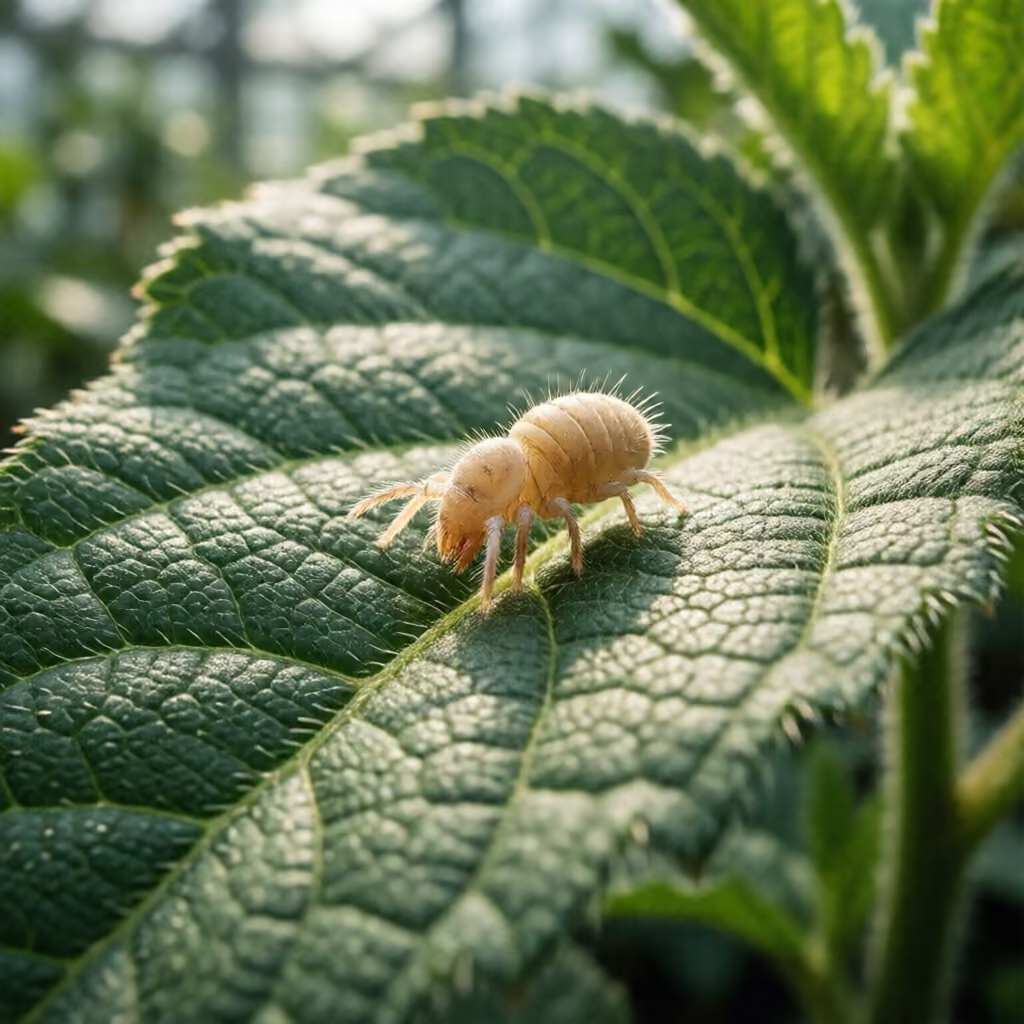
die Milbe
mite
A very small arachnid that can live on or in plants, animals, humans, or soil.
EXAMPLE
Die Milbe ist ohne Mikroskop kaum zu erkennen.
The mite is almost impossible to see without a microscope.
mite
die Milbe, die Milben
Loading your saved state.
mite
A very small arachnid that can live on or in plants, animals, humans, or soil.
Die Milbe ist ohne Mikroskop kaum zu erkennen.
The mite is almost impossible to see without a microscope.
| gender | feminine die |
|---|---|
| plural | die Milben |
| genitive | der Milbe |
| singular | plural | |
|---|---|---|
| nominative | die Milbe | die Milben |
| accusative | die Milbe | die Milben |
| dative | der Milbe | den Milben |
| genitive | der Milbe | der Milben |
The article changes with the case; it is shown in colour.
'Milbe' (mite) often appears in compounds that describe the animal's habitat or effects. Common examples include 'Hausstaubmilbe' (dust mite), 'Milbenbefall' (mite infestation), and 'Milbenallergie' (mite allergy).
Eine Hausstaubmilbe kann bei empfindlichen Menschen Beschwerden auslösen.
A dust mite can cause symptoms in sensitive people.
In the context of households, beds, dust, or allergies, the word often refers to dust mites. When plants or animals are involved, words like 'Blätter' (leaves), 'Fell' (fur), or 'Boden' (soil) indicate the mite's habitat.
Die Milbe wurde auf der Unterseite eines Blattes entdeckt.
The mite was discovered on the underside of a leaf.
'Milbe' (mite) is a neutral word that appears especially in biological, medical, and agricultural texts. In everyday life, it is often mentioned in connection with dust, skin problems, or protecting plants.
Im Biologieunterricht untersuchten die Schülerinnen eine Milbe unter dem Mikroskop.
In biology class, the students examined a mite under a microscope.