

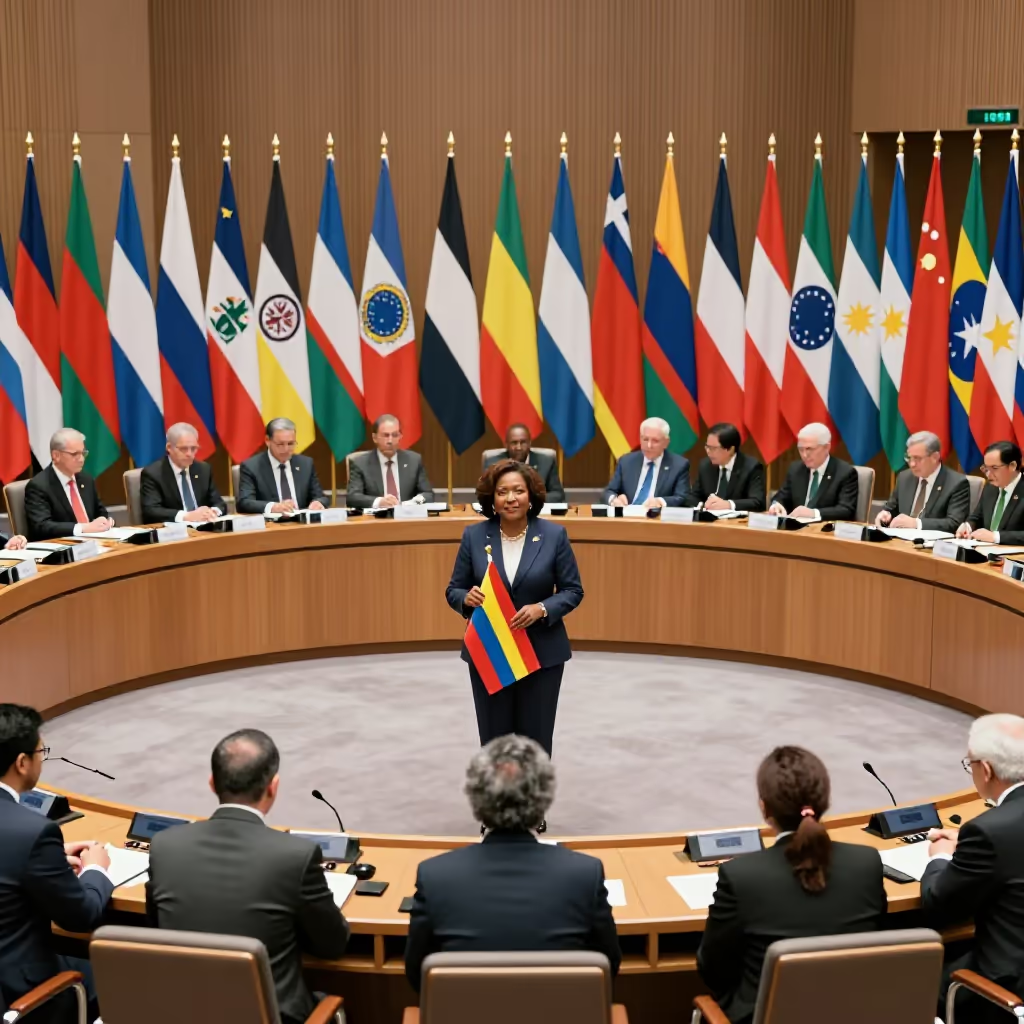
A state that is a member of a supranational organization, an alliance, or a confederation of states.
example
Die Entscheidung muss von allen Mitgliedsstaaten der Europäischen Union einstimmig getroffen werden.
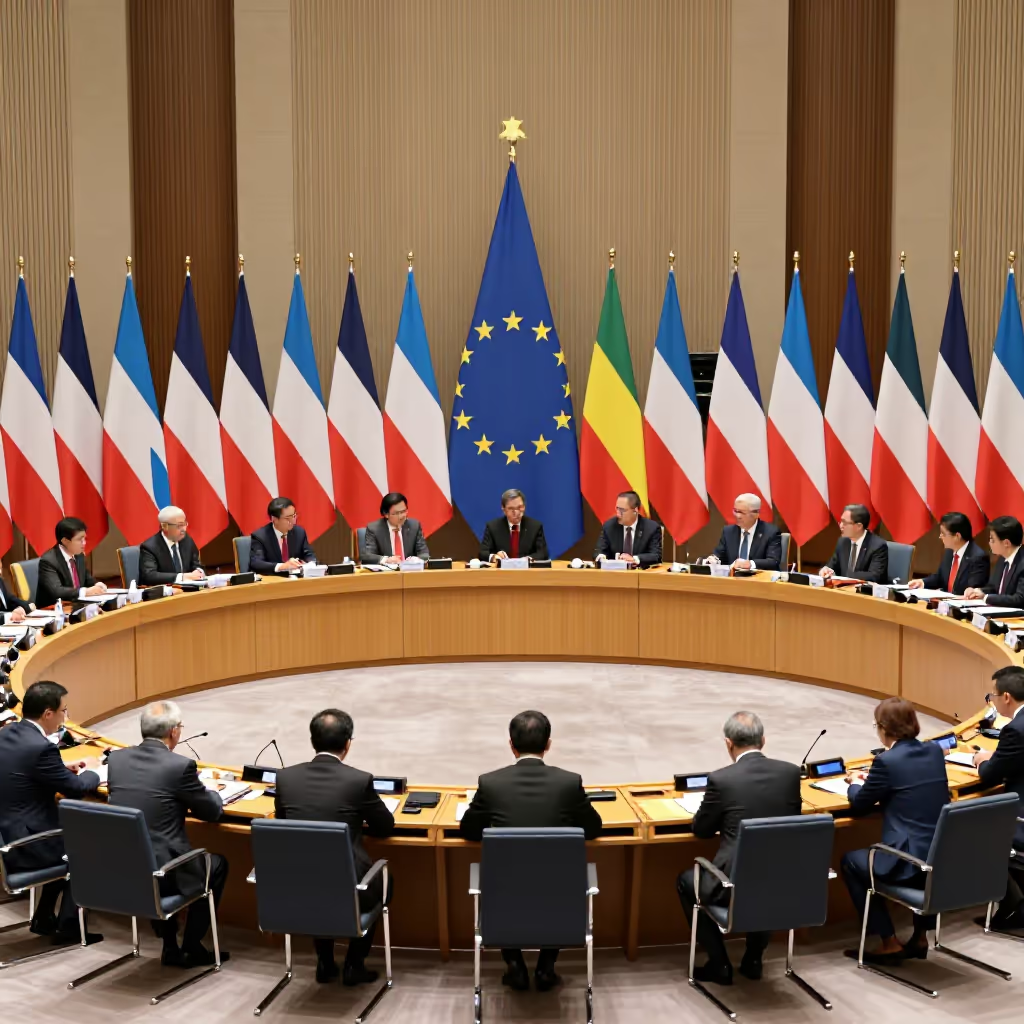
The decision must be made unanimously by all member states of the European Union.
Usage tips
Word composition
The word is clearly composed of 'das Mitglied' (member) and 'der Staat' (state), connected by an 's'. So it literally means a state that is a member of a larger community.
EXAMPLE
Jeder Mitgliedsstaat hat in der Versammlung eine Stimme.
Each member state has one vote in the assembly.
Typical collocations
This word is almost always used in connection with a specific international organization. The most common collocation is 'Mitgliedsstaat der Europäischen Union (EU)' (member state of the European Union).
EXAMPLE
Deutschland ist ein Gründungsmitglied der Europäischen Union.
Germany is a founding member of the European Union.
Sentence structure
Membership is often expressed using the genitive ('die Mitgliedsstaaten der NATO' — the member states of NATO) or by forming a compound word ('die EU-Mitgliedsstaaten' — the EU member states).
EXAMPLE
Die EU-Mitgliedsstaaten beraten über ein neues Gesetz.
The EU member states are discussing a new law.
Compare with
synonym · confusable
Mitgliedsstaat vs Mitgliedstaat
member state
'Mitgliedstaat' and 'Mitgliedsstaat' mean practically the same thing: a state is a member of a larger organization or alliance. Both words are used for countries in the EU, the United Nations, or similar groups. They are easy to confuse because there is only one additional 's' in the middle and the meaning stays the same. In many texts, you will find both forms. The main point is: it is not about an individual person as a member, but about an entire state as a member of an organization.
Mitgliedsstaat
Jeder Mitgliedsstaat muss die gemeinsamen Regeln beachten.
Every member state must follow the shared rules.
Mitgliedstaat
Deutschland ist ein Mitgliedstaat der Europäischen Union.