

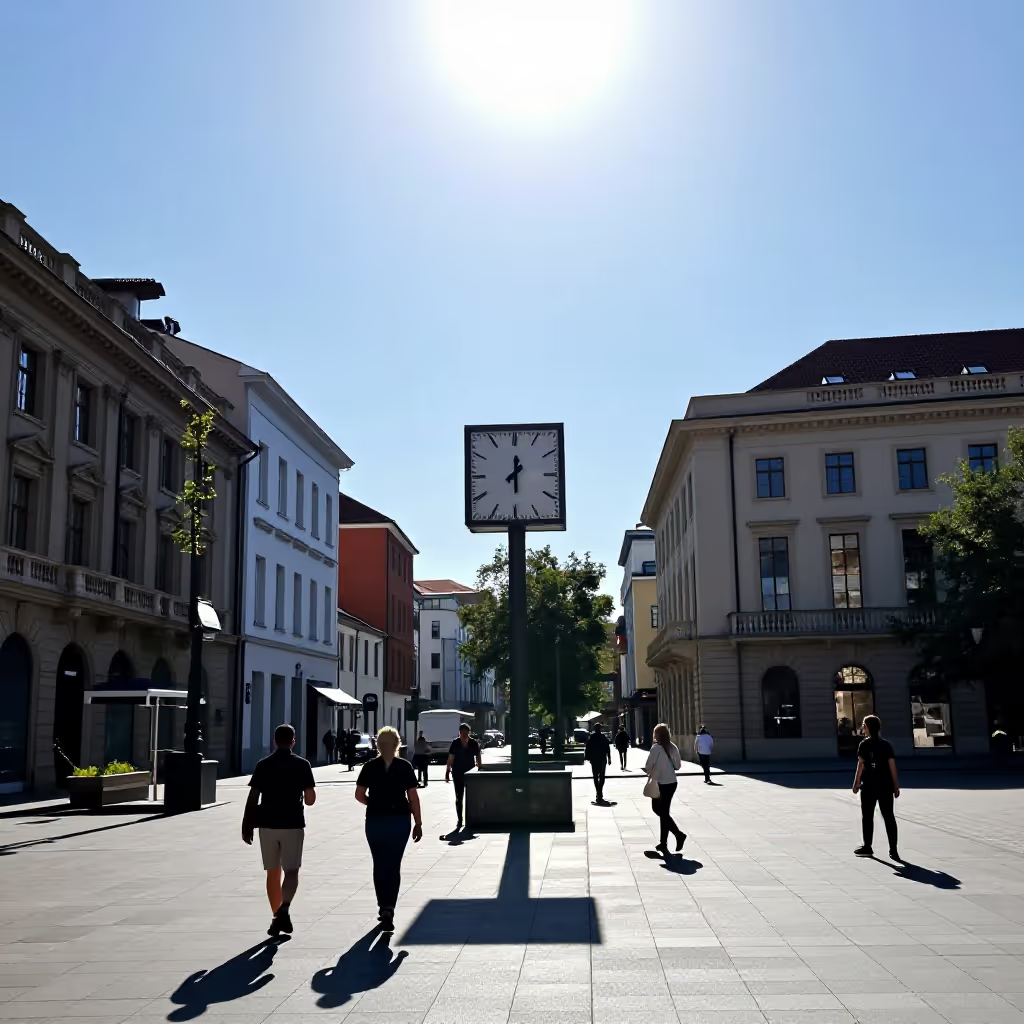
der Mittag
noon
The middle of the day, the time around 12 o'clock.
EXAMPLE
Heute Mittag scheint die Sonne besonders stark.
The sun is especially strong at noon today.
noon / lunch
Loading your saved state.
noon
The middle of the day, the time around 12 o'clock.
Heute Mittag scheint die Sonne besonders stark.
The sun is especially strong at noon today.

lunch
Refers to the meal eaten in the middle of the day; lunch.
Was gibt es heute zu Mittag?
What's for lunch today?
The word 'Mittag' is made up of 'Mitte' (middle) and 'Tag' (day). So it literally describes the middle of the day.
Die Glocken läuten genau zur Mitte des Tages, also um 12 Uhr mittags.
The bells ring exactly in the middle of the day, that is, at 12 noon.
'Mittag' is a base word for many other useful time expressions. These include 'Vormittag' (morning/forenoon), 'Nachmittag' (afternoon), 'Mittagspause' (lunch break), and 'Mittagessen' (lunch).
Nach der Mittagspause fühle ich mich oft müde.
After the lunch break, I often feel tired.
To specify an exact time, 'Mittag' is often used with prepositions such as 'am Mittag' (at noon) or 'gegen Mittag' (around noon). Adverbs like 'heute' (today) or 'morgen' (tomorrow) can stand directly before it.
Wir treffen uns morgen Mittag vor dem Kino.
We're meeting tomorrow at noon in front of the cinema.
When 'Mittag' refers to the meal, it is almost always used in the fixed phrase 'zu Mittag'. Typical sentences are 'zu Mittag essen' (to eat lunch) or the question 'Was gibt es zu Mittag?' (What's for lunch?).
Ich esse heute nur einen Salat zu Mittag.
I'm only having a salad for lunch today.
lunch
Mittag and Mittagessen can both refer to the meal in the middle of the day. With Mittag, this meaning often only becomes clear from a phrase such as „zu Mittag“. Mittagessen names the meal directly and is therefore unambiguous even without such context.

Heute gibt es zu Mittag eine warme Suppe.
Today we’re having hot soup for lunch.
Heute gibt es zum Mittagessen eine warme Suppe.
Today we’re having hot soup for lunch.