


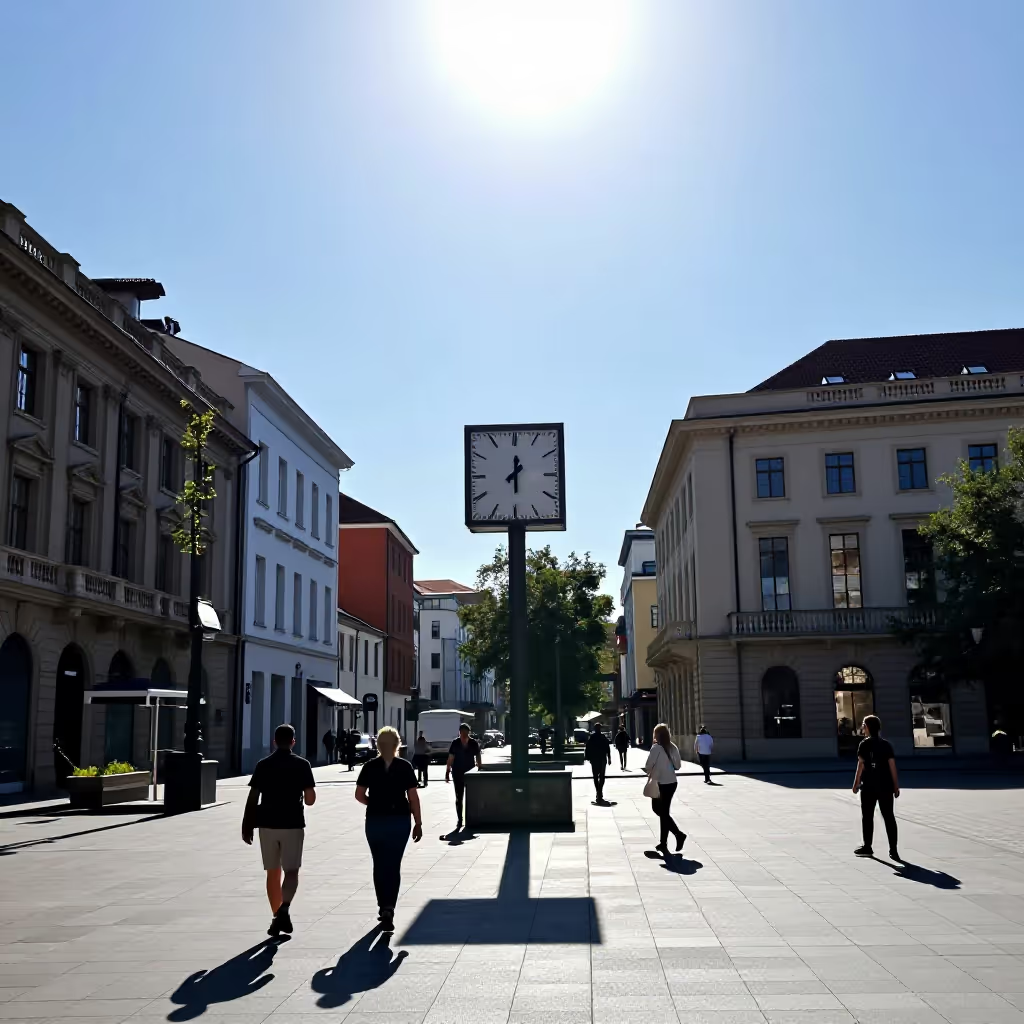
The period around the middle of the day, usually between 12 and 2 p.m., when most people take their lunch break and eat lunch.
example
Während der Mittagszeit ist das Restaurant immer sehr voll.
During lunchtime, the restaurant is always very full.
Usage tips
Compound word
The word is made up of 'Mittag' (midday/noon) and 'Zeit' (time). The 's' in between is a linking s that connects the two words. It literally means 'the time around midday'.
EXAMPLE
Um die Mittagszeit ist die Sonne am stärksten.
Around lunchtime, the sun is at its strongest.
Typical prepositions
To indicate a point in time, you use 'zur Mittagszeit' (at lunchtime). To describe a duration, you use 'während der Mittagszeit' (during lunchtime).
EXAMPLE
Zur Mittagszeit treffen wir uns immer in der Kantine.
At lunchtime, we always meet in the cafeteria.
Cultural context
In German-speaking countries, lunchtime is traditionally the time for the main meal of the day. Smaller shops or doctors' offices may take a break and be closed during this time.
EXAMPLE
Viele Restaurants bieten zur Mittagszeit ein günstiges Tagesmenü an.
Many restaurants offer an inexpensive daily special at lunchtime.
Compare with
near_synonym
Mittagszeit vs Mittag
noon / lunch
'der Mittag' and 'die Mittagszeit' both refer to the middle of the day. 'Mittag' can mean the point around 12 o'clock, and sometimes also the meal. 'Mittagszeit' more often means the period around that time, often the time for a break or for eating, for example between 12 and 2 p.m. If you mean an exact point in time, 'Mittag' fits better. If you mean a longer period or the typical lunch break, 'Mittagszeit' sounds more natural.
Mittagszeit
In der Mittagszeit ist es in der Kantine oft sehr laut.
At lunchtime, it is often very loud in the cafeteria.
Mittag
Der Verkäufer ist bis Mittag im Laden erreichbar.
The salesperson can be reached in the shop until noon.