

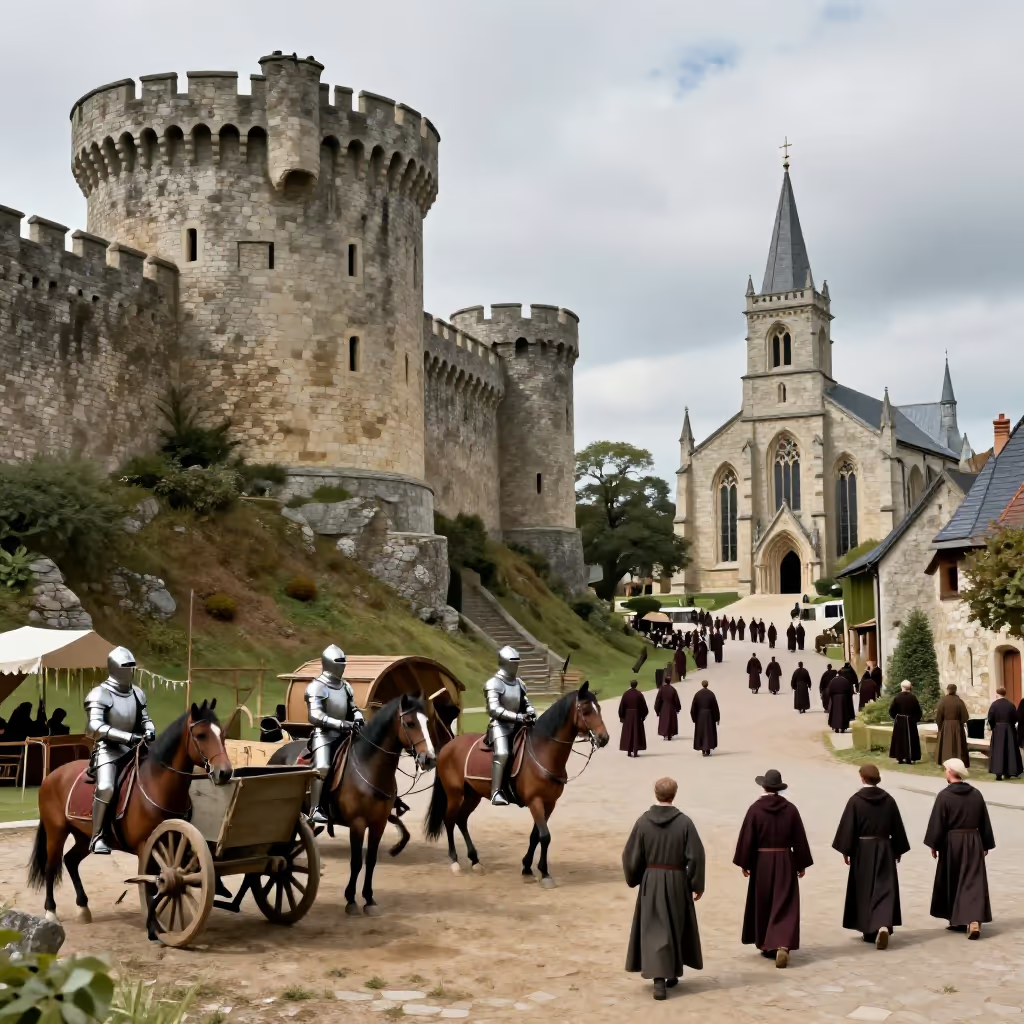
The historical period in Europe between antiquity and the modern era, lasting roughly from the 6th to the 15th century. This period is characterized, among other things, by feudalism, chivalry, and the strong influence of the church.
example
Viele Burgen und Kathedralen in Deutschland stammen aus dem Mittelalter.
Many castles and cathedrals in Germany date from the Middle Ages.

Usage tips
Word composition
The word is a clear compound of 'das Mittel' (the middle) and 'das Alter' (the age). So it literally means 'the middle age' and lies between antiquity and the modern era.
EXAMPLE
Das Mittelalter war eine faszinierende Epoche.
The Middle Ages was a fascinating period.
Word family
The related adjective is 'mittelalterlich' (medieval). It describes things, people, or ideas that come from the Middle Ages or are reminiscent of that time.
EXAMPLE
Wir besuchten einen mittelalterlichen Markt in der Altstadt.
We visited a medieval market in the old town.
Correct preposition
When talking about events or life in this period, you almost always use the preposition 'in' with the dative: 'im Mittelalter' (in the Middle Ages).
EXAMPLE
Im Mittelalter war das Leben für die meisten Menschen sehr hart.
In the Middle Ages, life was very hard for most people.
Typical collocations
Historians often divide the period more precisely. People speak of the 'frühes Mittelalter' (Early Middle Ages, approx. 6th–10th c.), 'Hochmittelalter' (High Middle Ages, approx. 11th–13th c.), and 'spätes Mittelalter' (Late Middle Ages, approx. 14th–15th c.).
EXAMPLE
Die meisten großen Kathedralen wurden im Hochmittelalter gebaut.
Most of the great cathedrals were built in the High Middle Ages.
Compare with
confusable
Mittelalter vs Renaissance
Renaissance / revival
'Mittelalter' and 'Renaissance' are both important periods in European history. They can be confused because they are close to each other in time and partly overlap. 'Mittelalter' means the older period between antiquity and the modern era, with chivalry, feudalism, and the strong influence of the church. 'Renaissance' comes later and emphasizes the rediscovery of antiquity in art, science, and thought. As a simple guide: the Middle Ages sound more like castles and knights, while the Renaissance sounds more like art, research, and a renewed interest in antiquity.
Mittelalter
Im Geschichtsunterricht lesen wir über Städte und Burgen im Mittelalter.
In history class, we read about cities and castles in the Middle Ages.
Renaissance
In der Renaissance interessierten sich viele Künstler wieder stark für die Antike.
During the Renaissance, many artists again became very interested in antiquity.