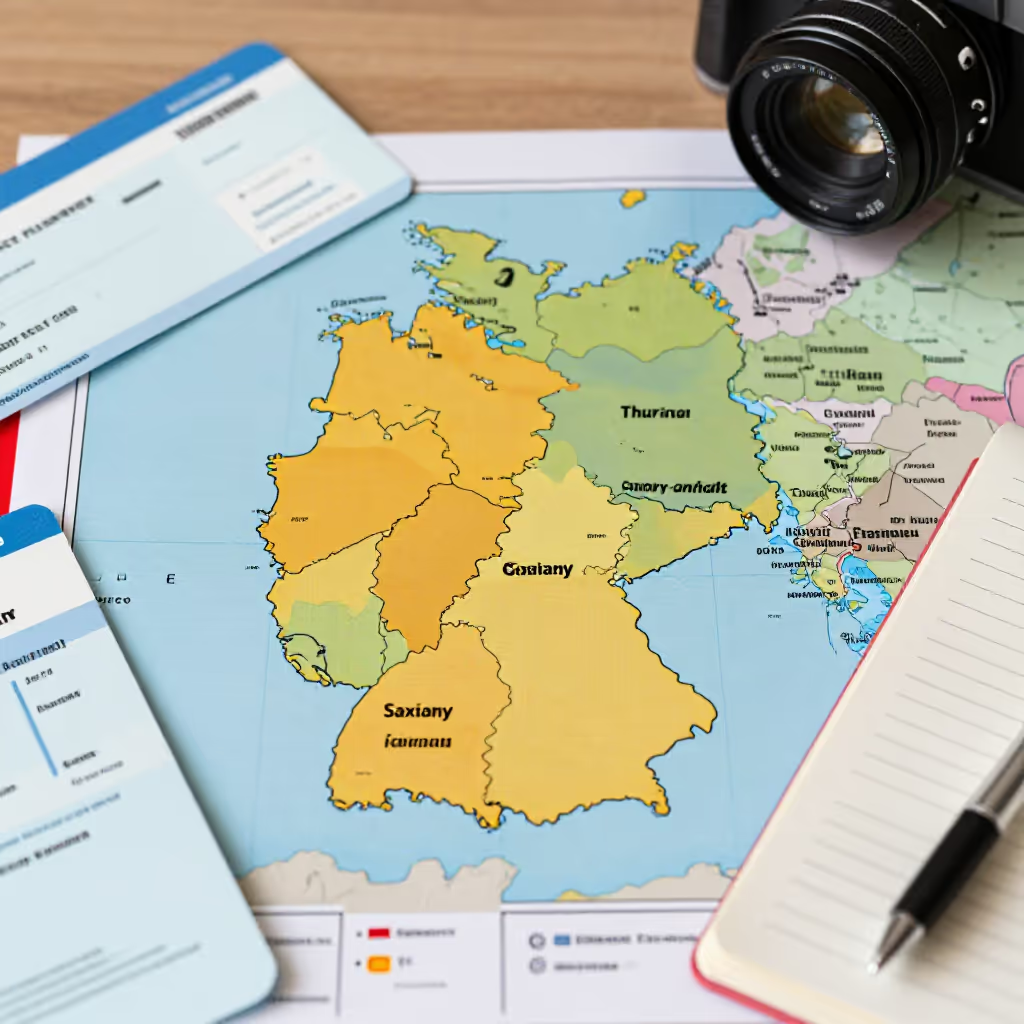
Refers to the geographical region in the middle of Germany, especially the federal states of Saxony, Saxony-Anhalt, and Thuringia.
example
Leipzig ist eine bedeutende Stadt im mitteldeutschen Raum.
Leipzig is an important city in the central German region.
Usage tips
Word composition
The adjective 'mitteldeutsch' (central German) is composed of the words 'mittel' (middle) and 'deutsch' (German). So it literally describes something that is located in the middle of Germany or comes from there.
EXAMPLE
Der mitteldeutsche Dialekt ist für viele Deutsche gut verständlich.
The central German dialect is easy for many Germans to understand.
Lowercase spelling
Although 'mitteldeutsch' (central German) refers to a geographical region, it is written in lowercase as an adjective in German. Only when it is used as part of a proper name is it capitalized.
EXAMPLE
Viele mitteldeutsche Städte haben eine reiche Geschichte.
Many central German cities have a rich history.
Typical combinations
In its geographical meaning, 'mitteldeutsch' (central German) is often used in fixed combinations, for example 'der mitteldeutsche Raum' (the central German area), 'die mitteldeutsche Wirtschaft' (the central German economy), or 'der mitteldeutsche Dialektraum' (the central German dialect area).
EXAMPLE
Die mitteldeutsche Region ist wirtschaftlich im Wandel.
The central German region is undergoing economic change.
Context clue
You can tell from the context whether the geographical region or the dialect group is meant. Words like 'Sprache' (language), 'Dialekt' (dialect), or 'Akzent' (accent) point to the linguistic meaning, while 'Region' (region), 'Stadt' (city), or 'Wirtschaft' (economy) indicate the geographical meaning.
EXAMPLE
Das Thüringische ist ein mitteldeutscher Dialekt.
Thuringian is a Central German dialect.
Compare with
confusable
mitteldeutsch vs süddeutsch
southern German
'süddeutsch' and 'mitteldeutsch' both describe something that belongs to a region in Germany or to dialects spoken there. The difference is the region: 'süddeutsch' fits southern Germany, for example Bavaria or Baden-Württemberg. 'mitteldeutsch' means the middle of Germany, especially Saxony, Saxony-Anhalt, and Thuringia, or the dialects in this central area. The words can be confused because both sound geographical and can also have to do with language. So pay attention to whether the topic is the south or the center of Germany.
mitteldeutsch
Im Kurs vergleichen wir mitteldeutsche Dialekte mit norddeutschen Formen.
In the course, we compare Central German dialects with northern German forms.
süddeutsch
Der Kunde spricht mit einem deutlich süddeutschen Akzent.
The customer speaks with a clearly southern German accent.