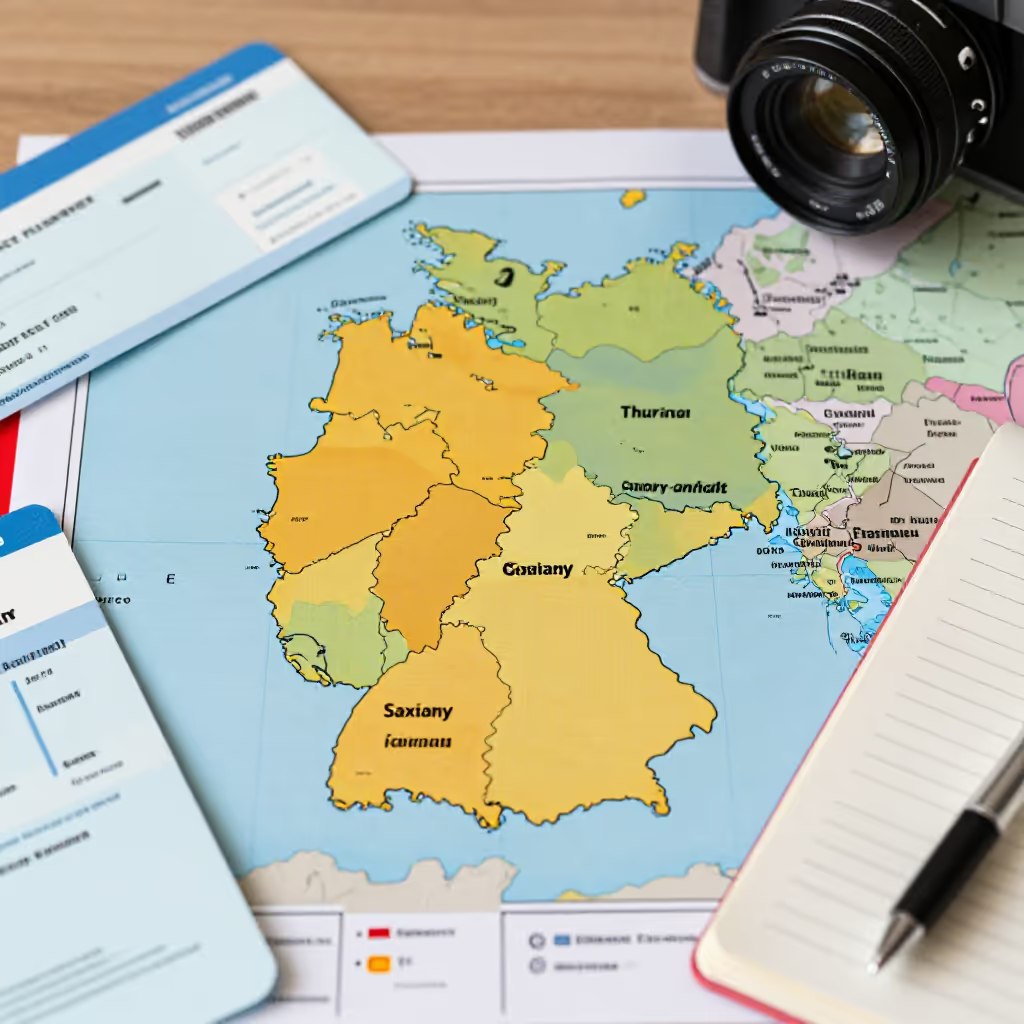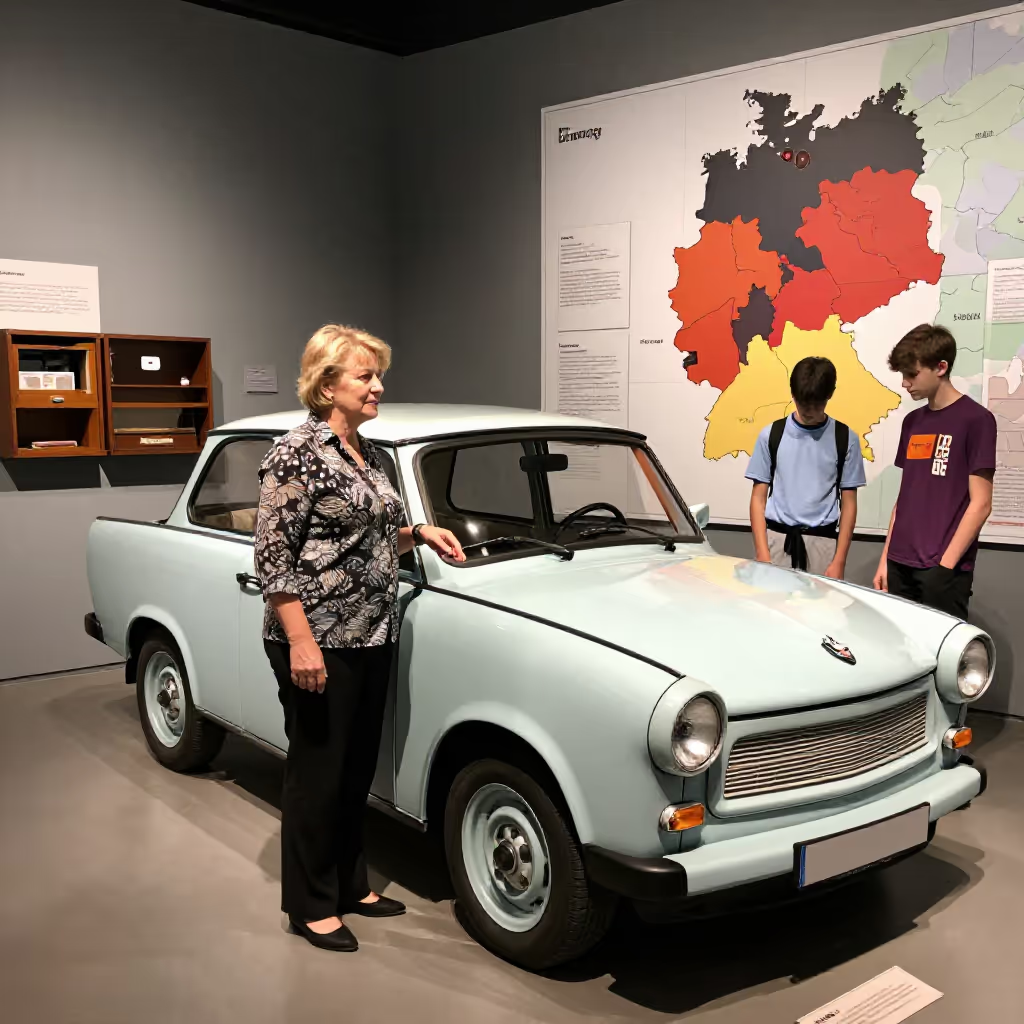
Relating to the territory, population, or culture of the German Democratic Republic (GDR) or of today's new federal states in eastern Germany.
example
Er wuchs in einer kleinen ostdeutschen Stadt in Thüringen auf.
He grew up in a small East German town in Thuringia.
Usage tips
Compound structure
The adjective is made up of the cardinal direction 'Ost' (east) and the word 'deutsch' (German). It describes a geographical or historical-political affiliation with an eastern part of Germany.
EXAMPLE
Viele ostdeutsche Regionen haben eine einzigartige Landschaft.
Many East German regions have a unique landscape.
Historical context
The meaning depends heavily on the time period. In modern conversations, it almost always refers to the territory of the former GDR. In historical texts about the period before 1945, it can mean the former eastern territories such as Silesia or Pomerania.
EXAMPLE
Meine Kollegin kommt aus einer ostdeutschen Stadt in Sachsen.
My colleague comes from an East German town in Saxony.
Use as a noun
The adjective 'ostdeutsch' (East German) is often used as a noun for a person. You then say 'der Ostdeutsche' (the East German man) or 'die Ostdeutsche' (the East German woman) to refer to someone from the new federal states.
EXAMPLE
Als Ostdeutscher kennt er die Geschichte der DDR sehr gut.
As an East German, he knows the history of the GDR very well.
Typical collocations
In its present-day meaning, 'ostdeutsch' (East German) is often combined with terms such as 'Bundesländer' (federal states), 'Biografie' (biography), 'Wirtschaft' (economy), or 'Identität' (identity).
EXAMPLE
Die ostdeutsche Wirtschaft hat sich seit 1990 stark verändert.
The East German economy has changed significantly since 1990.
Compare with
antonym · confusable
ostdeutsch vs westdeutsch
West German
'westdeutsch' and 'ostdeutsch' form a contrast when talking about west and east in Germany. 'Westdeutsch' can refer to the old Federal Republic of Germany before 1990 or to the geographical west of present-day Germany. 'Ostdeutsch' usually refers to the GDR, the new federal states in eastern Germany, or people and culture from this area. The words can be confused especially in historical texts, because they do not only mean compass directions, but also political and historical spaces. So you should pay attention to the context: before 1990, after 1990, or geographical.
ostdeutsch
Meine Nachbarin erzählt oft von ihrer Kindheit in einer ostdeutschen Kleinstadt.
My neighbor often talks about her childhood in a small East German town.
westdeutsch
In dem Film sieht man eine westdeutsche Stadt kurz vor der Wiedervereinigung.
In the film, you see a West German city shortly before reunification.