


der Modus
mode
A specific operating mode, state, or way in which a device, program, or system functions.
EXAMPLE
Bitte schalten Sie Ihr Handy in den Flugmodus.
Please switch your phone to airplane mode.
mode
Loading your saved state.
mode
A specific operating mode, state, or way in which a device, program, or system functions.
Bitte schalten Sie Ihr Handy in den Flugmodus.
Please switch your phone to airplane mode.

mood
In grammar, a category of the verb that expresses the speaker's attitude toward the statement (e.g. reality, possibility, command). The three moods in German are indicative, subjunctive, and imperative.
Der Lehrer erklärte den Unterschied zwischen dem Indikativ und dem Konjunktiv als Modus des Verbs.
The teacher explained the difference between the indicative and the subjunctive as moods of the verb.

mode
In statistics, the value that occurs most frequently in a set of measurements or a sample. It is also called the modal value.
In der Zahlenreihe 2, 3, 3, 5, 7, 10 ist 3 der Modus.
In the number sequence 2, 3, 3, 5, 7, 10, 3 is the mode.
mode
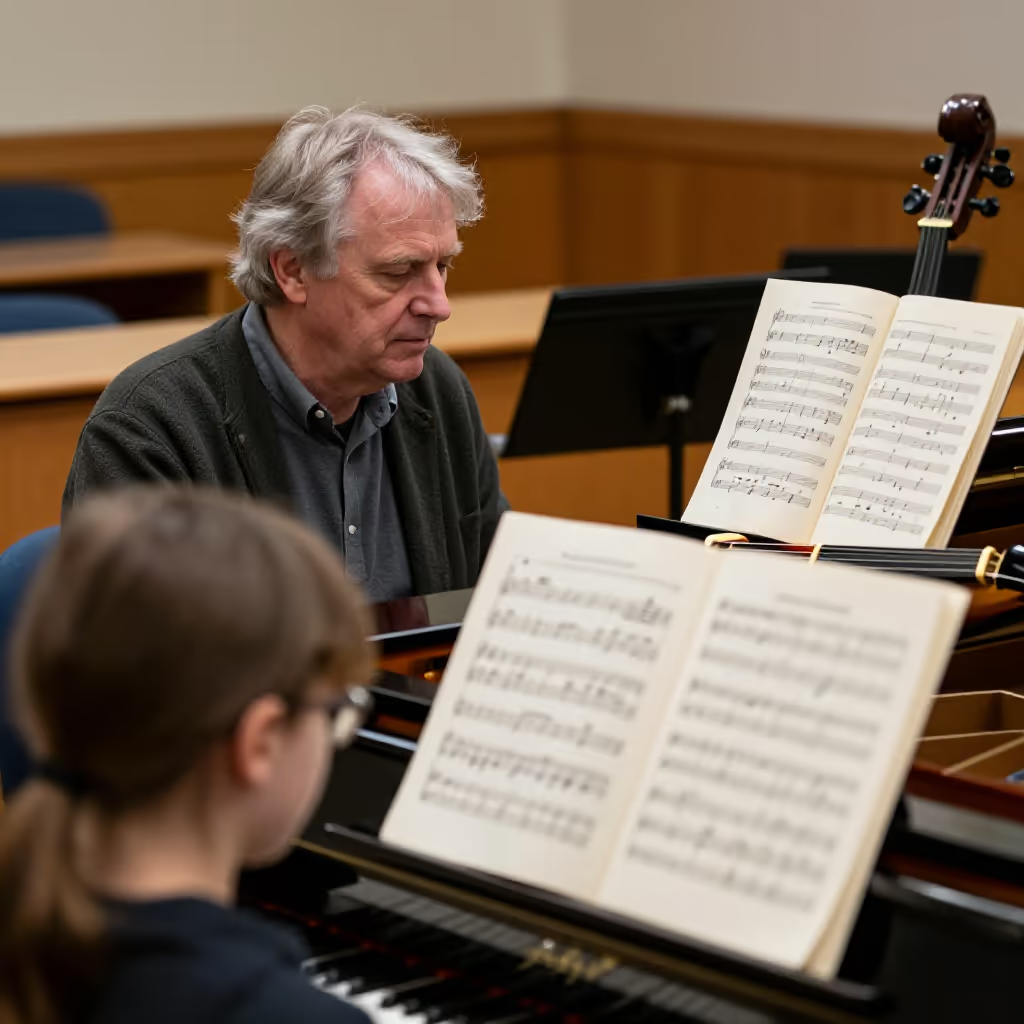
In music, a particular type of scale or tonal system with characteristic melodic patterns, especially the historical church modes.
Jazzmusiker improvisieren oft über verschiedene Modi.
Jazz musicians often improvise over different modes.
method / manner
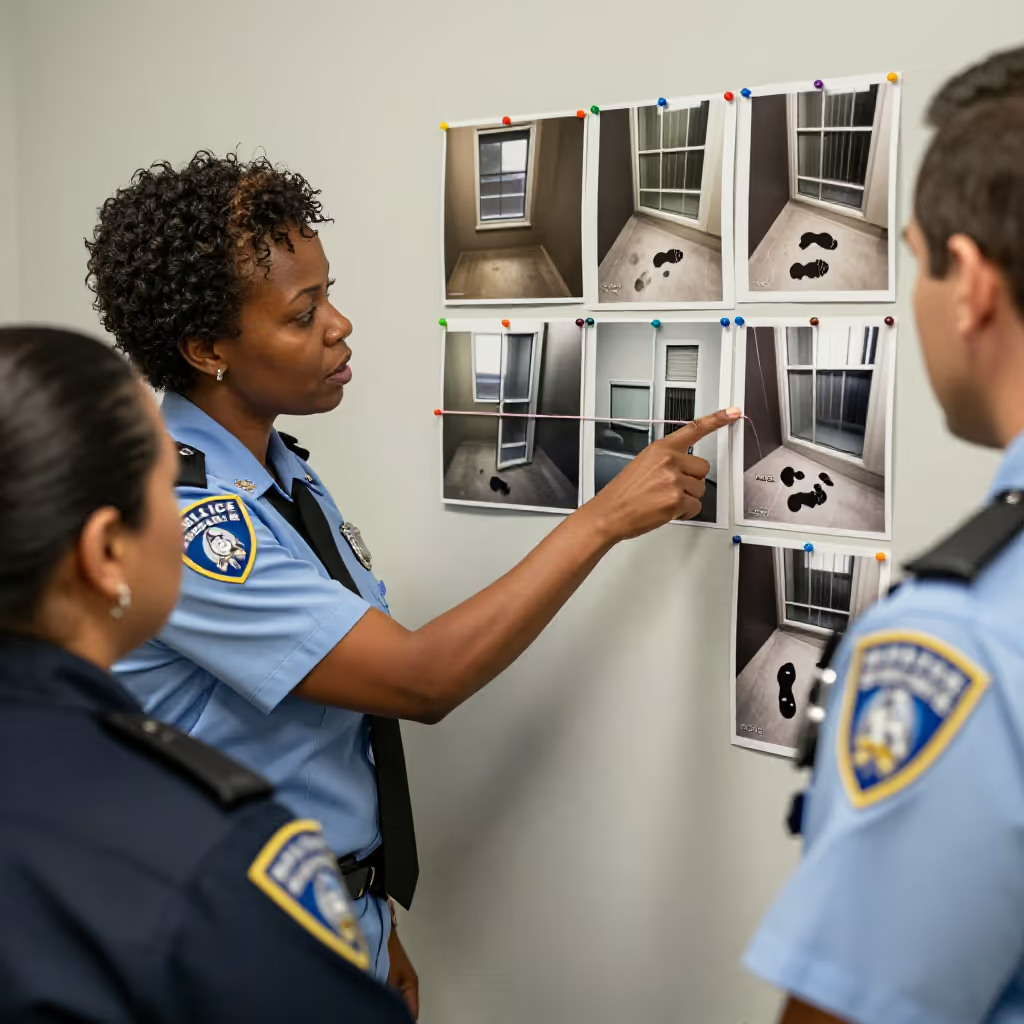
A way, method, or procedure. The term is often used in fixed Latin expressions such as 'Modus Vivendi' (a way of living together) or 'Modus Operandi' (method of operation).
Die beiden verfeindeten Parteien fanden einen Modus Vivendi, um friedlich nebeneinander zu existieren.
The two hostile parties found a modus vivendi in order to coexist peacefully.
Although it sounds similar, 'der Modus' (mode) does not mean 'Mode' (fashion). The English word 'mode' can mean both, but 'der Modus' in German refers to a way of functioning or a state, not to clothing.
Schalte dein Handy bitte in den Lautlos-Modus.
Please switch your phone to silent mode.
'Modus' (mode) is a technical term in many fields. The context makes the meaning clear: in technology it is about devices, in grammar about verbs, in statistics about numbers, and in music about scales.
Je nach Fachgebiet hat der Begriff „Modus“ eine andere, sehr spezifische Bedeutung.
Depending on the field, the term 'Modus' has a different, very specific meaning.
'Modus' (mode) is most commonly used for technical devices and software. It often forms compound words such as 'Flugmodus' (airplane mode), 'Energiesparmodus' (power-saving mode), or 'Nachtmodus' (night mode).
Der Energiesparmodus verlängert die Akkulaufzeit des Laptops.
Power-saving mode extends the laptop's battery life.
When you hear 'Modus' (mood) in grammar class, it refers to the three ways a verb can express a statement: indicative (reality), subjunctive (possibility), and imperative (command).
Der Konjunktiv ist ein Modus, der oft für indirekte Rede verwendet wird.
The subjunctive is a mood that is often used for indirect speech.
In elevated language, 'Modus' (method/manner) appears in fixed Latin expressions. 'Modus Vivendi' describes a way of living together despite conflicts, and 'Modus Operandi' the typical method of operation of a person.
Die Ermittler erkannten schnell den Modus Operandi des Täters.
The investigators quickly recognized the perpetrator's modus operandi.
program
For a device, both Programm and Modus can refer to a selectable operating mode. A Programm typically represents a fixed sequence, while a Modus describes the more general way the device operates. Use „Programm“ for a specific sequence and „Modus“ for the desired operating mode.

Im Energiesparmodus arbeitet die Maschine mit weniger Strom.
In energy-saving mode, the machine uses less electricity.
Für die Wäsche wähle ich das Programm mit Waschen, Spülen und Schleudern.
For the laundry, I select the program that includes washing, rinsing, and spinning.