

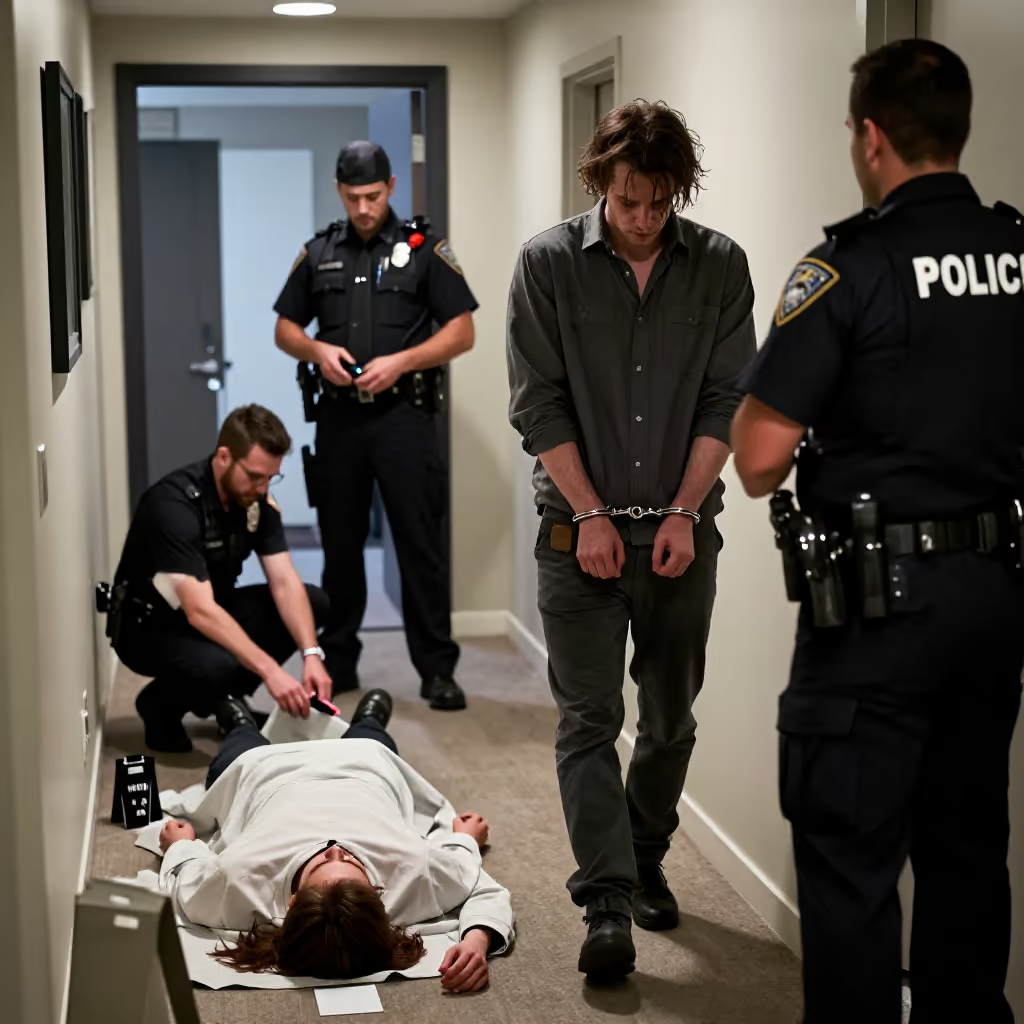
der Mörder
murderer
A person who has intentionally and unlawfully killed another human being.
EXAMPLE
Die Polizei konnte den Mörder nach einer langen Ermittlung überführen.
The police were able to convict the murderer after a long investigation.
murderer
Loading your saved state.
murderer
A person who has intentionally and unlawfully killed another human being.
Die Polizei konnte den Mörder nach einer langen Ermittlung überführen.
The police were able to convict the murderer after a long investigation.
'Der Mörder' (the murderer) is the person who carries out the action of the verb 'morden' (to murder). The ending '-er' is often used in German to indicate the person performing an action.
Wer mordet, wird Mörder genannt.
Someone who murders is called a murderer.
The word belongs to a word family: 'der Mord' (murder) is the act itself, and 'morden' (to murder) is the corresponding verb. If you know one word, you can often derive the others.
Der Mord geschah in der Nacht.
The murder happened during the night.
In crime novels or the news, 'Mörder' (murderer) is often combined with verbs like 'suchen' (to search for), 'jagen' (to hunt), 'fassen' (to catch), 'verhaften' (to arrest), or 'verurteilen' (to sentence/convict).
Die Polizei hat den Mörder nach wochenlanger Suche endlich gefasst.
After weeks of searching, the police finally caught the murderer.
killer
Mörder and Killer can both refer to a person who has killed someone. Mörder is the neutral, general term. Killer usually sounds more colloquial and can suggest a deliberate or professional perpetrator in particular, so it is not equally suitable in every situation.

Die Polizei nahm den Mörder des Mannes noch am selben Abend fest.
The police arrested the man's murderer that same evening.
Im Film verfolgt ein Killer den Politiker durch die leeren Straßen.
In the film, a killer pursues the politician through the empty streets.