

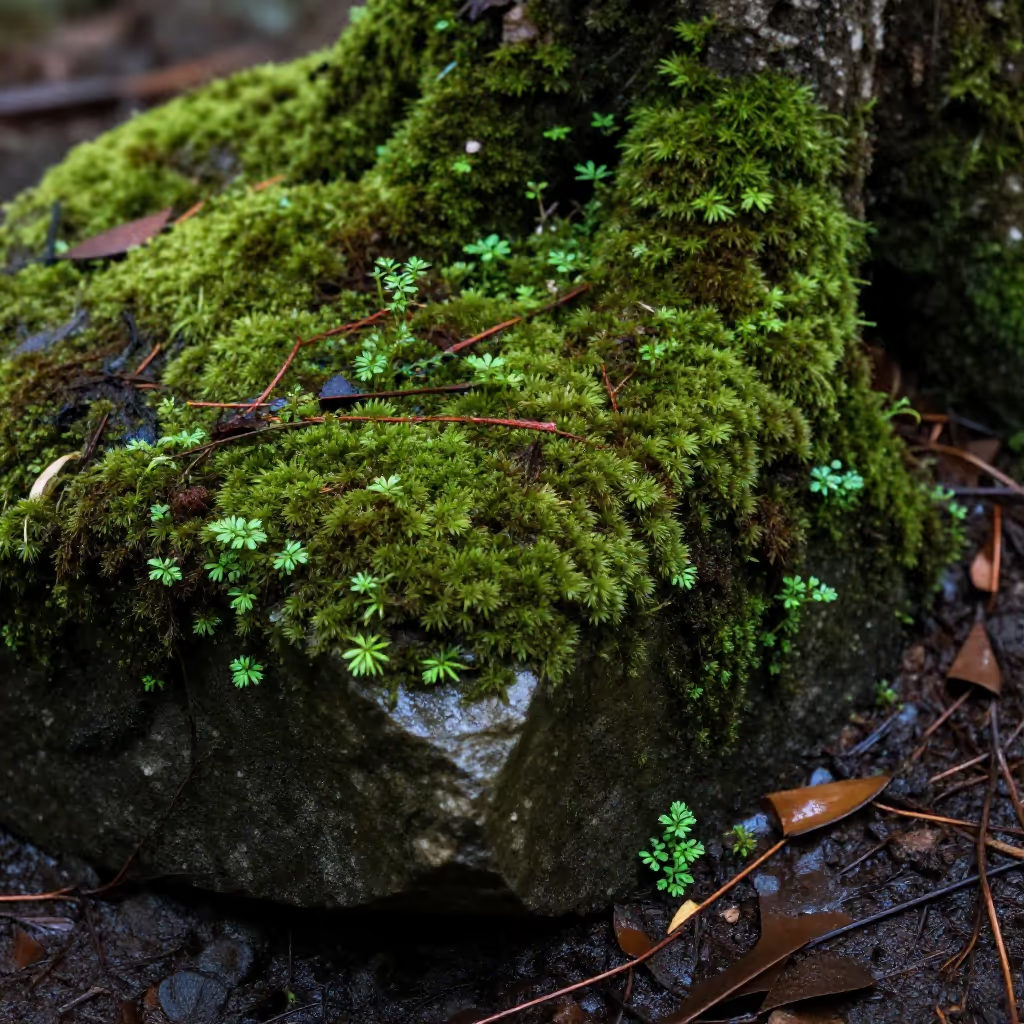
A term for a group of small, usually green land plants that often grow in damp, shady environments on stones, bark, or the ground. The correct singular form is 'das Moos' (moss).
example
Die alten Mauern der Burgruine waren vollständig mit weichem Moos bewachsen.
The old walls of the castle ruins were completely covered with soft moss.
Usage tips
Singular and plural
The correct singular form is 'das Moos' (moss). It is often used uncountably for the plant as a material or covering. The plural form 'die Moose' (mosses) is mostly used in biology when talking about different types of moss.
EXAMPLE
Der ganze Waldboden ist mit weichem Moos bedeckt.
The entire forest floor is covered with soft moss.
Word family
The adjective 'moosig' (mossy) and the participle 'bemoost' (moss-covered) are derived from the noun 'Moos' (moss). Both mean 'covered with moss'.
EXAMPLE
Die alten Steine im Garten sind schon ganz moosig.
The old stones in the garden are already completely mossy.
Typical collocations
Moss is often described in connection with damp, natural places. Typical verbs are 'wachsen' (to grow) and 'bedecken' (to cover).
EXAMPLE
An der Nordseite des Baumes wächst besonders viel Moos.
A particularly large amount of moss grows on the north side of the tree.
Compare with
confusable
Moose vs Moos
moss / cash
'Moos' and 'Moose' are easily confused because they look almost the same and both have to do with small green plants. The correct singular form is 'das Moos'. 'Moose' is normally the plural: 'die Moose'. The form 'das Moose' is not correct as a singular. If you are talking about a green layer of plants on a stone or in the forest, you say 'das Moos'. If you mean several species or several plants, you say 'die Moose'.
Moose
„Das Moose“ ist keine korrekte Singularform; richtig heißt es „das Moos“.
'Das Moose' is not a correct singular form; the correct form is 'das Moos'.