

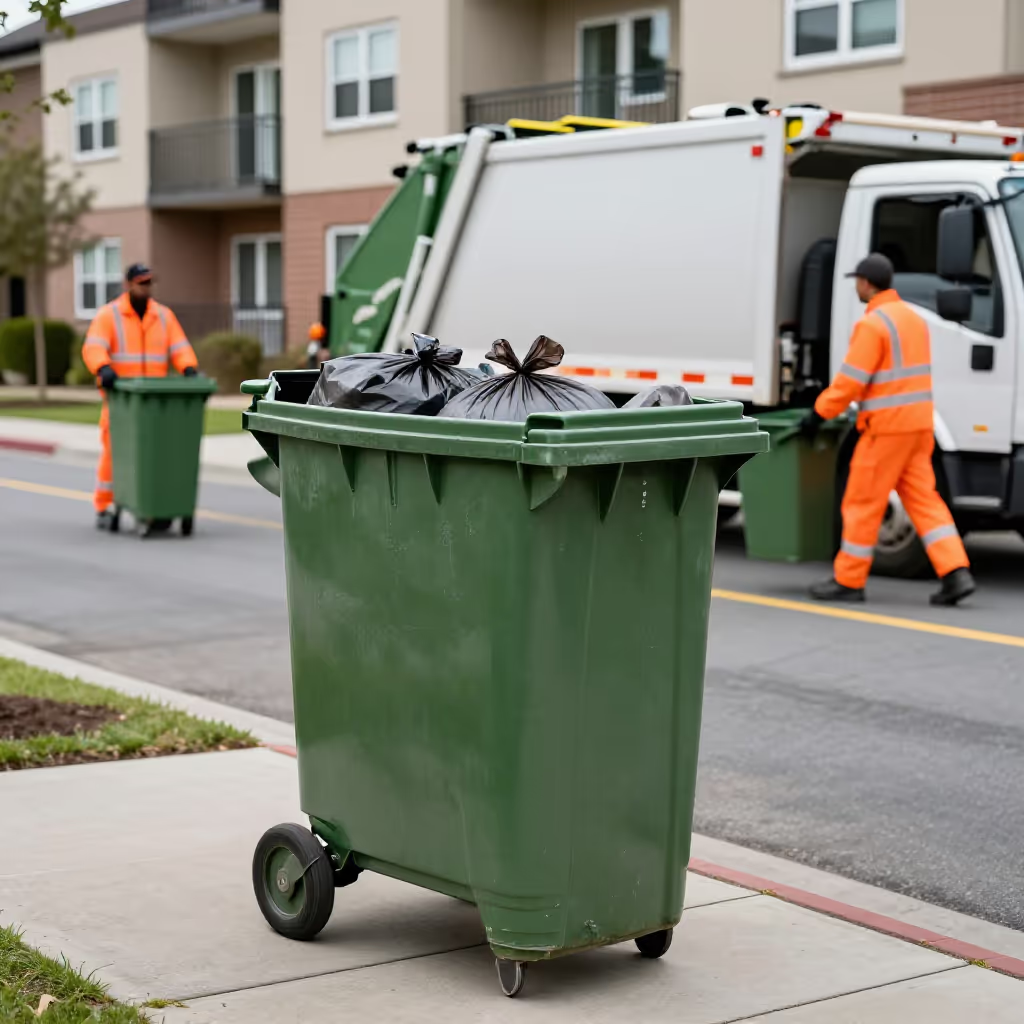
A large container in which waste is collected before it is picked up by the garbage collection service.
example
Bitte bring die Mülltonne an die Straße, sie wird morgen früh geleert.
Please take the trash bin to the street; it will be emptied tomorrow morning.

Usage tips
Word composition
The word is made up of 'Müll' (trash/waste) and 'Tonne' (a large, round container). So it is literally a bin for trash.
EXAMPLE
Die grüne Mülltonne ist für den Biomüll.
The green trash bin is for organic waste.
Typical collocations
Common verbs used with 'Mülltonne' (trash bin) are 'die Mülltonne rausstellen' (to put the trash bin out) or 'an die Straße stellen' (to put it by the street), so that it can be emptied, and 'etwas in die Mülltonne werfen' (to throw something into the trash bin).
EXAMPLE
Kannst du bitte den Müll rausbringen und in die Mülltonne werfen?
Can you please take out the trash and throw it into the trash bin?
Prepositions
You use 'in die Mülltonne' with the accusative when describing movement. When talking about the location, it is 'in der Mülltonne' with the dative.
EXAMPLE
Er warf den alten Brief in die Mülltonne.
He threw the old letter into the trash bin.
Compare with
synonym · confusable
Mülltonne vs Tonne
bin / ton
'die Tonne' and 'die Mülltonne' can both mean a large container for waste. 'die Mülltonne' is more specific: it clearly says that it is about trash, often in front of the house or by the street. In everyday speech, 'die Tonne' can be short for 'Mülltonne', but it is more general and can also mean other things. Learners may confuse the words because people often just say 'Tonne' in conversation. If the context is not clear, 'Mülltonne' is more unambiguous.
Mülltonne
Am Morgen stellt mein Vater die Mülltonne an die Straße.
In the morning, my father puts the trash bin out by the street.
Tonne
Die Tonne ist schon voll, deshalb stelle ich den Müll daneben.
The bin is already full, so I put the trash next to it.