

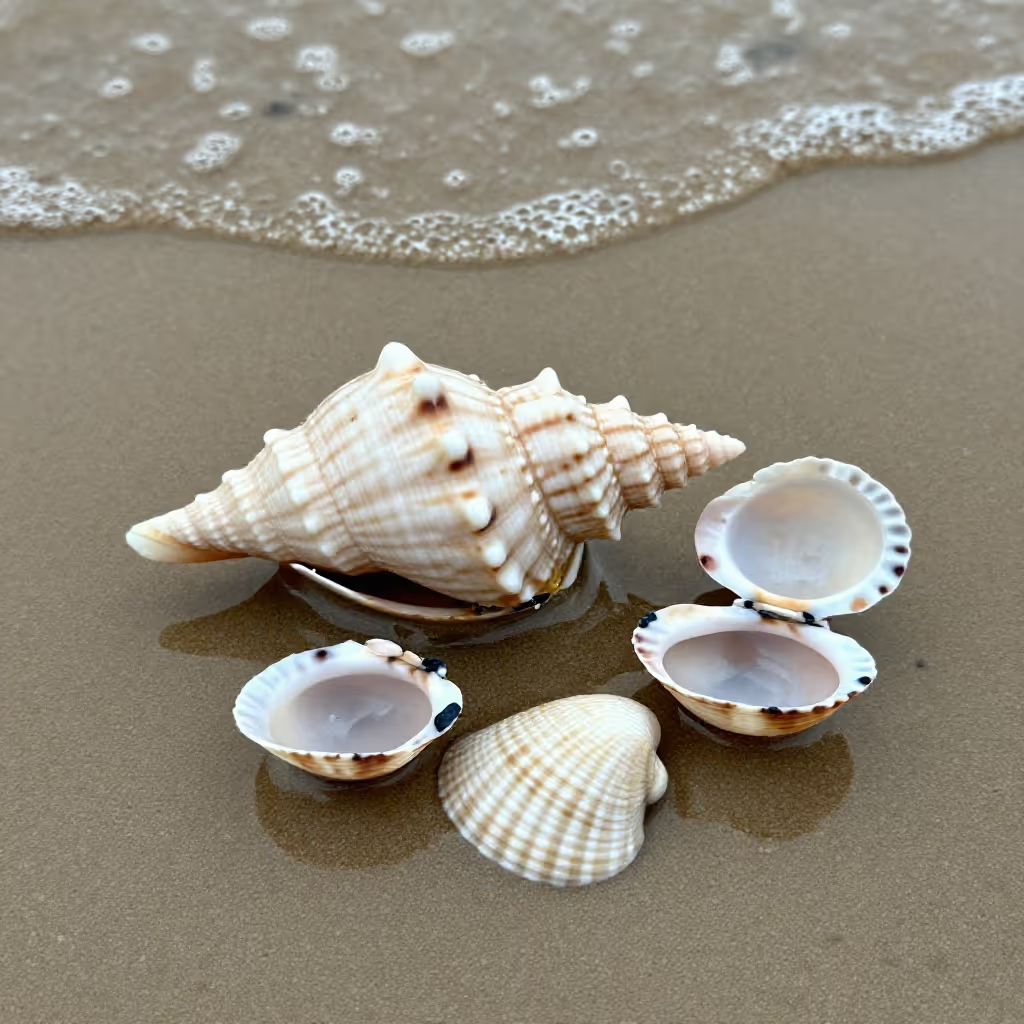
die Muschel
shell
The hard shell of a mollusk, often consisting of two parts, that is frequently found on the beach.
EXAMPLE
Die Kinder sammelten am Strand bunte Muscheln und Steine.
The children collected colorful shells and stones on the beach.
shell / mussel
Loading your saved state.
shell
The hard shell of a mollusk, often consisting of two parts, that is frequently found on the beach.
Die Kinder sammelten am Strand bunte Muscheln und Steine.
The children collected colorful shells and stones on the beach.

mussel
A mollusk that lives in water and has a two-part shell, often eaten as food.
In diesem Restaurant gibt es ausgezeichnete Muscheln in Weißweinsoße.
This restaurant has excellent mussels in white wine sauce.

outer ear
The outer, visible part of the ear (auricle).
Die Form der Ohrmuschel hilft dabei, den Schall zu bündeln und zum Gehörgang zu leiten.
The shape of the outer ear helps collect sound and direct it into the ear canal.

earpiece
Colloquial and becoming dated: the part of an old telephone receiver that you hold to your ear in order to listen.
Bei alten Telefonen musste man die Muschel fest ans Ohr drücken, um etwas zu verstehen.
With old telephones, you had to press the earpiece firmly to your ear to understand anything.
'Muschel' sounds similar to the English word 'muscle', but it means 'shell' or 'mussel'. The German word for 'muscle' is 'der Muskel'. This mix-up is a common mistake.
Nach dem Sport tut mir jeder Muskel weh.
After exercising, every muscle hurts.
Whether the shell or the animal is meant is usually revealed by the verb. 'Muscheln sammeln' (to collect shells) refers to the empty shells on the beach, while 'Muscheln essen' (to eat mussels) or 'kochen' (to cook) refers to the animal as food.
Wir haben am Strand schöne Muscheln gesammelt.
We collected beautiful shells on the beach.
When referring to the ear, the compound word 'die Ohrmuschel' (outer ear) is almost always used. The word 'Muschel' (shell/mussel) on its own is very rare in this context and could be misunderstood.
Er trug einen Ohrring in seiner linken Ohrmuschel.
He wore an earring in his left outer ear.
The meaning referring to a telephone receiver is dated. It refers to old rotary phones, where the receiver consisted of a mouthpiece and an earpiece.
Meine Oma erzählte, wie man früher die Muschel ans Ohr halten musste.
My grandma told me how people used to have to hold the earpiece to their ear.
shell / bowl
Schale is a general term for the hard, calcareous casing of a mollusk. Muschel refers more specifically to this kind of shell, often one consisting of two parts, such as the shells found on the beach. When the mollusk shell is not specified in more detail, Schale is appropriate; for the typical two-part form, Muschel is more suitable.
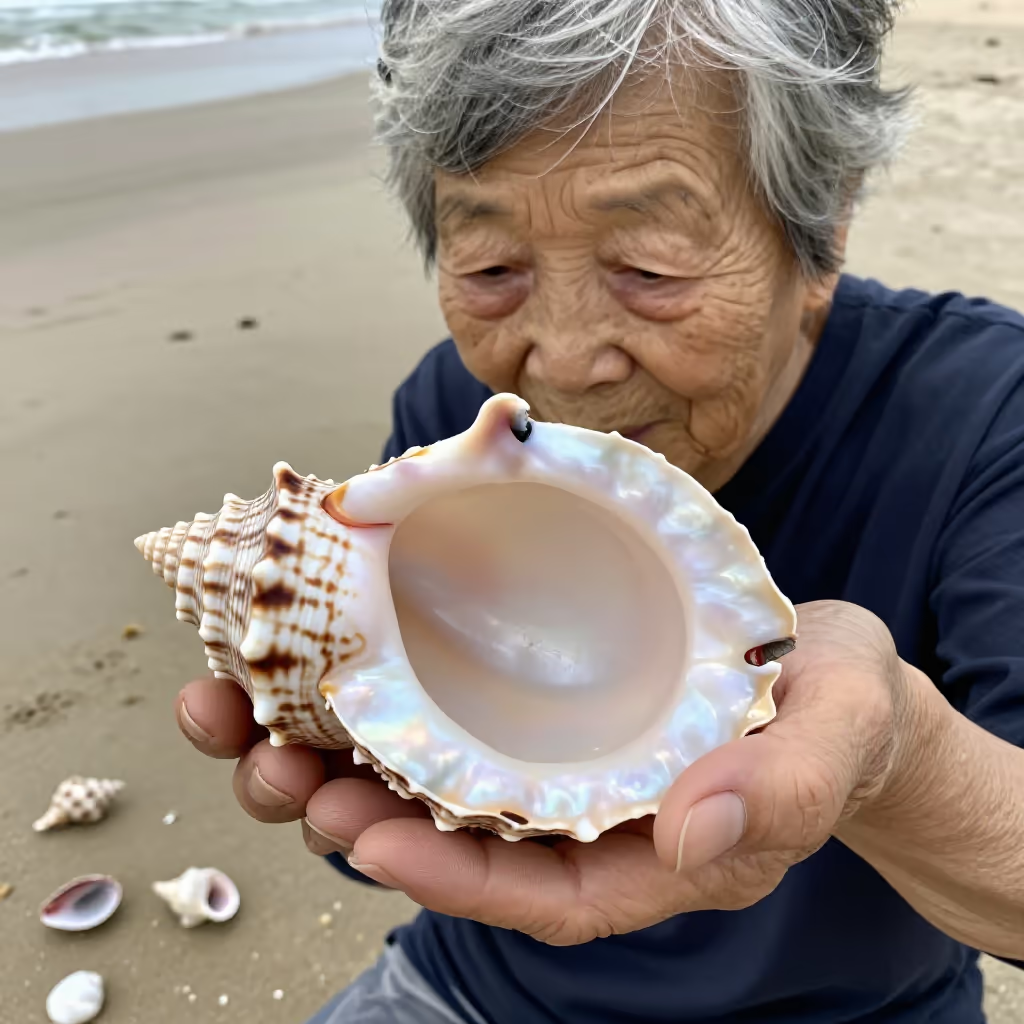
Am Strand fand sie eine leere, aus zwei Teilen bestehende Muschel.
At the beach, she found an empty shell consisting of two parts.
Am Strand fand sie die leere Schale eines kleinen Weichtiers.
At the beach, she found the empty shell of a small mollusk.