

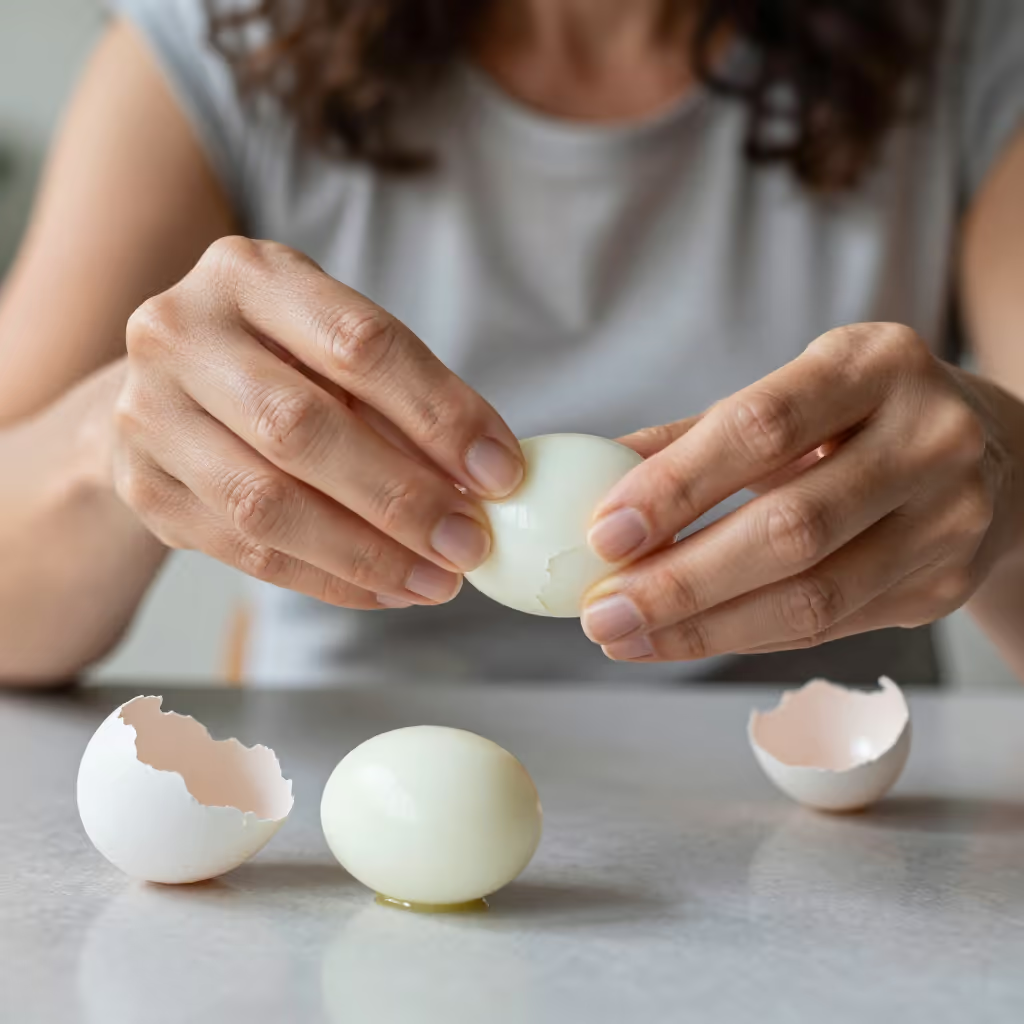
die Schale
shell / peel
The outer, often hard covering of fruits, nuts, or eggs.
EXAMPLE
Bitte wirf die Bananenschale in den Biomüll.
Please throw the banana peel into the organic waste.
shell / bowl
Loading your saved state.
shell / peel
The outer, often hard covering of fruits, nuts, or eggs.
Bitte wirf die Bananenschale in den Biomüll.
Please throw the banana peel into the organic waste.
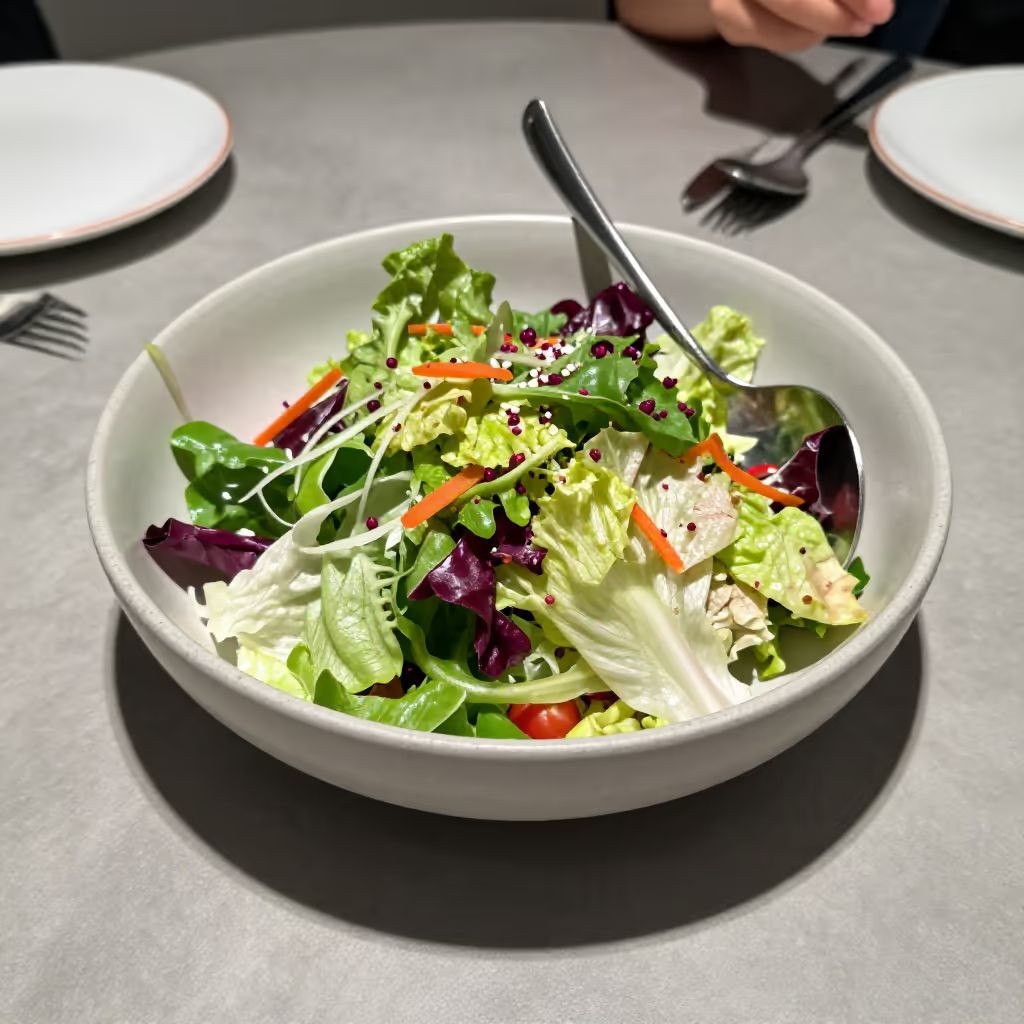
bowl
A shallow, open container, usually round, used for serving or storing food.
Stell bitte eine Schale mit Chips auf den Tisch.
Please put a bowl of chips on the table.

to dress up
To dress especially elegantly and smartly, usually for a special occasion.
Für die Hochzeit hat er sich richtig in Schale geworfen.
He really dressed up for the wedding.
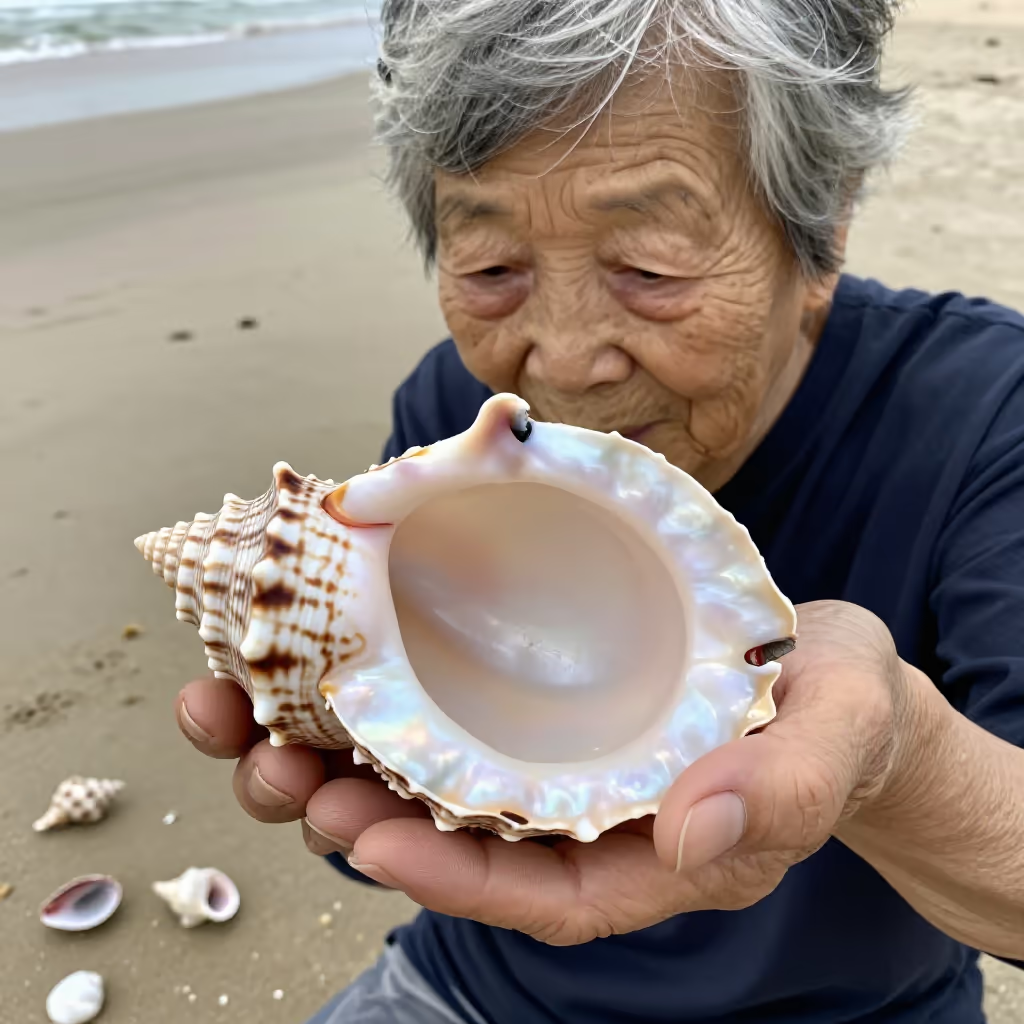
shell
The hard, calcareous casing of mollusks such as mussels or snails.
Am Strand haben wir viele bunte Schalen gesammelt.
We collected many colorful shells on the beach.
Although the meanings are different, they share the basic idea of an outer covering (as with a fruit or shellfish) or an enclosing container (like a bowl).
Sowohl die Schale der Orange als auch die Schale für den Salat dienen als eine Art Behälter.
Both the peel of the orange and the bowl for the salad serve as a kind of container.
The context makes the meaning clear. If people are talking about fruit or eggs, the covering is meant. If food is on the table, the container is meant. At the beach, you find the shells of shellfish.
Gib mir bitte die Schale mit dem Obstsalat.
Please pass me the bowl with the fruit salad.
In the meaning 'Hülle' (covering), 'Schale' (shell/peel) is often used in compounds such as 'Bananenschale' (banana peel), 'Eierschale' (eggshell), or 'Nussschale' (nutshell). The idiom 'harte Schale, weicher Kern' (hard shell, soft core) is also very common.
Er wirkt unnahbar, aber er hat eine harte Schale und einen weichen Kern.
He seems unapproachable, but he has a hard shell and a soft core.
As a container, 'Schale' (bowl) is typically used for soups, salads, cereal, or fruit. People often say 'einer Schale voll mit...' (a bowl full of...) or 'einer Schale von etwas' (a bowl of something).
Zum Frühstück esse ich immer eine Schale Müsli mit frischen Früchten.
For breakfast I always eat a bowl of cereal with fresh fruit.
The idiom 'sich in Schale werfen' (to dress up) is a fixed unit. It is always used reflexively with 'sich' and the preposition 'in'.
Für die Oper hat sie sich ordentlich in Schale geworfen.
She really dressed up for the opera.
skin
Haut and Schale can both refer to the outer layer of a fruit. Haut is used especially for a thin layer, while Schale usually refers to a firmer or easily removable covering. However, the usual choice also depends on the particular fruit and common usage.
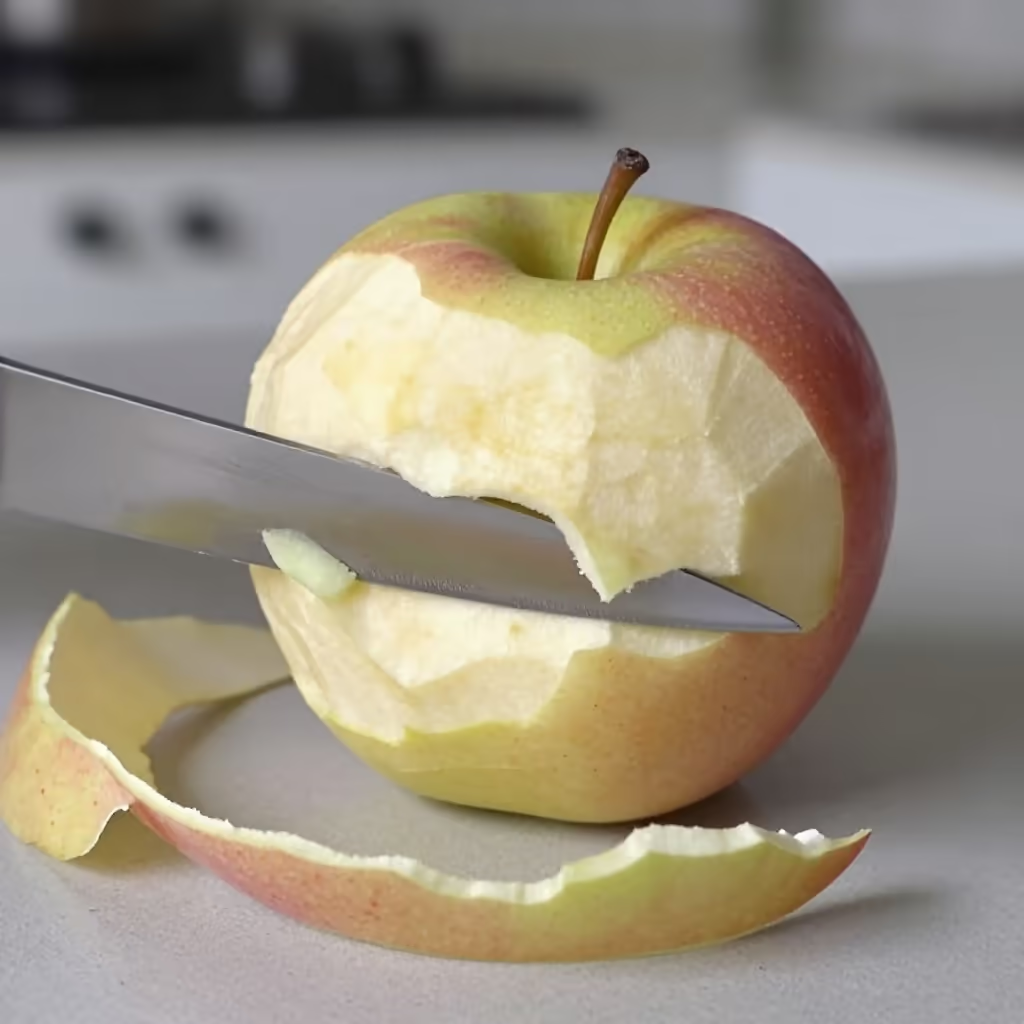
Vor dem Essen entfernt sie die feste Schale von der Orange.
Before eating, she removes the firm peel from the orange.
Vor dem Kochen zieht sie die dünne Haut von der Tomate ab.
Before cooking, she removes the thin skin from the tomato.