


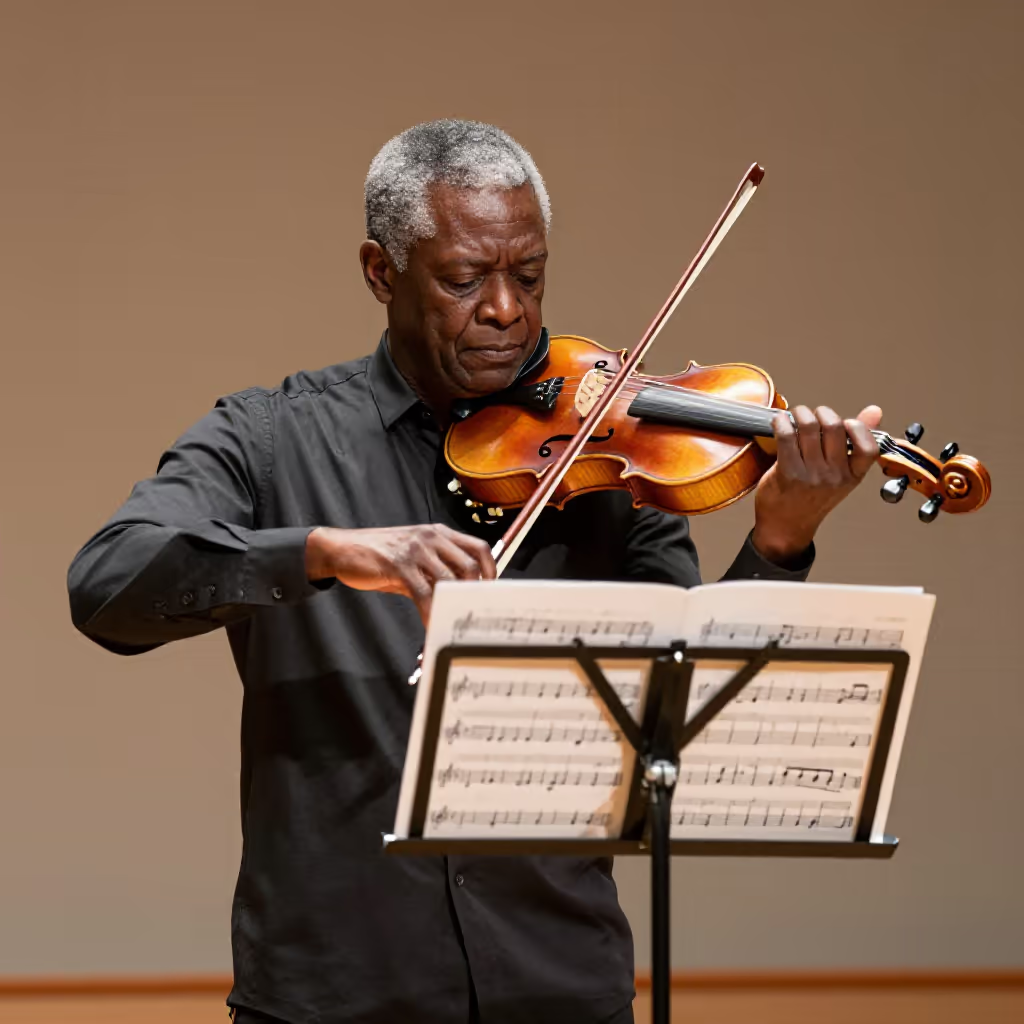
To make music by playing an instrument or singing. It often describes a shared or joyful activity without any professional ambition.
example
Die Familie musiziert jeden Sonntag nach dem Mittagessen zusammen.
The family makes music together every Sunday after lunch.
Usage tips
Word family
The verb 'musizieren' (to make music) is derived directly from the noun 'die Musik' (music). The ending '-ieren' is often used to form verbs from nouns, especially with words of foreign origin.
EXAMPLE
Schon als Kind hat sie es geliebt zu musizieren.
Even as a child, she loved making music.
Common mistake
'Musizieren' (to make music) is an intransitive verb and cannot take a direct object. You cannot say what you 'musizieren'. If you want to name the piece of music, you have to use another verb such as 'spielen' (to play) or 'singen' (to sing).
EXAMPLE
Wir haben den ganzen Abend zusammen musiziert.
We made music together all evening.
Use with prepositions
If you want to say whom you are making music with, you use the preposition 'mit' (+ dative). To name the instrument, you use 'auf' (+ dative).
EXAMPLE
Er musiziert gerne mit seinen Freunden.
He likes making music with his friends.
Compare with
near_synonym
musizieren vs spielen
to play
'spielen' and 'musizieren' can both mean that someone is making music. 'spielen' is used especially with an instrument: you play piano, guitar, or violin. 'musizieren' is more general for making music together or joyfully; it can also include singing. It sounds a bit more elevated than 'spielen', but not unnatural. If you mention a specific instrument, 'spielen' is usually the easiest choice. If several people are making music together, 'musizieren' fits very well.
musizieren
Am Sonntag musizieren die Nachbarn zusammen im Garten.
On Sunday, the neighbors make music together in the garden.